Home Page Overview
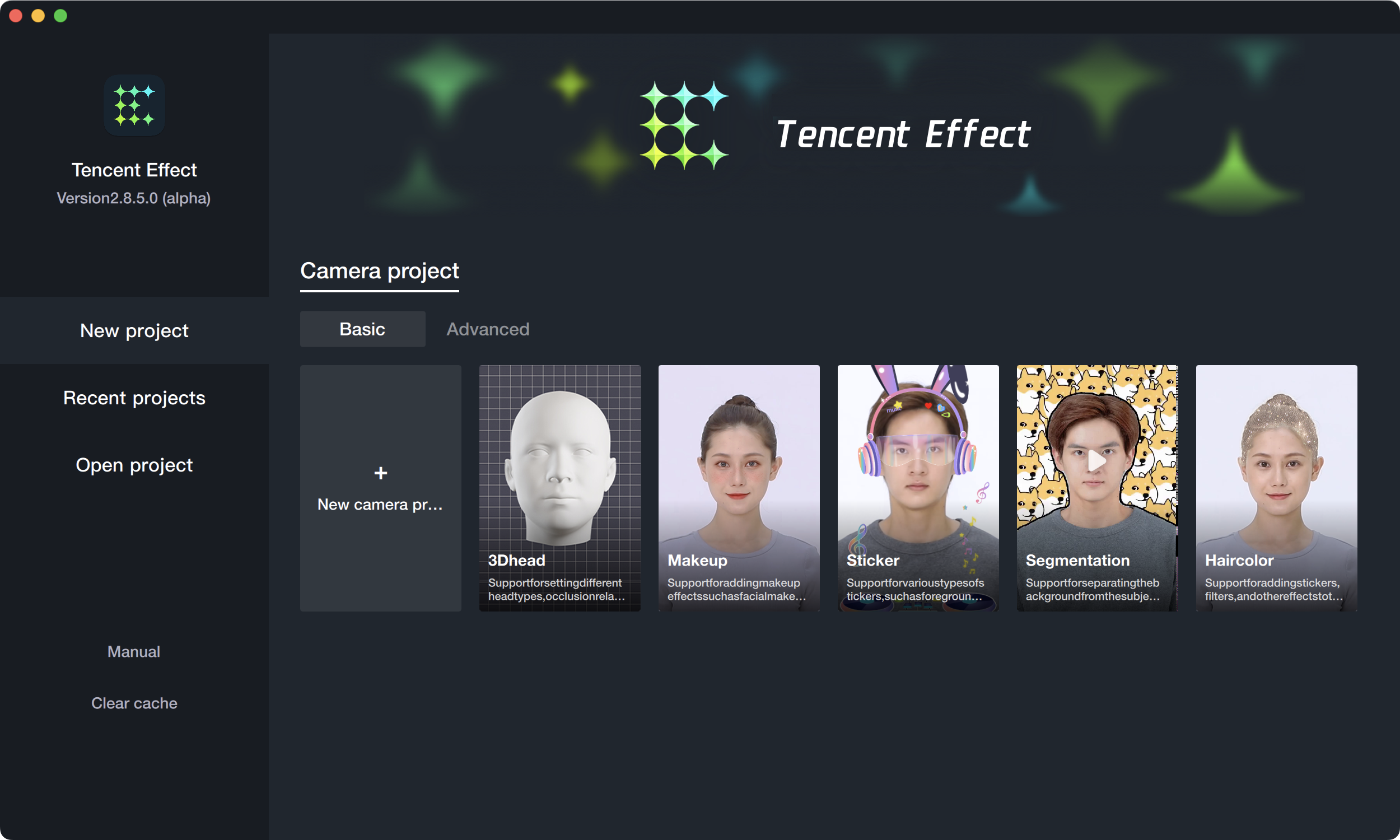
The Tencent Effect home page offers the following features:
Create New Project
Shooting Project: Includes several popular gameplay project templates. Open and modify these templates directly.
Recent Projects: Saves your recently opened projects for quick access next time.
Open Project: Lets you open projects stored locally.
User Guide
Feedback
Workspace Overview
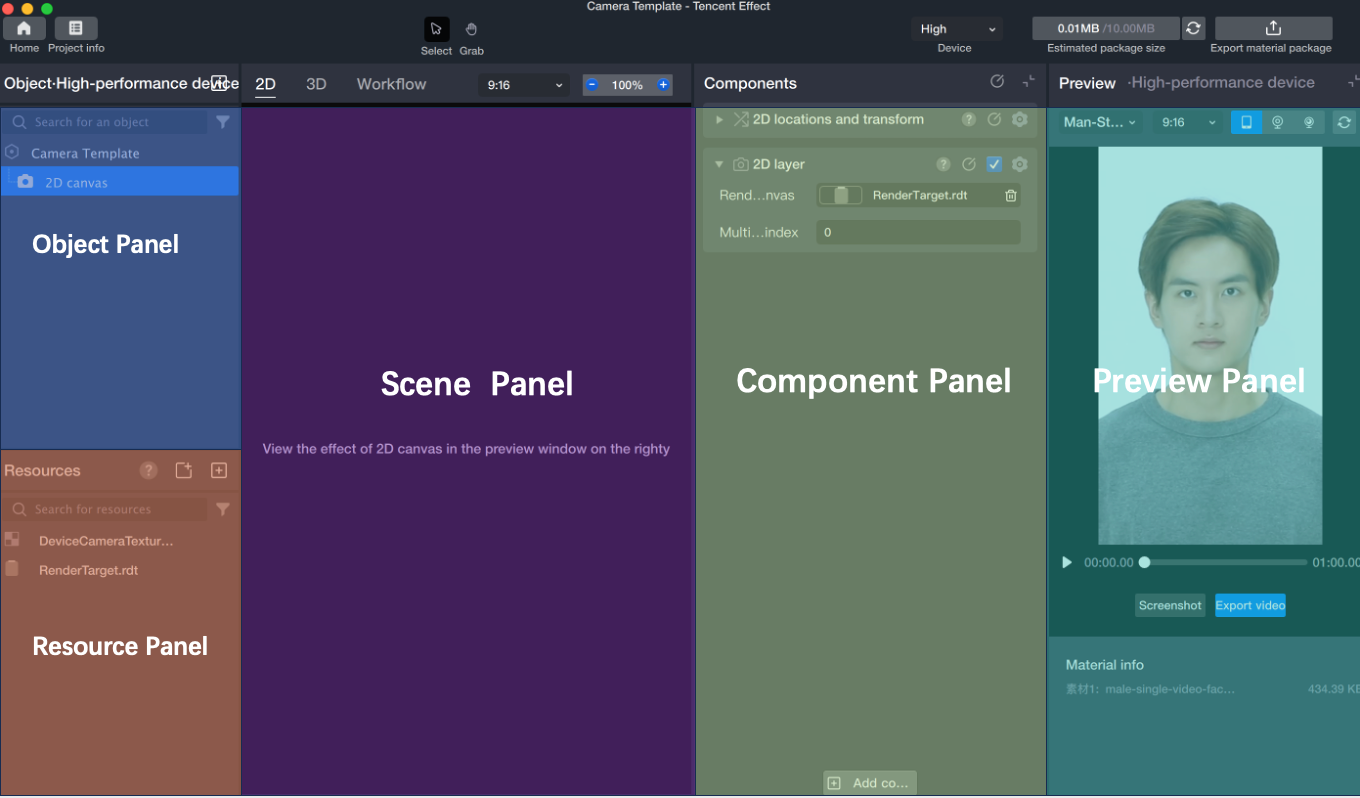
Tencent Effect's workspace is built from modular panels that form the main area for creating and editing effects. All panels can be resized, and the Preview Panel supports hiding and expanding.
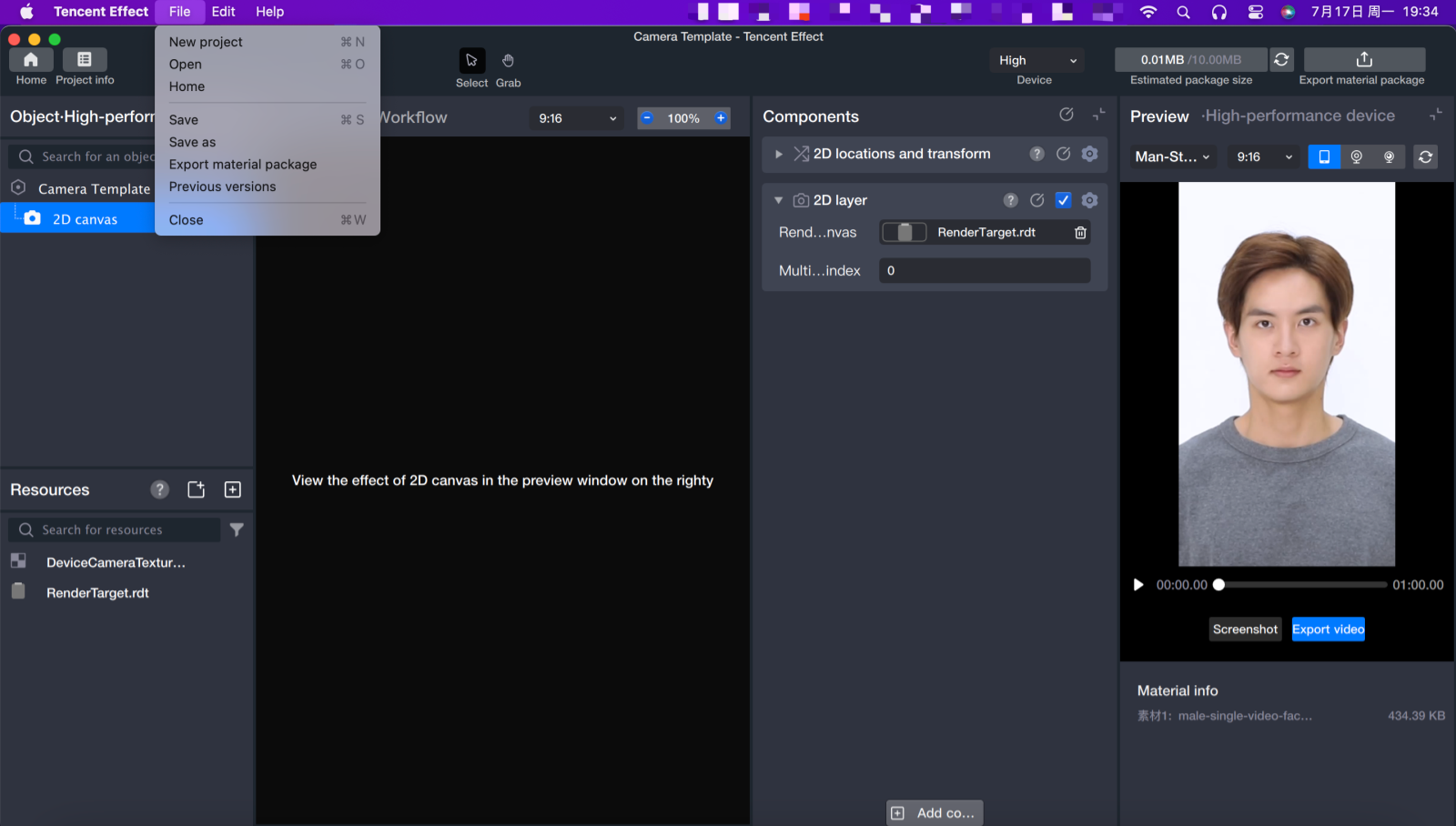
Menu Bar
The menu bar provides options for file and project management, making it easier to organize your workflow. See the image below:
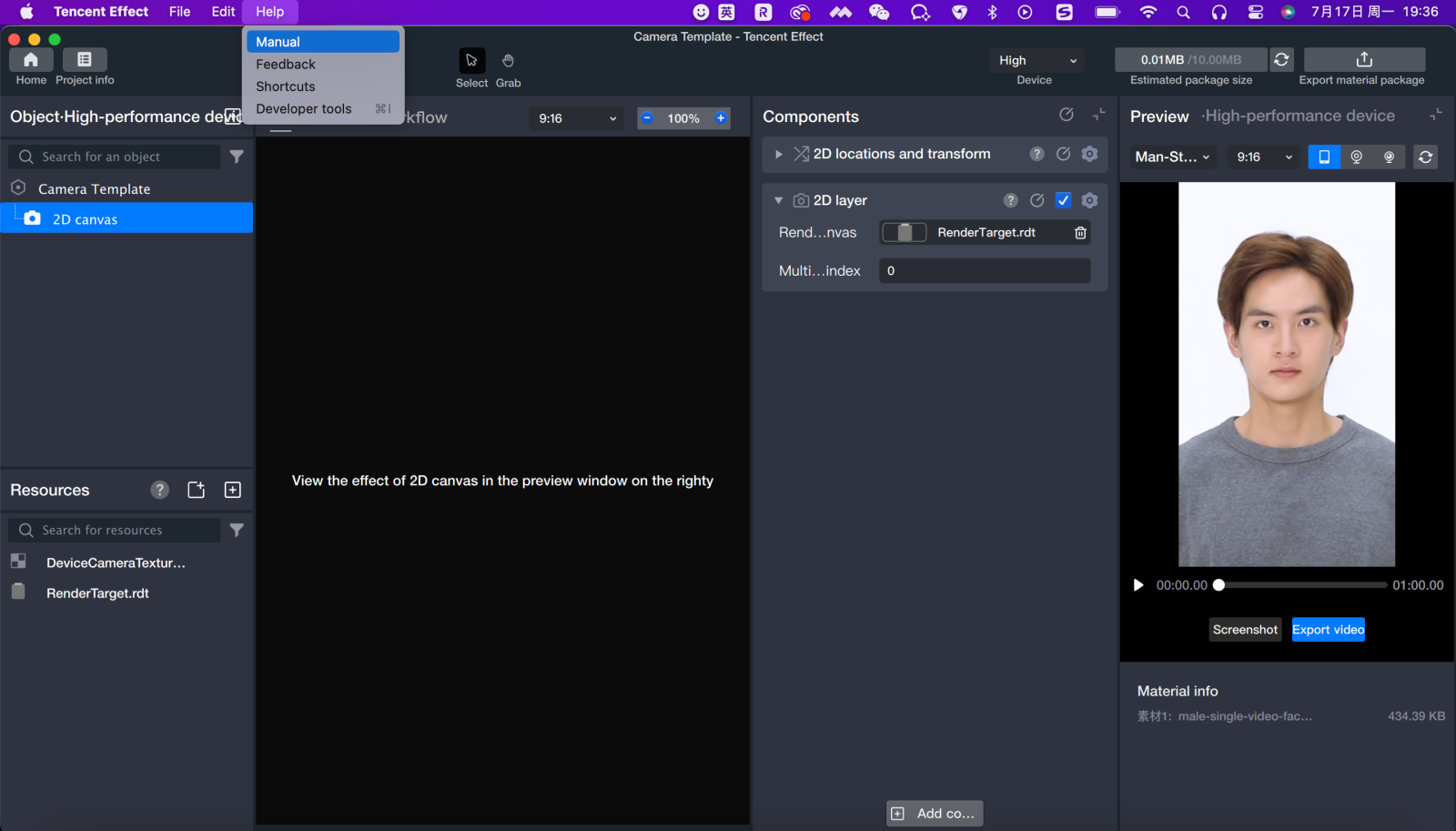
The New User Guide under Help walks you through the basic creation steps.
Workspace Panels
Shooting Project Panel
Object Panel
The Object Panel lets you organize the video structure for gameplay projects. It shows the hierarchical arrangement of all objects in the scene and controls the rendering order: objects render from top to bottom, with the lowest object appearing at the top layer. Common operations include:
Add Object: Create a new object by dragging resources into the Object Panel, using the Add Object sub-panel, or right-clicking to add.
Move Object: Drag and drop to reposition objects or nest them as parent and child.
Copy/Paste/Delete/Rename Object: Select an object and right-click to perform these actions.
Enable/Disable Object: Click the eye icon next to the object.
The Add Object sub-panel offers frequently used objects for quick addition, or you can add an empty object and customize its components.
Asset Panel
Import assets into your project in the following ways:
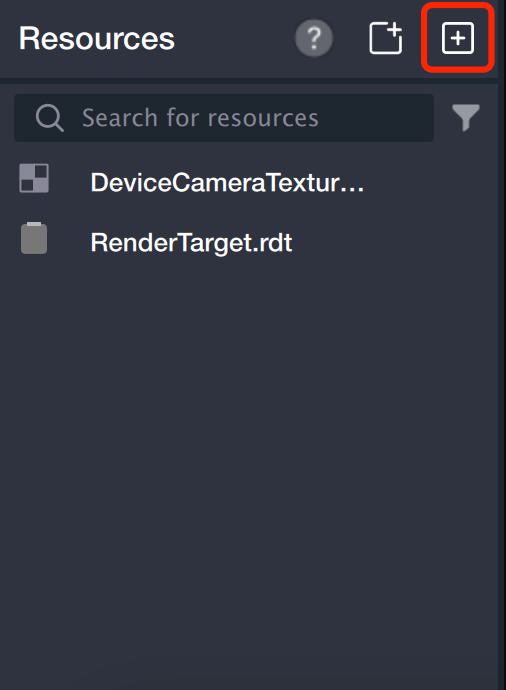
Click the + button in the Asset Panel to preload resources required for your project.
Drag files or folders from your computer directly into the Asset Panel. The system automatically recognizes and adds the asset type.
Dragging a sequence frame folder into the Asset Panel will convert it to the high-performance pag format, and you can set the frame rate.
Manage assets in the Asset Panel by right-clicking for actions such as:
Copy, cut, delete, rename
Group selected assets: Create folders to organize resources
Edit assets: Image assets support compression
Scene Panel
The Scene Panel visually displays the effects of objects from the Object Panel and offers editing tools for selection, movement, scaling, and binding.
General capabilities:
Preview effects such as makeup, filters, liquify, and more
Adjust position, size, and rotation for foreground materials, face stickers, etc.
In the 3D panel, modify position, size, rotation, material, and lighting for 3D props
In animation mode, preview animation playback effects
In standard template projects:
Move the timeline marker to view the scene at different times
Press the spacebar to play or pause the video in the Scene Panel
Component Panel
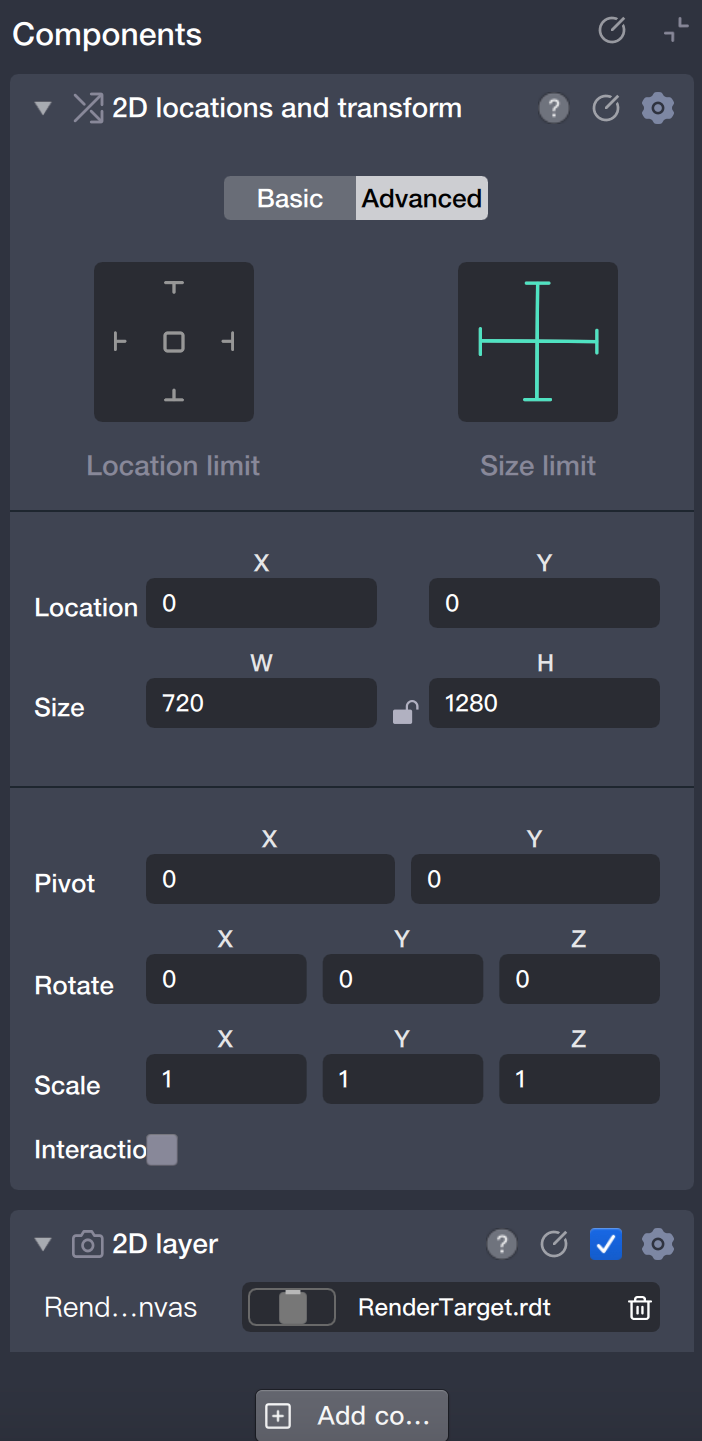
The Component Panel provides modular components that define object functions and properties.
Edit any parameter of a selected object in the Component Panel:
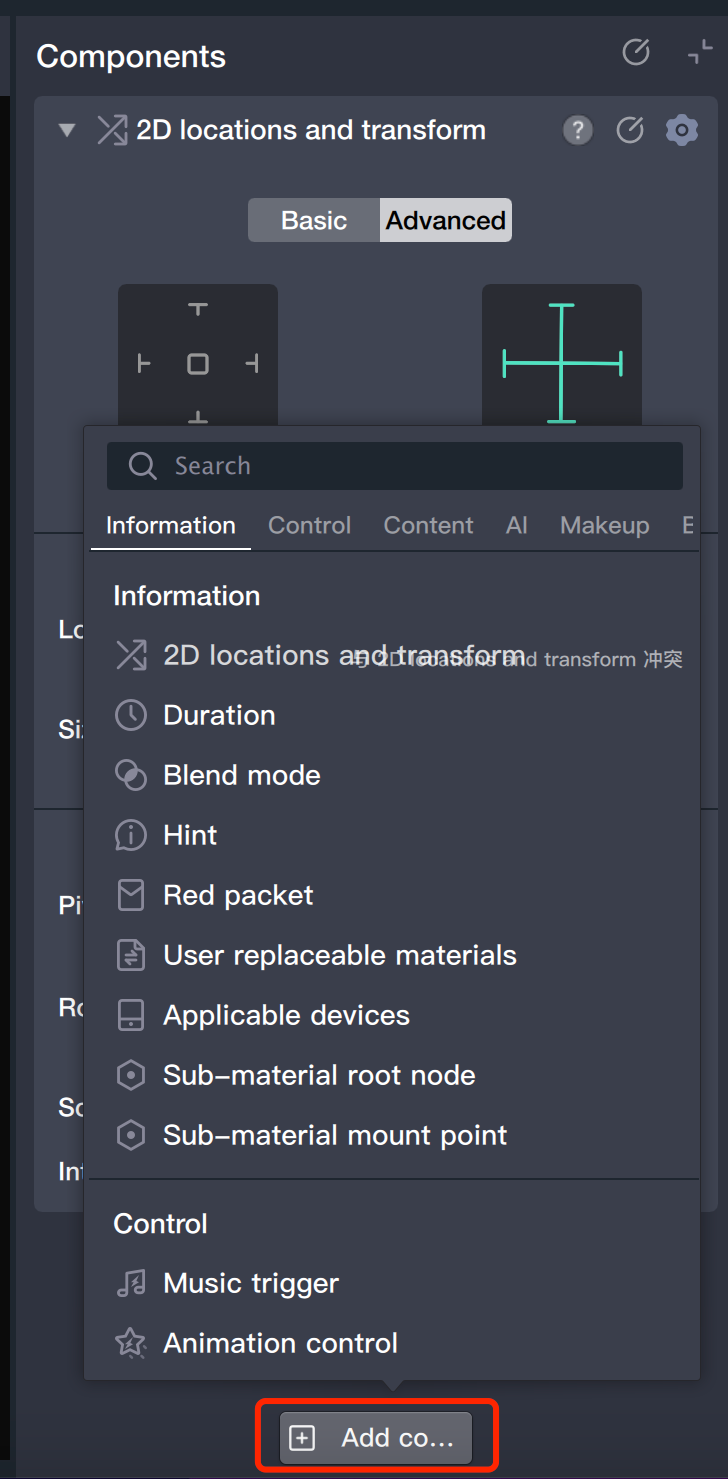
Add new components to any selected object:
Preview Panel
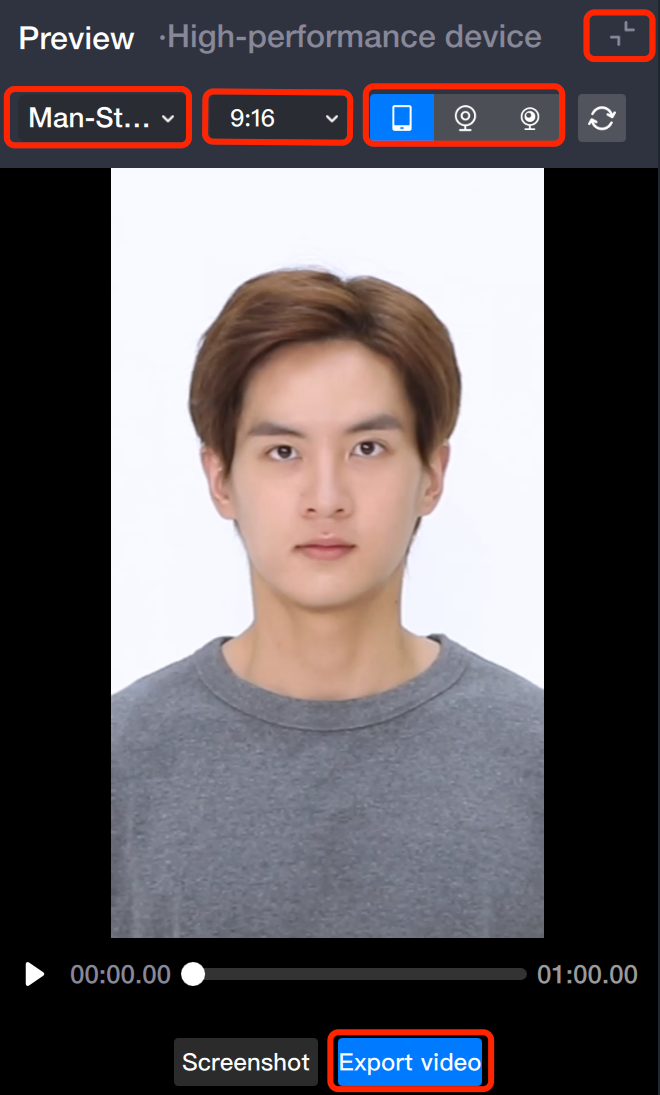
The Preview Panel delivers real-time previews of your gameplay experience. Hide or expand the Preview Panel using the button in the upper right corner.
Tencent Effect includes preset preview videos and images. Switch between materials to test your effects:
Use the dropdown menu to switch between resources
Upload your own photos or videos for preview
Export preview videos as high-definition files for promotion or showcasing
Enable Camera Preview: For shooting project scenarios, activate your PC or external camera for a real-time preview.
Flow Panel
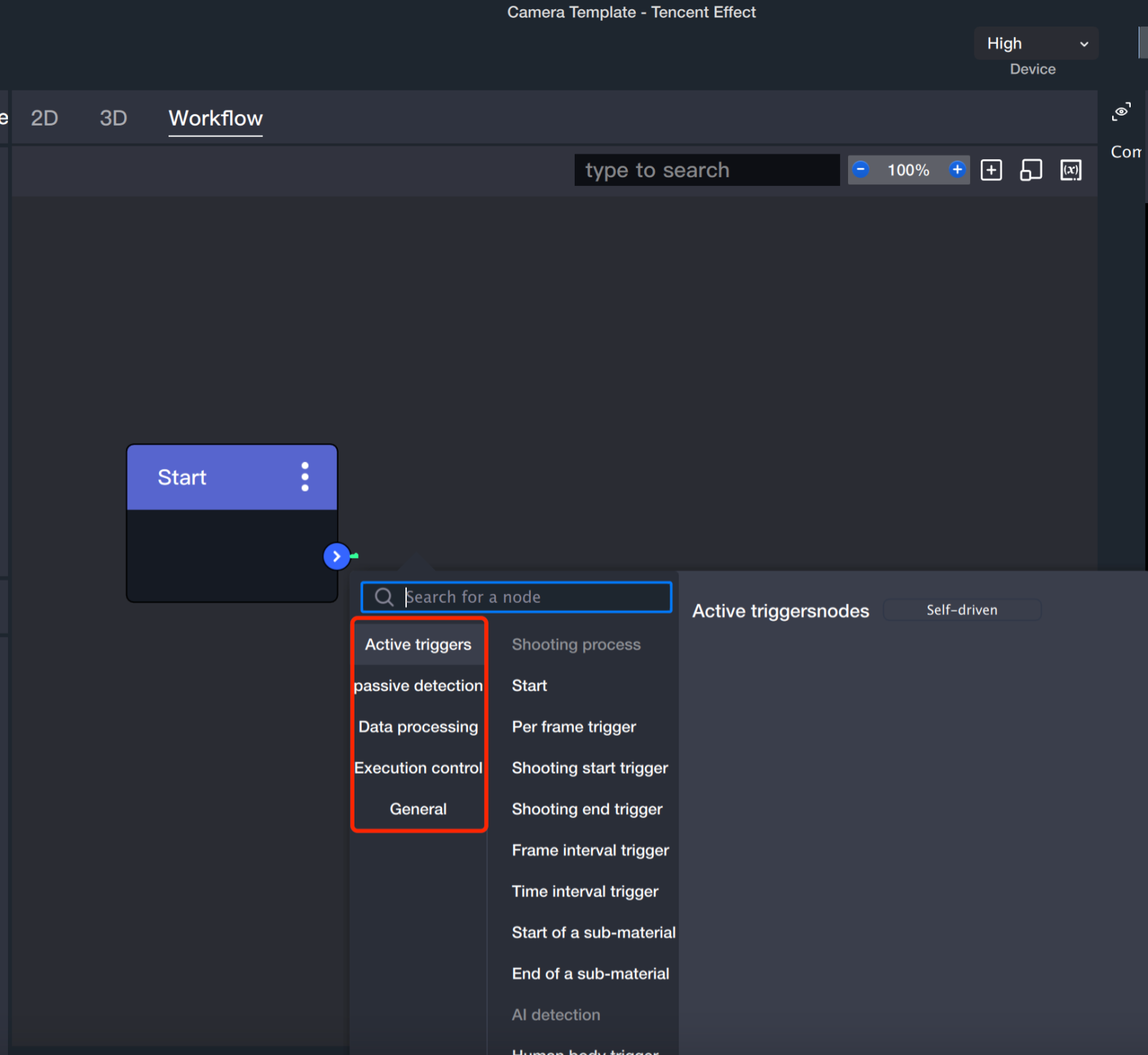
In short video creation, effects often require storylines or trigger logic. The Flow Panel helps you organize design effects in a structured, rule-based way, presenting gameplay as a complete script.
The Flow Panel provides four core elements for designing gameplay flows: Trigger Conditions, Logic Judgment, Trigger Results, and Data Processing. Use these elements to design flows such as timed triggers, conditional triggers, show/hide, and switching.
To add a node:
Right-click any blank area to add a node
Click the + button in the upper right corner of the panel to add