Scenarios
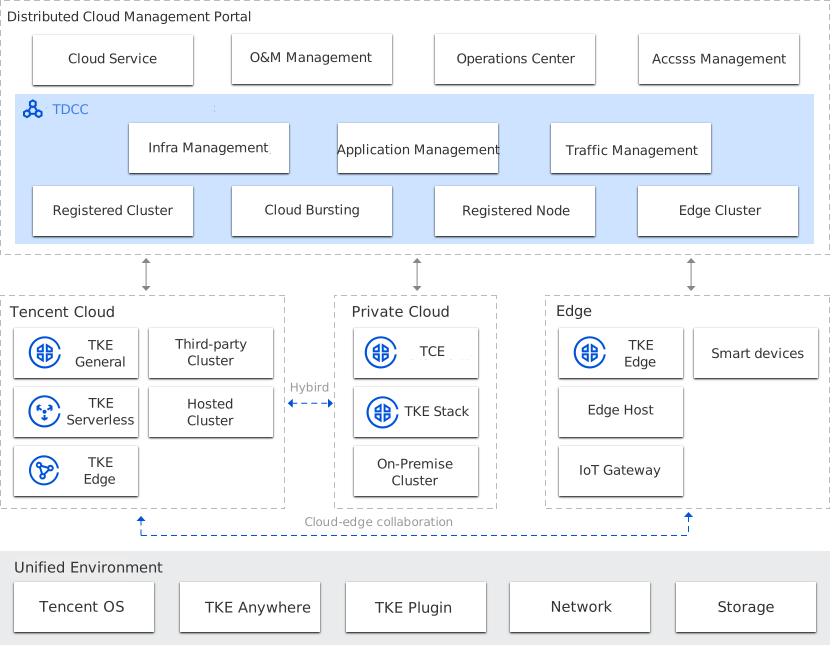
Multi-Cloud Management
It enjoys flexible access and management of various computing resources within the enterprise, distributes cloud services to different physical locations to reduce latency, improves service quality, and has the platform's operation, governance, updates, and evolution provided uniformly by the cloud service provider. By utilizing container technology as the service foundation in a distributed environment, and delivering containerized applications and cloud services based on cloud-native standards, it provides lightweight, efficient, scalable, secure, reliable, and open-source services to support rapid business growth and flexible expansion.
It supports managing cloud and on-premises resources through various methods, such as node registration, adding super nodes to IDC clusters for elastic scale-out, and registered cluster management.
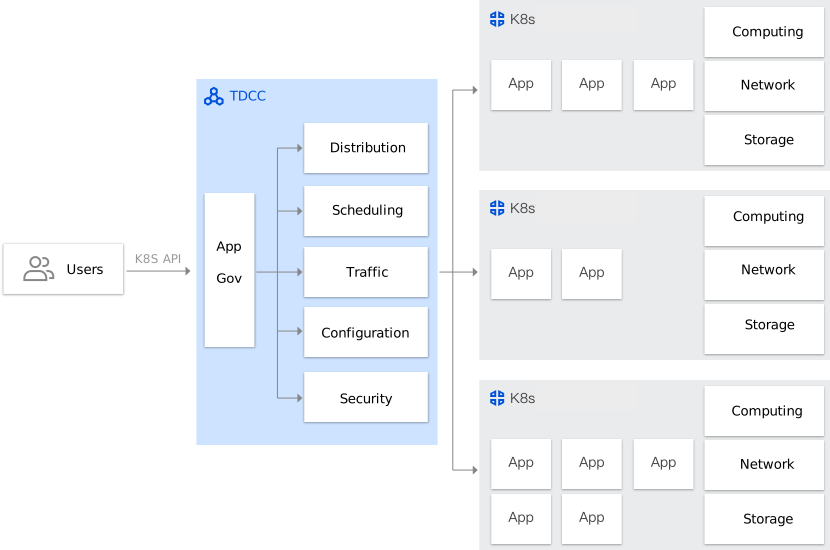
Application Governance
Cloud-native applications run across multiple cloud services, using the same APIs and workflows for deployment and management. By leveraging the Kubernetes standard, it provides a consistent operational environment across multiple heterogeneous cloud infrastructures. This minimizes the switching costs and enables Kubernetes applications to scale from a single cluster to multiple regions and clusters across different cloud service providers, reducing the risk of vendor lock-in.
It provides users with a unified and consistent Kubernetes experience across multiple clouds, while also supports the definition of independent policies and application configurations for public cloud clusters, local clusters, and edge clusters. This flexible approach addresses the differences across various locations.
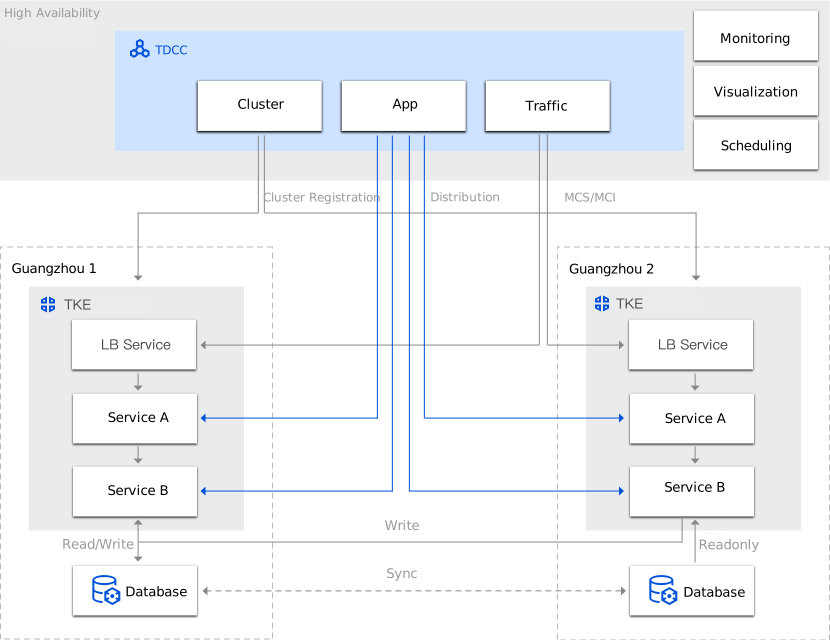
High-Availability Disaster Recovery
In a single Kubernetes cluster, application services support high availability, allowing services to continue running after partial hardware or software faults. However, the distance between cluster primary nodes limits its ability to provide protection against disaster-level events. To enable disaster recovery for entire sites or regions, unified governance of multi-cluster applications, traffic, storage, and other components can be implemented. This approach ensures high availability and disaster recovery, improving the fault resilience and reliability standards of the entire business system.
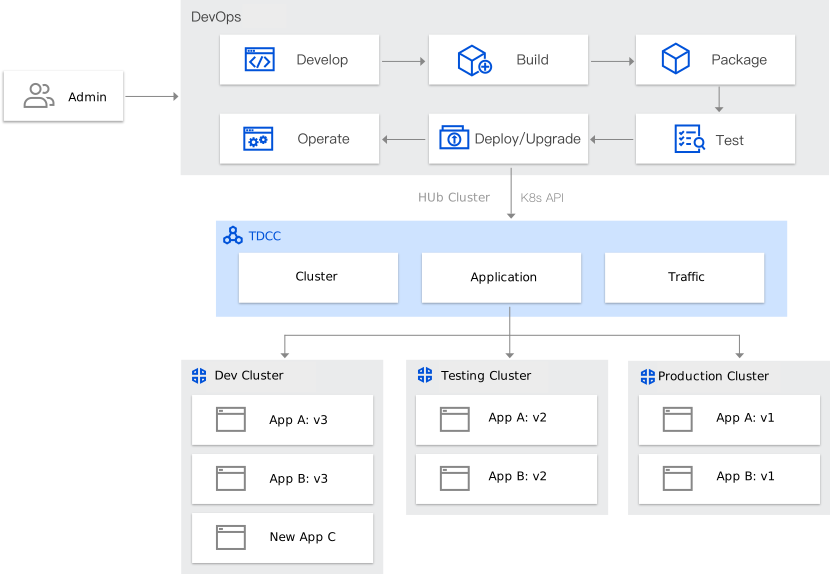
Automatic Release
Various types of DevOps systems can be integrated with TDCC's Hub Cluster to achieve multi-cloud and multi-cluster application release management, grayscale management, and application lifecycle management at minimal cost. This eliminates the need for tedious configuration and initialization of development, testing, and production environment clusters. By loosely coupling the application release logic and the underlying clusters, it allows for flexible and convenient expansion and management of business releases, accelerating product iteration and business growth.
Cloud-Edge Collaboration
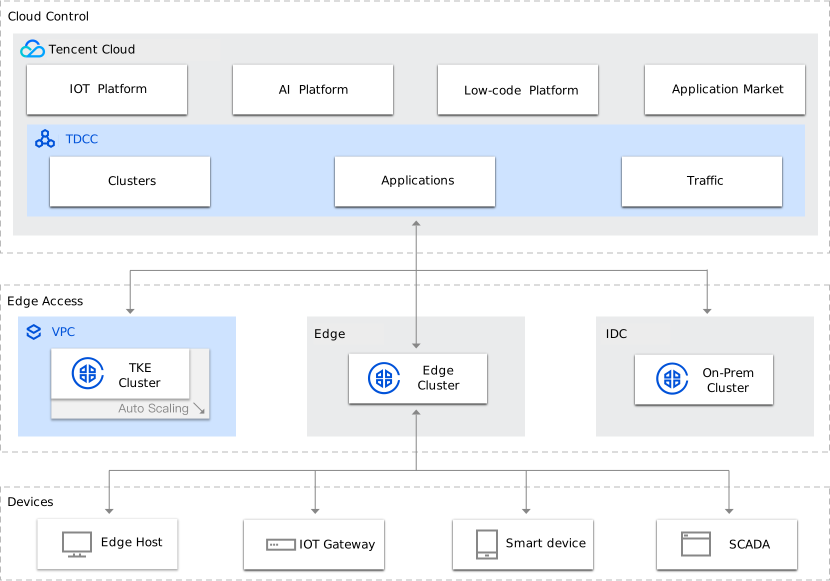
The distributed cloud platform, based on cloud-native technology, is well-suited for various edge terminals. It provides a unified tech stack for lightweight edge access facilities, edge data centers, edge gateways, smart devices, and more, enabling unified management of clouds from different operators, private clouds, industry clouds, regional clouds, and others.
Mature cloud services and products on public clouds, such as AI/big data, databases/middleware, cloud development/low-code platforms, and IoT edge computing, can seamlessly be deployed and extended to the edge, following cloud-native standards.
Help and Support
Was this page helpful?
You can also Contact sales or Submit a Ticket for help.
Help us improve! Rate your documentation experience in 5 mins.
Feedback