This document describes the container module feature and how to view the details of containers, images, and servers.
Viewing the Container Module
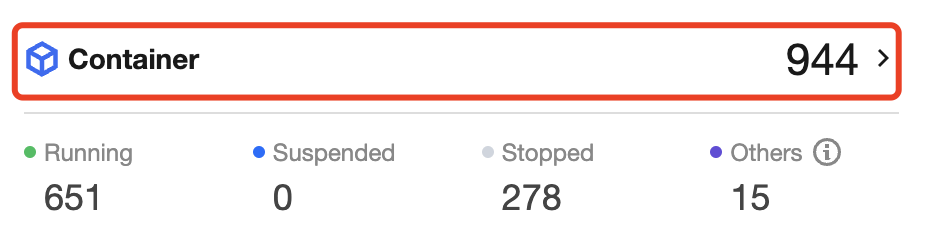
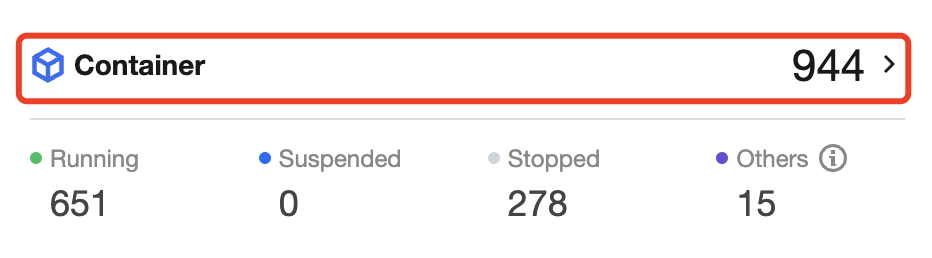
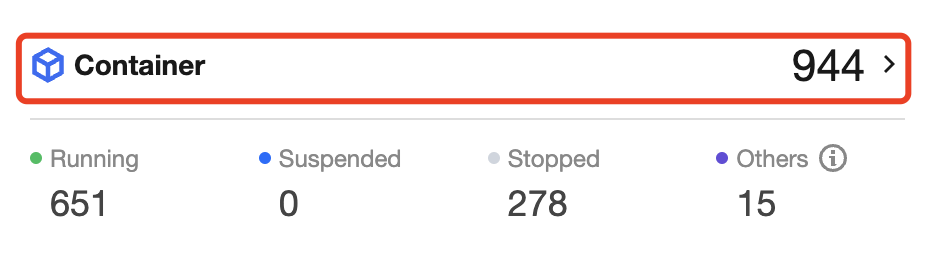
The container module displays the total number of containers and the numbers of running, suspended, and aborted containers.
Filtering containers
1. Log in to the TCSS console and click Asset Management on the left sidebar. 2. On the Asset Management page, click Containers to enter the container list page.
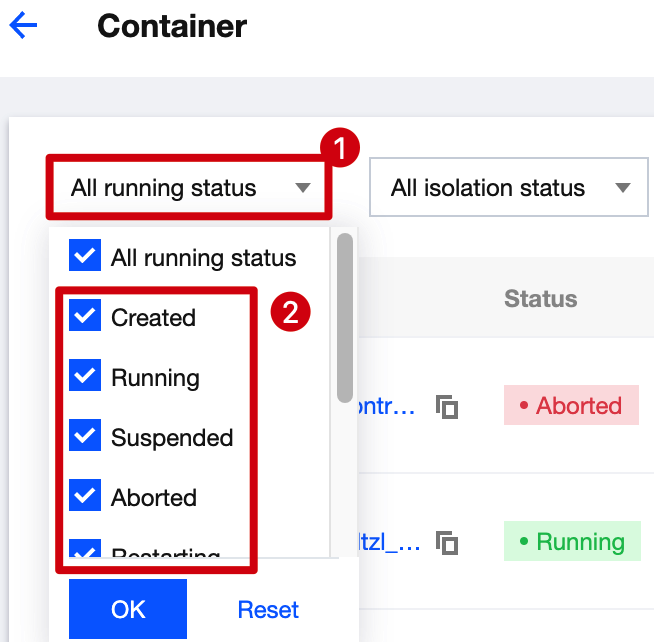
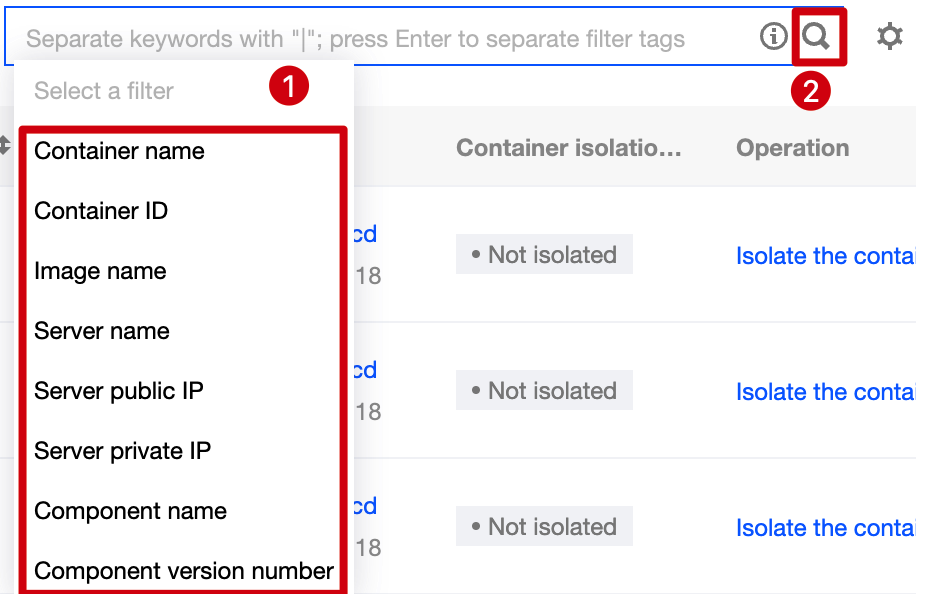
3. On the container list page, filter containers by status or click the search box and search for containers by keyword such as container name/ID, image name, or server IP.
Click the status drop-down list in the top-left corner to filter containers by status.
Click the search box and search for containers by keyword such as container name, container ID, image name, or server IP.
Viewing the list of containers
1. Log in to the TCSS console and click Asset Management on the left sidebar. 2. On the Asset Management page, click Containers to enter the container list page.
3. On the container list page, click a Container name to pop up the drawer on the right, which displays the container details, including the basic container information, process information, and port information.
4. On the Asset Management page, click a Server IP to pop up the drawer on the right, which displays the server details, including the basic server information, Docker information, and the numbers of images and containers.
Note:
In the drawer, click the number to view the numbers of images and containers on the server.
Custom list management
1. Log in to the TCSS console and click Asset Management on the left sidebar. 2. On the Asset Management page, click Containers to enter the container list page.
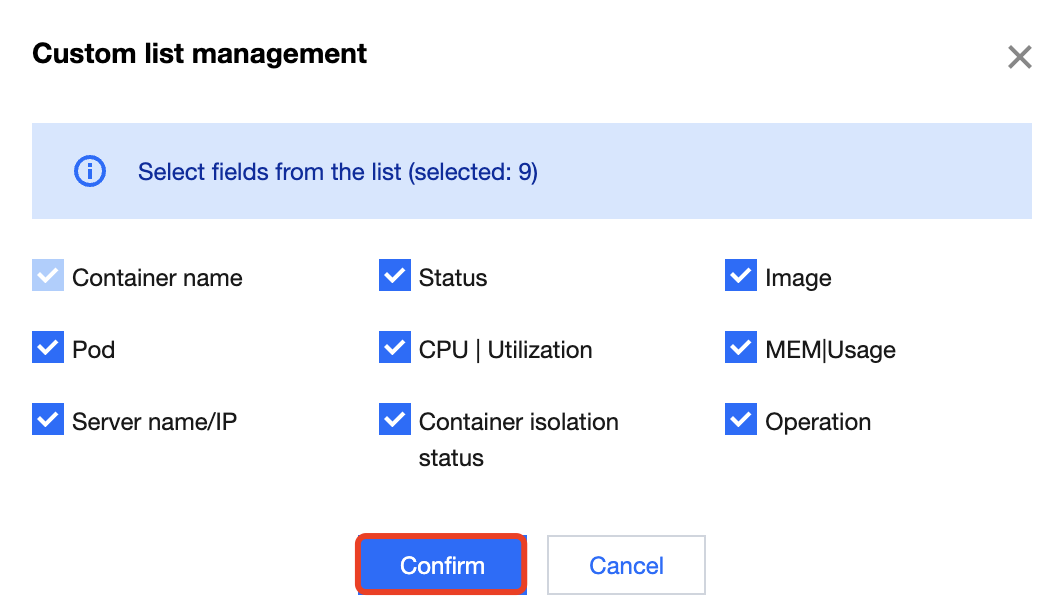
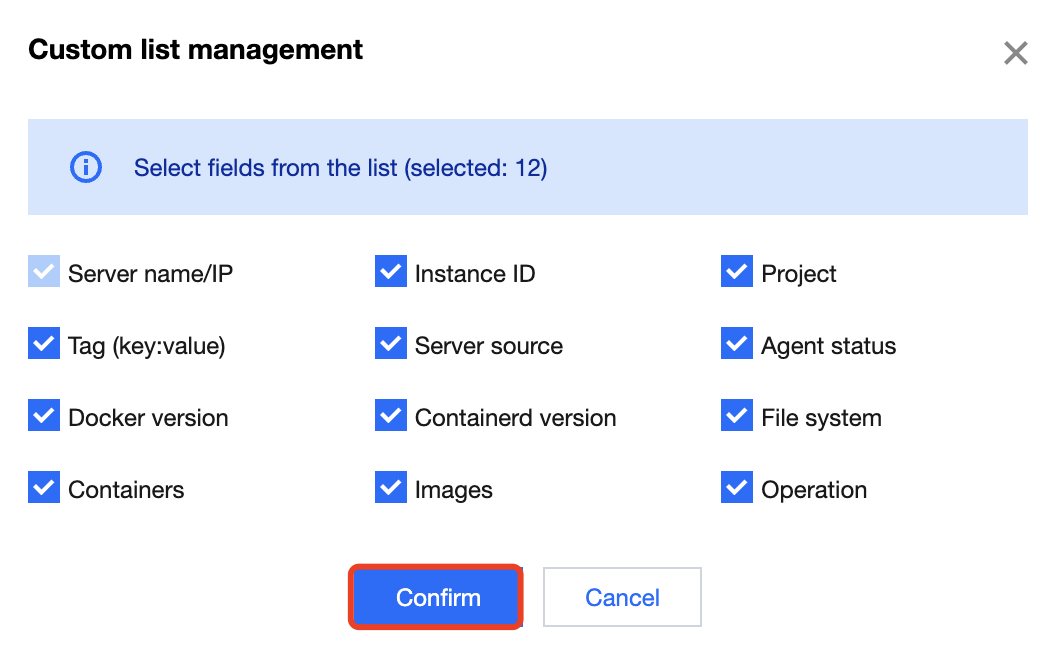
3. On the container list page, click to pop up the Custom List Management window. 4. In the pop-up window, select the target type and click OK.
Key fields in the list
1. Status: Running, Suspended, or Aborted.
2. Image: Name of the associated image.
3. Pod: Pod of the container.
4. CPU | Utilization: CPU utilization.
5. MEMUsage: Memory utilization.
Viewing the Local Image Module
1. Log in to the TCSS console and click Asset Management on the left sidebar. 2. On the Asset Management page, the image module displays the total number of images. Click Images to enter Image Security > Local Images and view the details.
Viewing the Image Repository Module
1. Log in to the TCSS console and click Asset Management on the left sidebar. 2. On the Asset Management page, the image repository module displays the total number of image repositories. Click Image repositories to enter Image Security > Image repository and view the details.
Viewing the Server Module
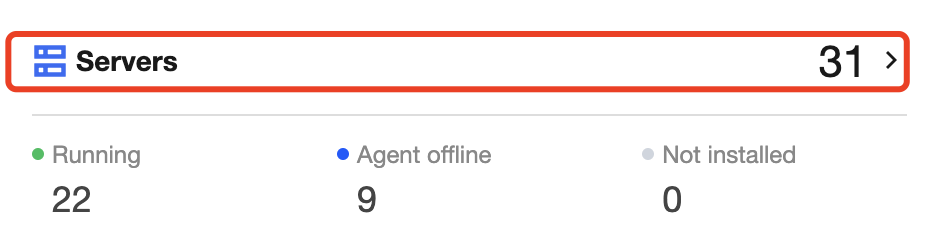
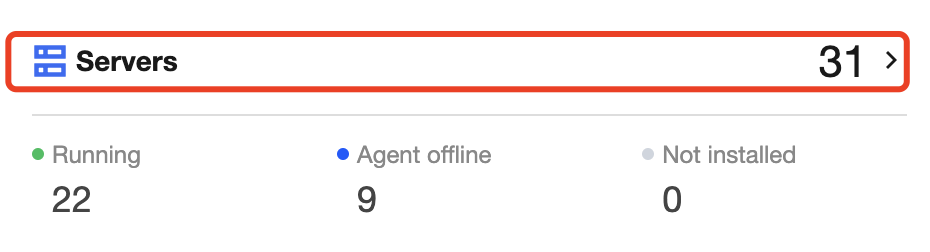
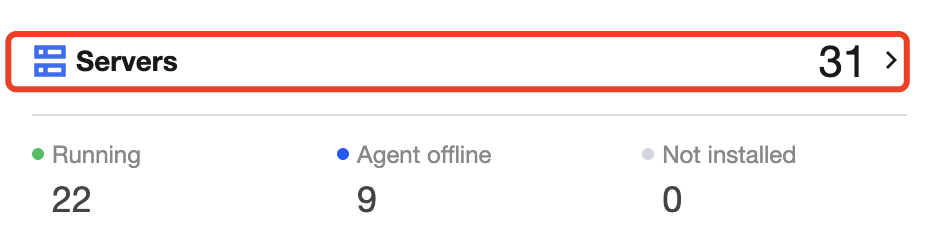
The server module displays the total number of servers and the numbers of running and offline servers.
Filtering servers
1. Log in to the TCSS console and click Asset Management on the left sidebar. 2. On the Asset Management page, click Servers to view the list of all servers.
3. On the server list page, filter servers by running status or click the search box and search for servers by keyword such as server name, project, Docker version, or server IP.
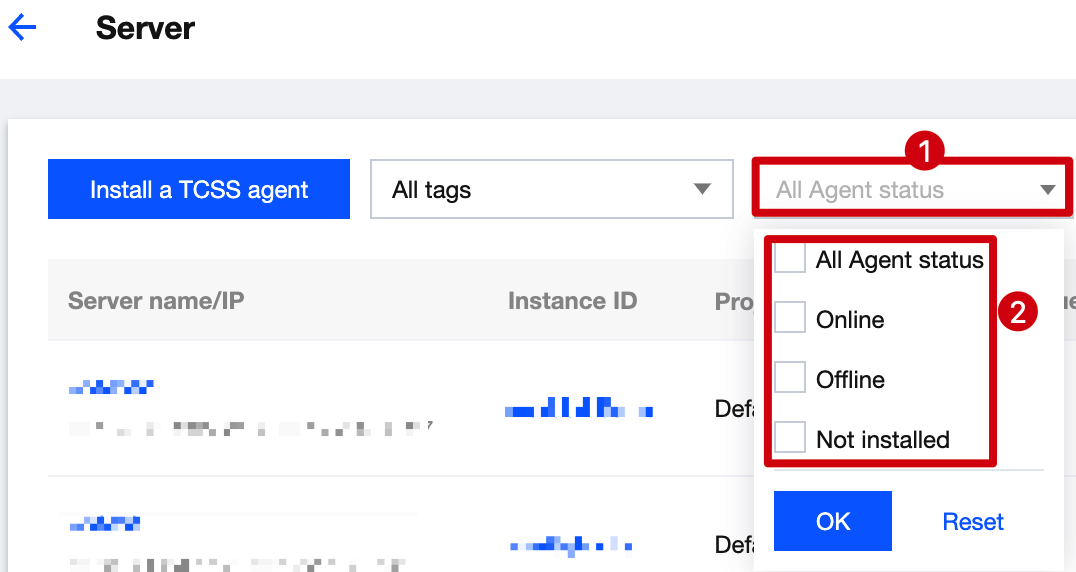
Click the status drop-down list in the top-left corner to filter servers by status.
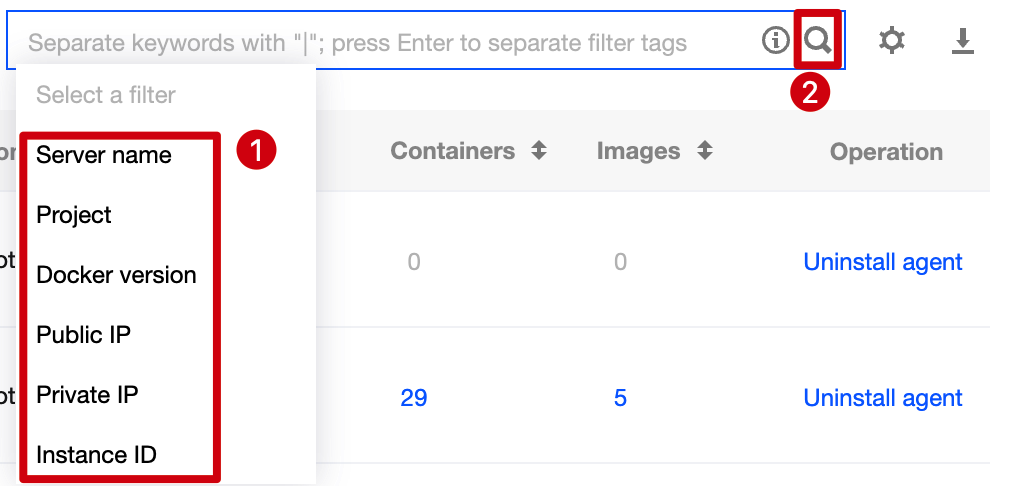
Click the search box and search for servers by keyword such as server name, project, Docker version , or server IP.
Viewing the list of containers
1. Log in to the TCSS console and click Asset Management on the left sidebar. 2. On the Asset Management page, click Servers to view the list of all servers.
3. On the server list page, click a Server IP to pop up the drawer on the right, which displays the server details, including the basic server information, Docker information, and the numbers of images and containers.
Note:
In the drawer, click the number to view the numbers of images and containers on the server.
4. On the server list page, click Images to view the details of associated images.
5. On the server list page, click Containers to view the details of associated containers.
Custom list management
1. Log in to the TCSS console and click Asset Management on the left sidebar. 2. On the Asset Management page, click Servers to view the list of all servers.
3. On the server list page, click to pop up the Custom List Management window. 4. In the pop-up window, select the target type and click OK.
Fields in the list
1. Server name: Server name.
2. Server IP: Click a Server IP to pop up the drawer on the right, which displays the server details, including the basic server information, Docker information, and the numbers of images and containers.
3. Project: Project name of the server.
4. Docker version: Docker version number. If no Docker version is installed, "Not installed" will be displayed.
5. Docker file system type: Type of the Docker file system.
6. Images: Number of images associated with the server. Click the number to view the details.
7. Containers: Number of containers associated with the server. Click the number to view the details.