FAQs
Download
フォーカスモード
フォントサイズ
Although TencentDB for MongoDB manages the configuration of public network access uniformly, the public network access may be interrupted when you separately operate Cloud Load Balancer (CLB). To prevent this, the console will report some common errors.
Problem 1: CLB instance is mistakenly deleted, leading to the public network disconnection.
Issue description
The TencentDB for MongoDB console prompts that the CLB instance doesn’t exist, check the instance status in the console.
Possible cause
After the public network access is enabled, the CLB instance bound to TencentDB for MongoDB was deleted.
Solutions
1. Log in to the CLB console, and create a CLB instance as needed.
2. Log in to the TencentDB for MongoDB console. In the Network Configuration section on the Instance Details page, click Disable next to Public Network Access to disable the public network access.
3. When it is disabled, click Configure CLB Public Network Access, select the CLB instance, configure the listening port for it, and enable the public network access again.
Problem 2: The listener doesn’t exist, leading to public network disconnection.
Issue description
The TencentDB for MongoDB console prompts that the listener doesn’t exist, check the listener status in the console.
Possible cause
After enabling the public network access, you may delete the listener configuration in the CLB console.
Solutions
1. Log in to the CLB console. Click Instance ID to enter the details page, select the Listener Management tab to check whether the listener is deleted mistakenly.
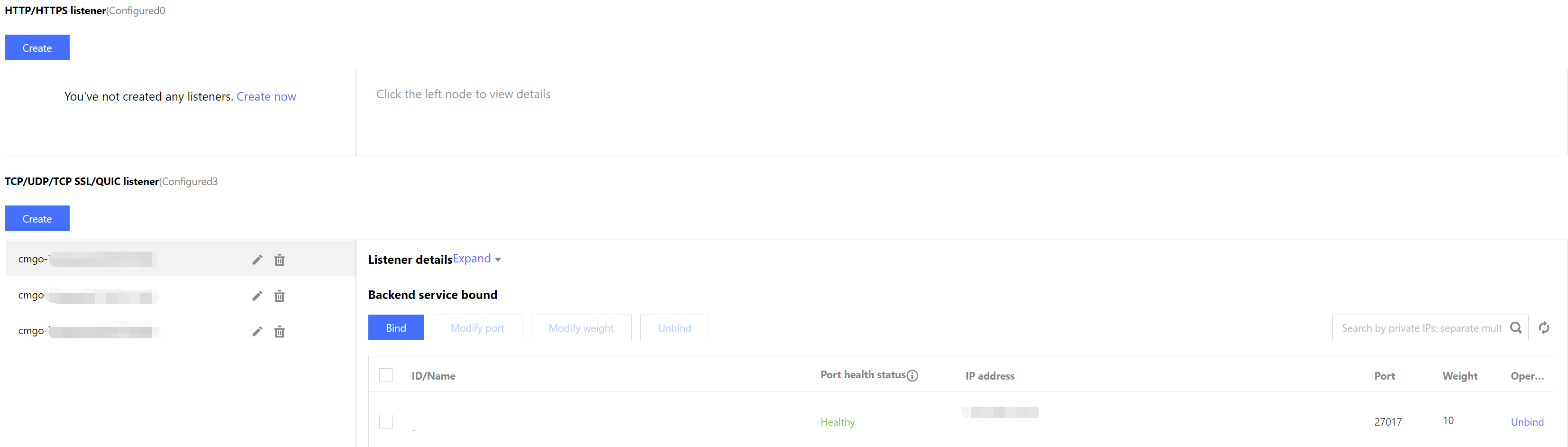
2. Log in to the TencentDB for MongoDB console. In the Network Configuration section on the Instance Details page, click Disable next to Public Network Access to disable the public network access.
3. When it is disabled, click Configure CLB Public Network Access, select the CLB instance, configure the listening port for it again, and enable the public network access.
Problem 3: The number of the CLB listeners is not the same as that of the MongoDB VIPs, causing the public network to disconnect.
Issue description
The TencentDB for MongoDB console prompts that the number of the CLB listeners is not the same as that of the instance VIPs. To add nodes or delete the listeners for the current instance, click Modify to configure the rules of the public network access.
Possible cause
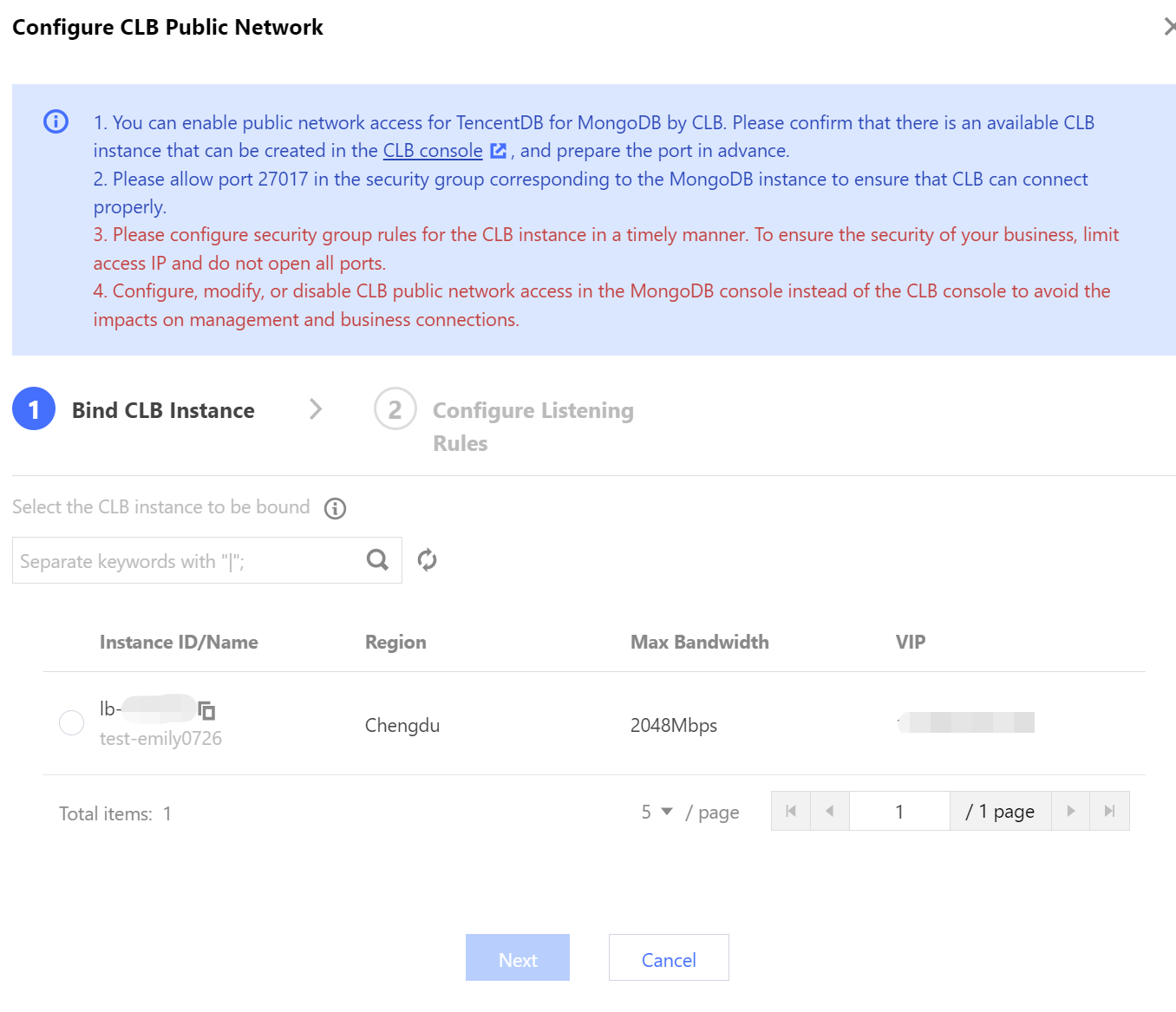
Each CLB listening port has a private network address of the MongoDB instance. When you add nodes for MongoDB instance as instructed in Adding Secondary Node, the newly added node cannot find the corresponding listener, causing an access error.
Solutions
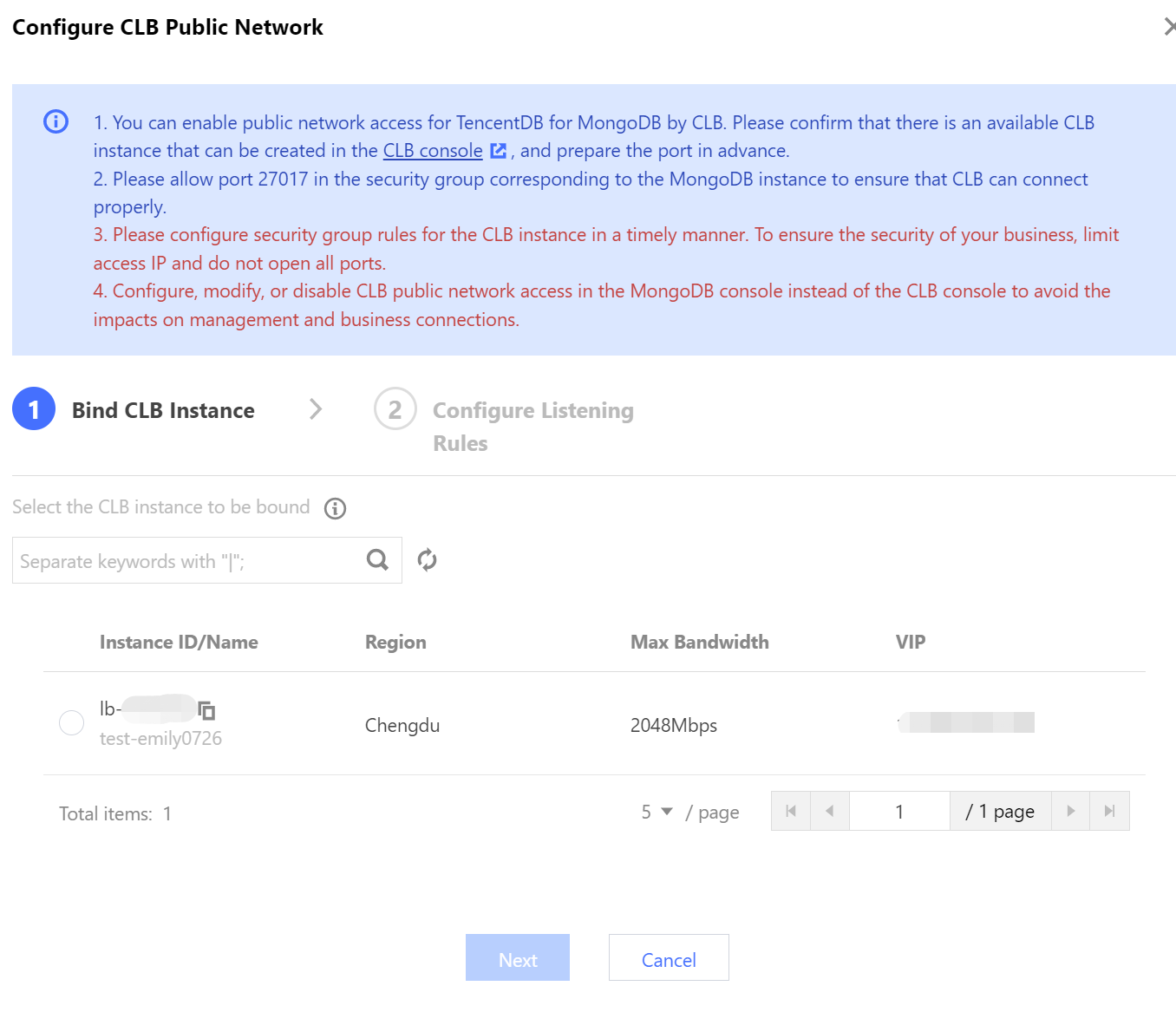
Log in to the TencentDB for MongoDB console. In the Network Configuration section on the Instance Details page, click Modify next to Public Network Access. In the Configure CLB Public Network Access window, modify the configuration of the public network access.
Problem 4: The CLB listening port is not the same as the one configured. Check the listening rules of the CLB instance or modify the public network access rules.
Issue description
The TencentDB for MongoDB console prompts that the CLB listening port is not the same as the one configured. Check the listening rules of the CLB instance or modify the public network access rules.
Possible cause
You modified the IP port bound to a listener in the CLB console mistakenly, resulting in inconsistency between the listening port and the one actually configured.
Solutions
Option 1: Log in to the MongoDB console. In the Network Configuration section on the Instance Details page, click Modify next to Public Network Access. In the Configure CLB Public Network Access window, change the configured listening port of the public network to the same as that of the listener.
Option 2: Log in to the MongoDB console. In the Network Configuration section on the Instance Details page, click Disable next to Public Network Access to disable the public network access. When it is disabled, click Configure CLB Public Network Access, select the CLB instance, configure the listening port for it again, and enable the public network access.
フィードバック