Standard Access (CX Platform is Equinix)
Download
フォーカスモード
フォントサイズ
Prerequisites
You already have an Equinix Fabric account.
The account already has a Port or Virtual Device in the region where a connection needs to be established.
If you do not have an account, you can contact sales or create one yourself on the Equinix page. If you have questions about using the page, you can contact Equinix sales for guidance or contact Equinix online services to obtain support.
Operation Steps
1. Placing an Order on the Equinix Side
Step 1: Selecting a Service Provider.
1. Log in to Equinix Fabric. From the Connections menu, select Create Connection.
2. Click A Service Provider.
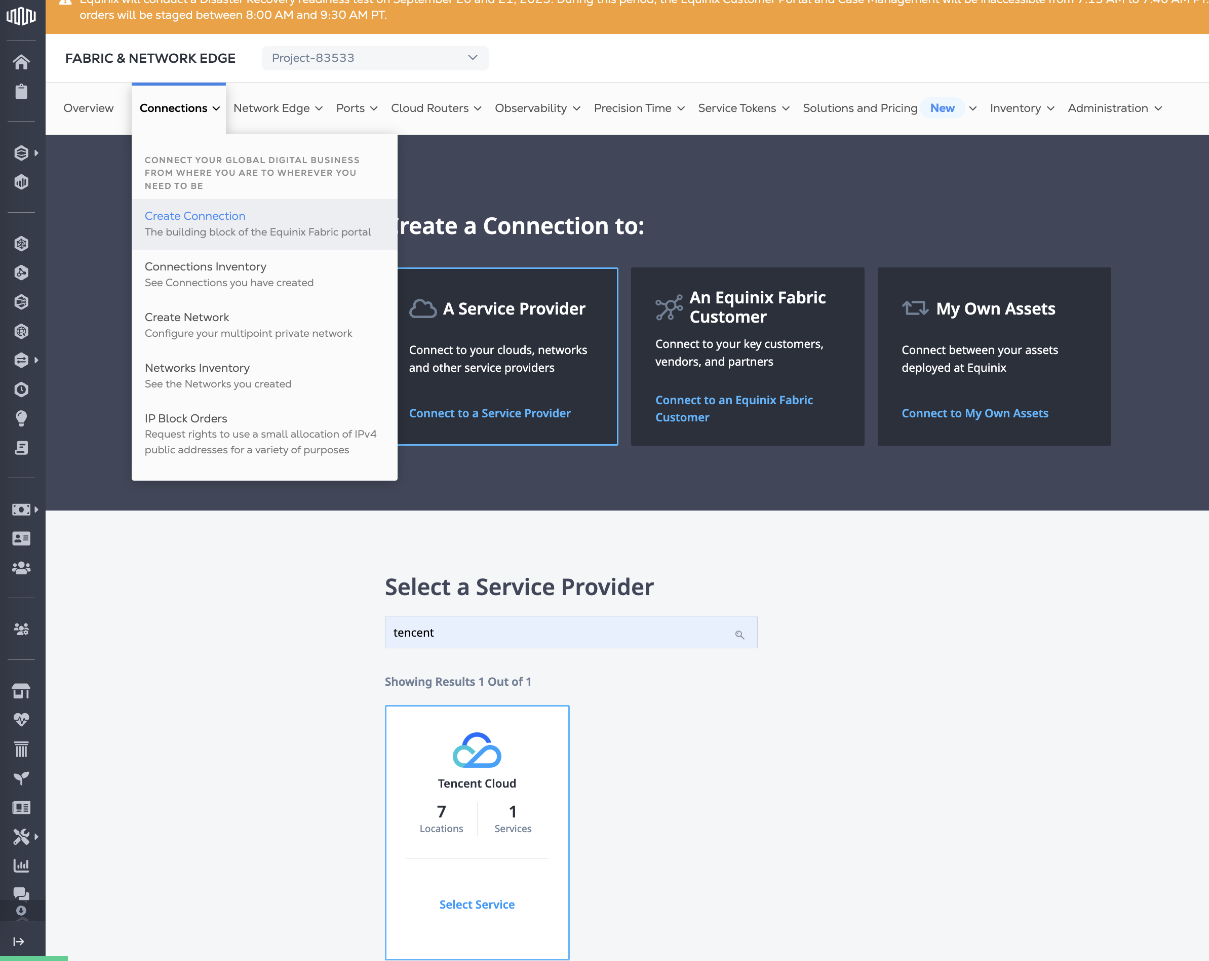
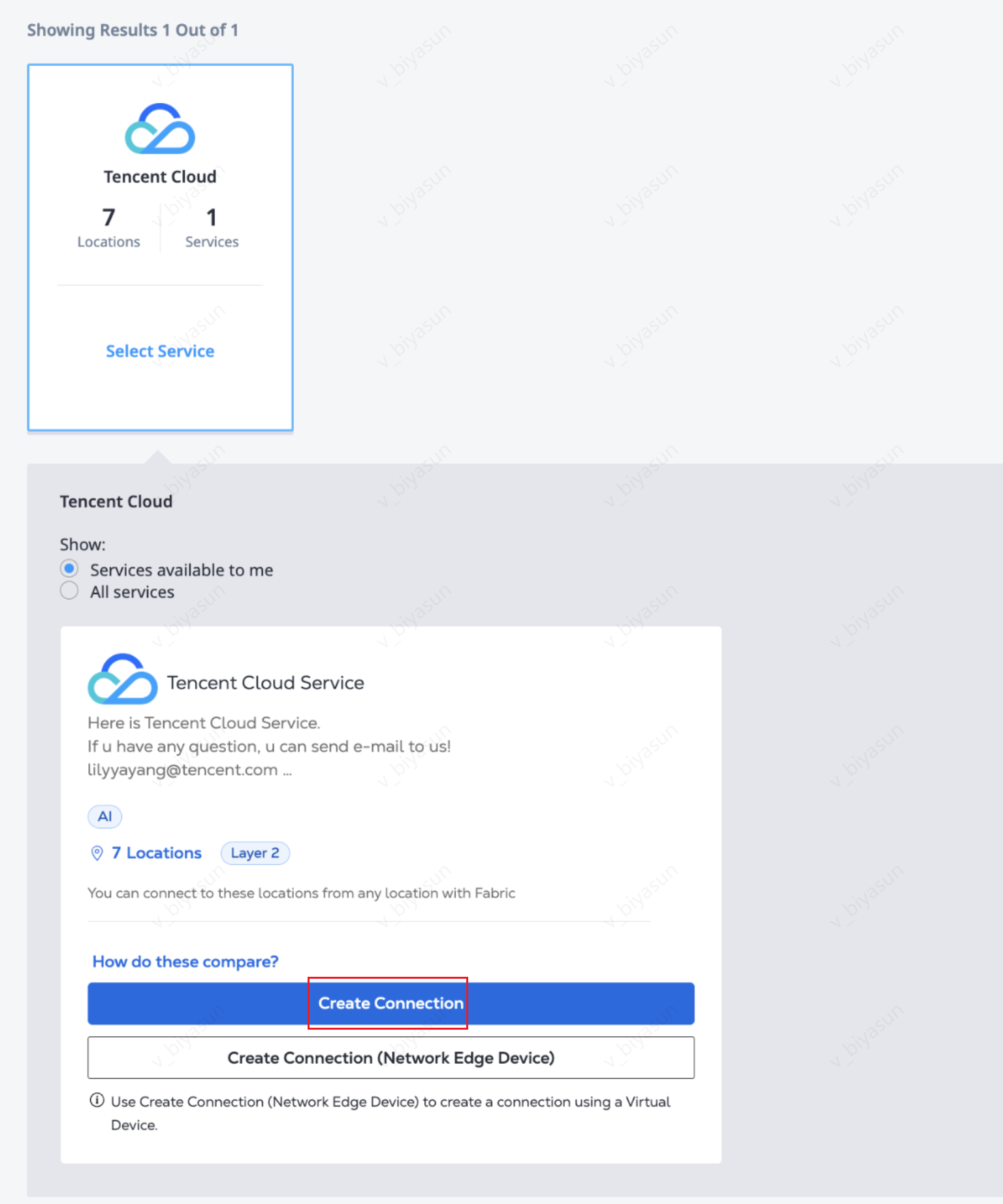
3. In the search box of the Select a Service Provider area, enter Tencent. In the pop-up window, select the service type Services available to me and click Create Connection.
Step 2: Configuring Connection Information.
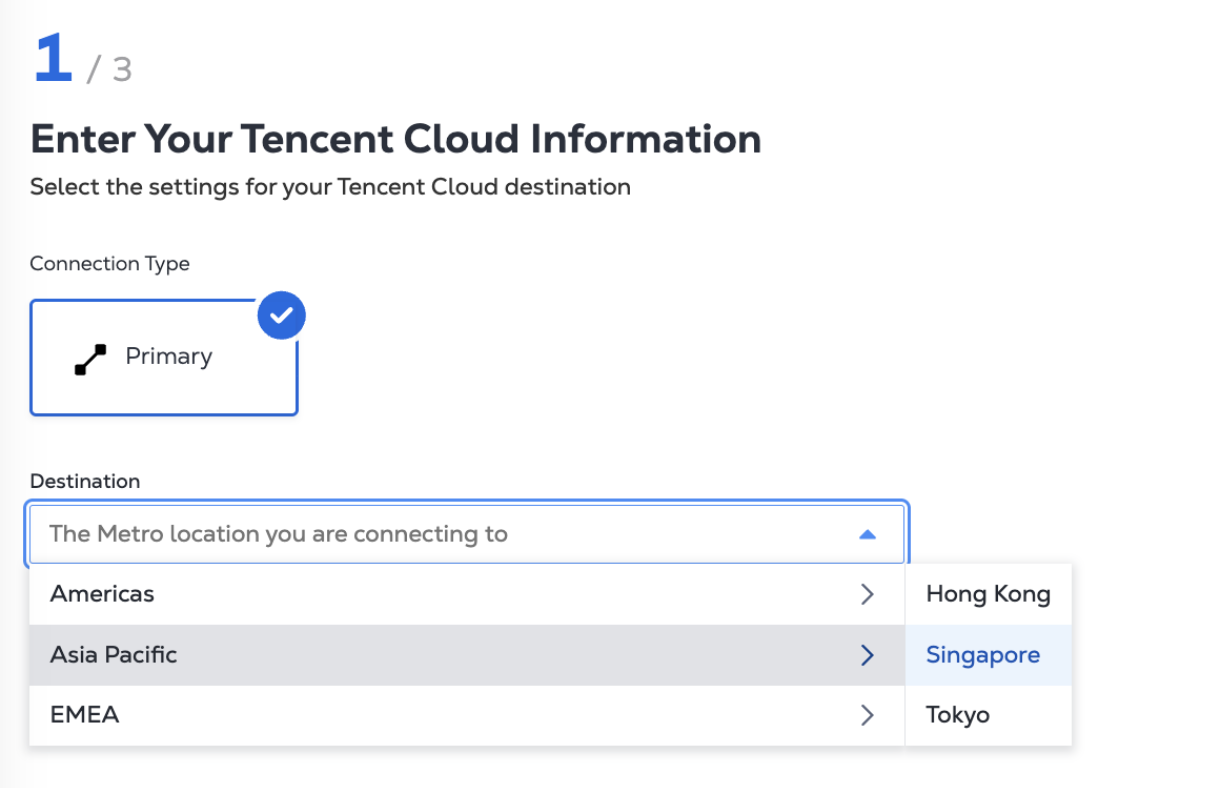
1. Select Primary for Connection Type and choose an appropriate Destination as needed.
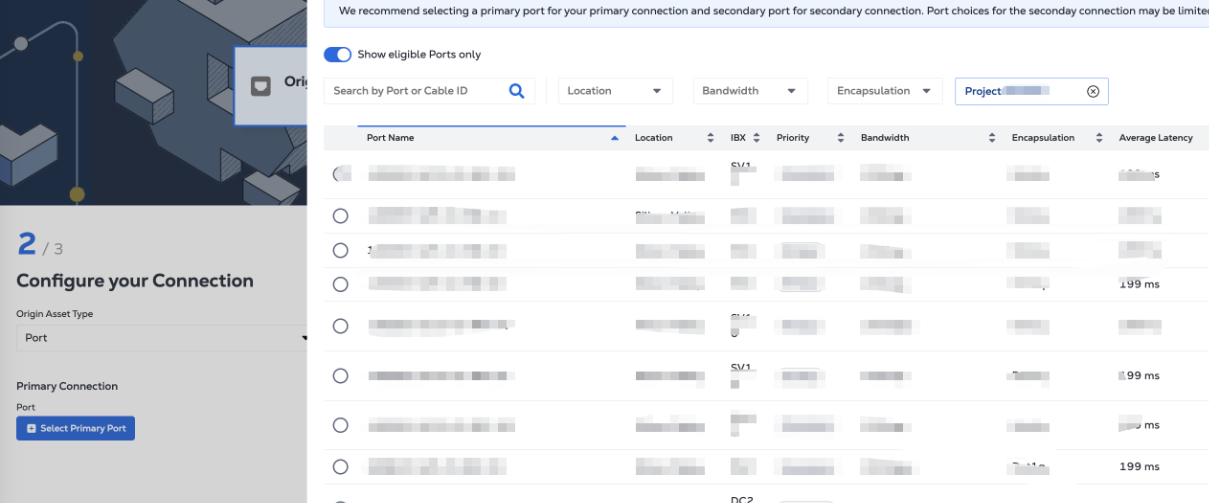
2. Select your access region and port.
Note:
The ports and regions supported by the CX platform are subject to what is displayed on the CX platform.
3. Fill in the connection parameters: Connection Name, VLAN ID, bandwidth, and so on. After confirming, go to the next step.
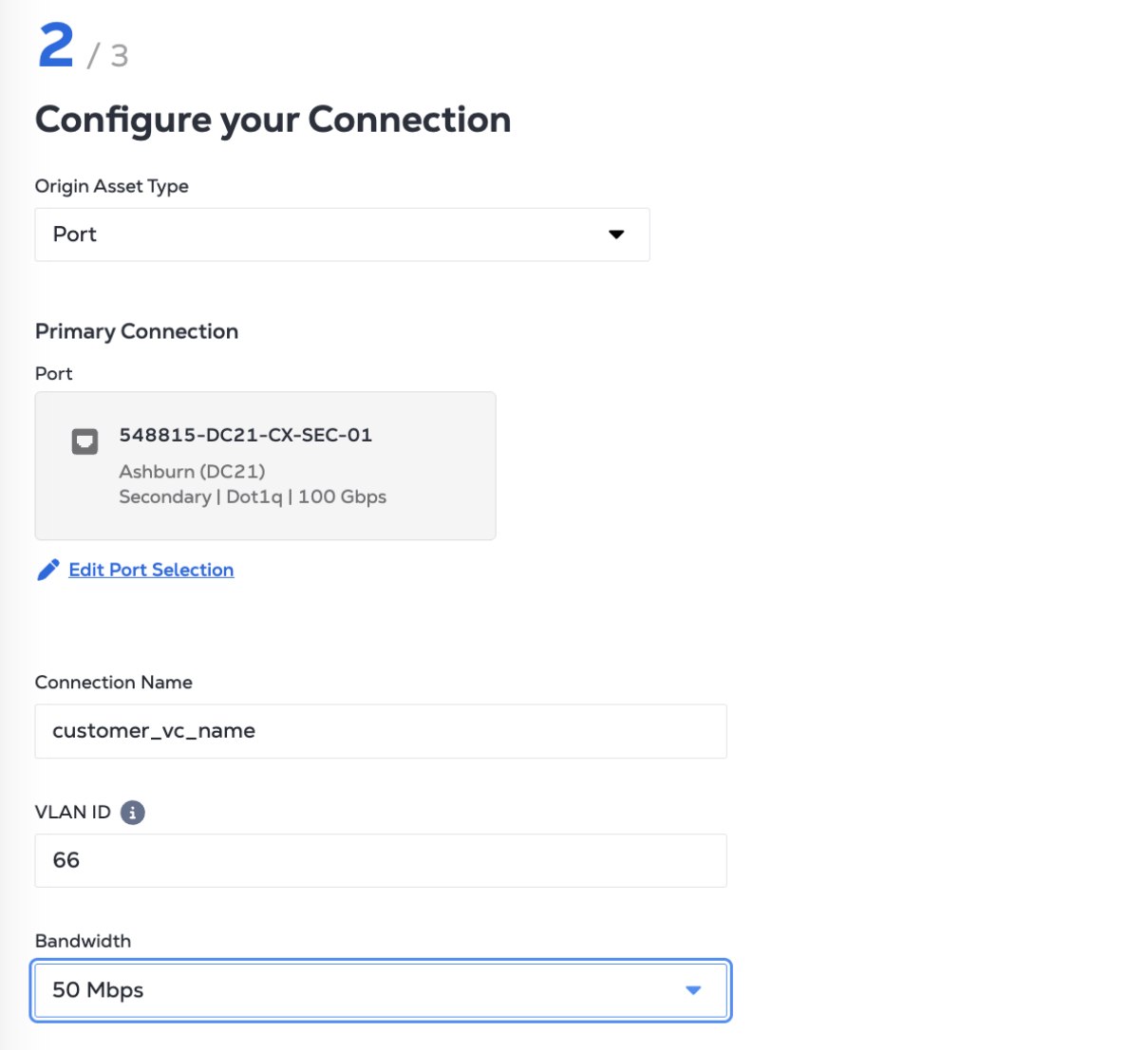
4. Verify the configured Connection parameter information, and then save and submit it.
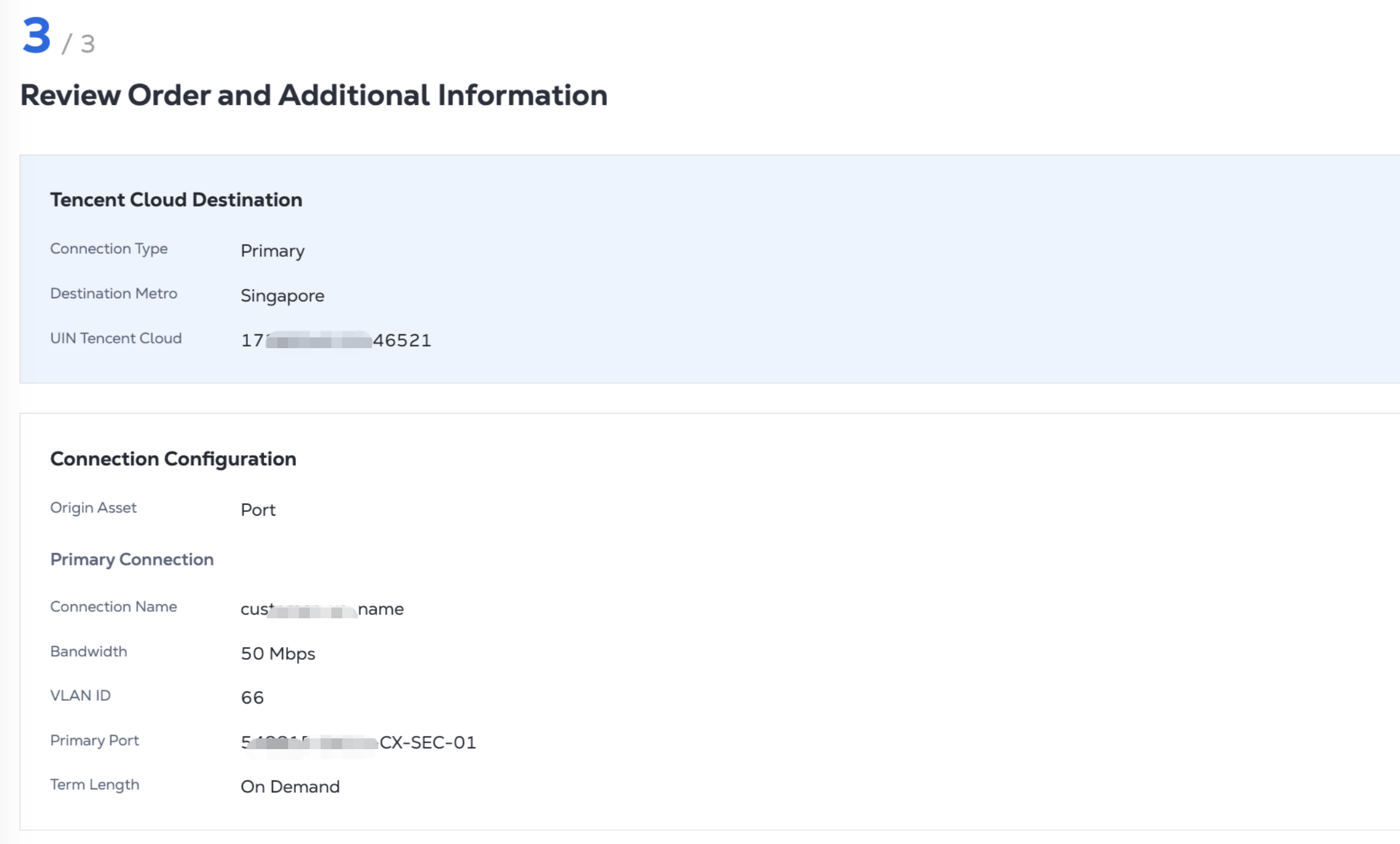
Note:
After you complete the above configurations on the CX platform, you need to contact your business manager or submit a ticket to contact Tencent Cloud for the subsequent line review and configuration work.
2. Building Tencent Cloud Resources
1. Log in to the Direct Connect Access Console. In the left navigation pane, click Cloud Exchange to go to the Cloud Exchange list page. Purchase Cloud Exchange resources. For billing details, see Billing Overview.
2. When the cloud exchange instance status is Operational, it indicates connectivity with Equinix, and you can create Tencent Cloud resources. In the row of the specific instance, click Build Cloud Resources with One Click. On the build page, configure the corresponding parameters based on your actual situation. For details on configuring parameters, see Dedicated Tunnel.
フィードバック