tencent cloud

Tencent Cloud WeData

Release Notes
Dynamic Release Record (2026)
Product Introduction
Product Overview
Product Advantages
Product Architecture
Product Features
Application Scenarios
Purchase Guide
Billing Overview
Product Version Purchase Instructions
Execute Resource Purchase Description
Billing Modes
Overdue Policy
Refund
Preparations
Overview of Account and Permission Management
Add allowlist /security groups (Optional)
Sign in to WeData with Microsoft Entra ID (Azure AD) Single Sign-On (SSO)
Operation Guide
Console Operation
Project Management
Data Integration
Studio
Data Development
Data Analysis
Data Science
Data Governance (with Unity Semantics)
API Documentation
History
Introduction
API Category
Making API Requests
Smart Ops Related Interfaces
Project Management APIs
Resource Group APIs
Data Development APIs
Data Asset - Data Dictionary APIs
Data Development APIs
Ops Center APIs
Data Operations Related Interfaces
Data Exploration APIs
Asset APIs
Metadata Related Interfaces
Task Operations APIs
Data Security APIs
Instance Operation and Maintenance Related Interfaces
Data Map and Data Dictionary APIs
Data Quality Related Interfaces
DataInLong APIs
Platform Management APIs
Data Source Management APIs
Data Quality APIs
Platform Management APIs
Asset Data APIs
Data Source Management APIs
Data Types
Error Codes
WeData API 2025-08-06
Service Level Agreements
Related Agreement
Privacy Policy
Data Processing And Security Agreement
Contact Us
Glossary

PySpark

PDF
Mode fokus
Ukuran font
Terakhir diperbarui: 2026-01-07 17:48:31
Note:
It is necessary to start Hive and Spark component services in the EMR cluster.
1. The current user has permission in the EMR cluster.
2. Corresponding databases and tables have been created in Hive, such as wedata_demo_db in the example.
3. PySpark automatically submits tasks in cluster mode.

Code Example

from pyspark.sql import SparkSession
from pyspark.sql.types import StructType, StructField, IntegerType, StringType

spark = SparkSession.builder.appName("WeDataApp").getOrCreate()

schema = StructType([
StructField("user_id", IntegerType(), True),
StructField("user_name", StringType(), True),
StructField("age", IntegerType(), True)
])

data = [(1, "Alice", 25), (2, "Bob", 30)]
df = spark.createDataFrame(data, schema=schema)

df.show()
from pyspark.sql import SparkSession

spark = SparkSession.builder.appName("WeDataApp").enableHiveSupport().getOrCreate()

df = spark.sql("SELECT * FROM WeData_demo_db.user_demo")

count = df.count()

print("The number of rows in the dataframe is:", count)

Parameter Description

Parameter
Description
Python version
Supports Python 2 and Python 3.

Use the Python Environment Of the Scheduling Resource Group In a PySpark Task

Install Python Libraries In the Scheduling Resource Group

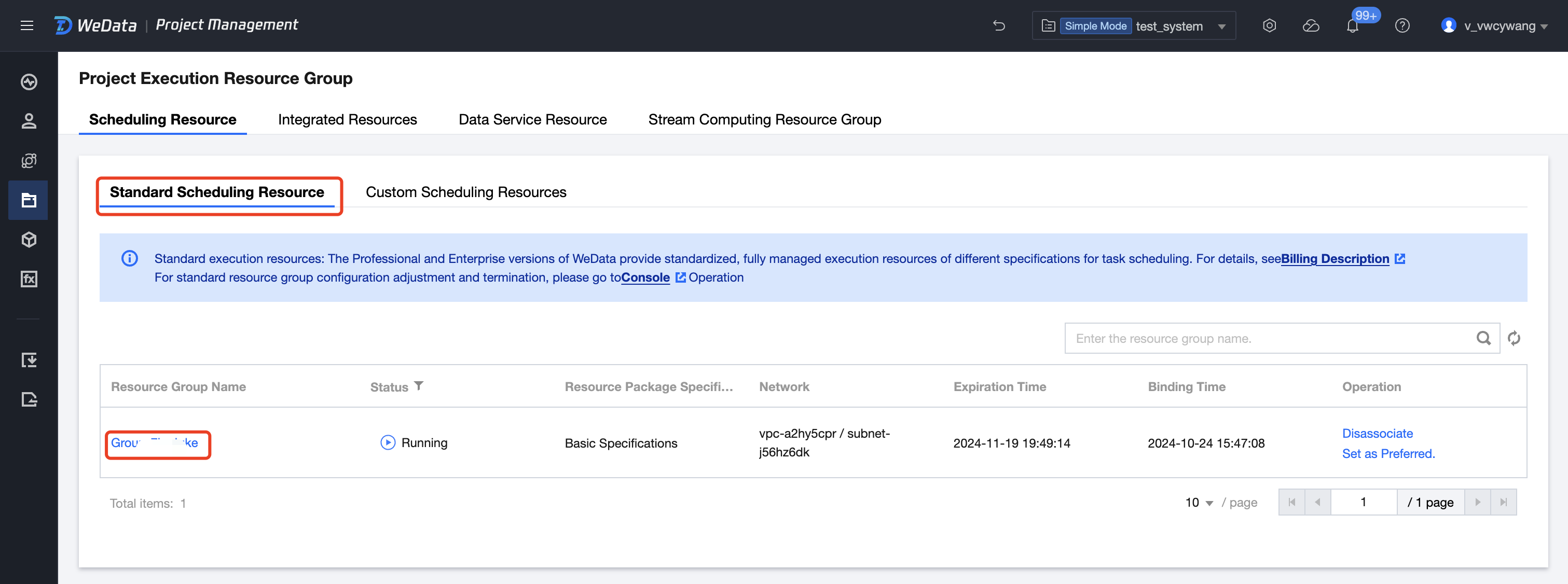
1. Go to Project Management > Execution Resource Group > Standard Scheduling Resource Group interface, click Resource Detail to enter the resource operation and maintenance interface.

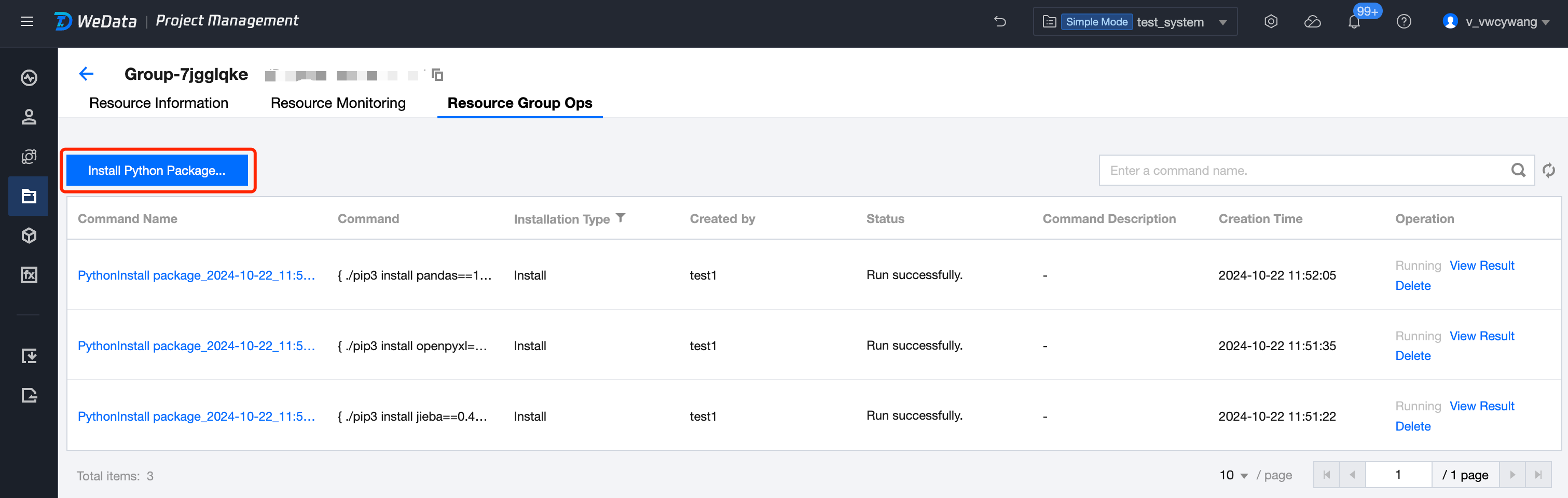
2. In the resource operation and maintenance interface, click Python Package Installation to install built-in Python libraries. It is recommended to install the Python 3 version.

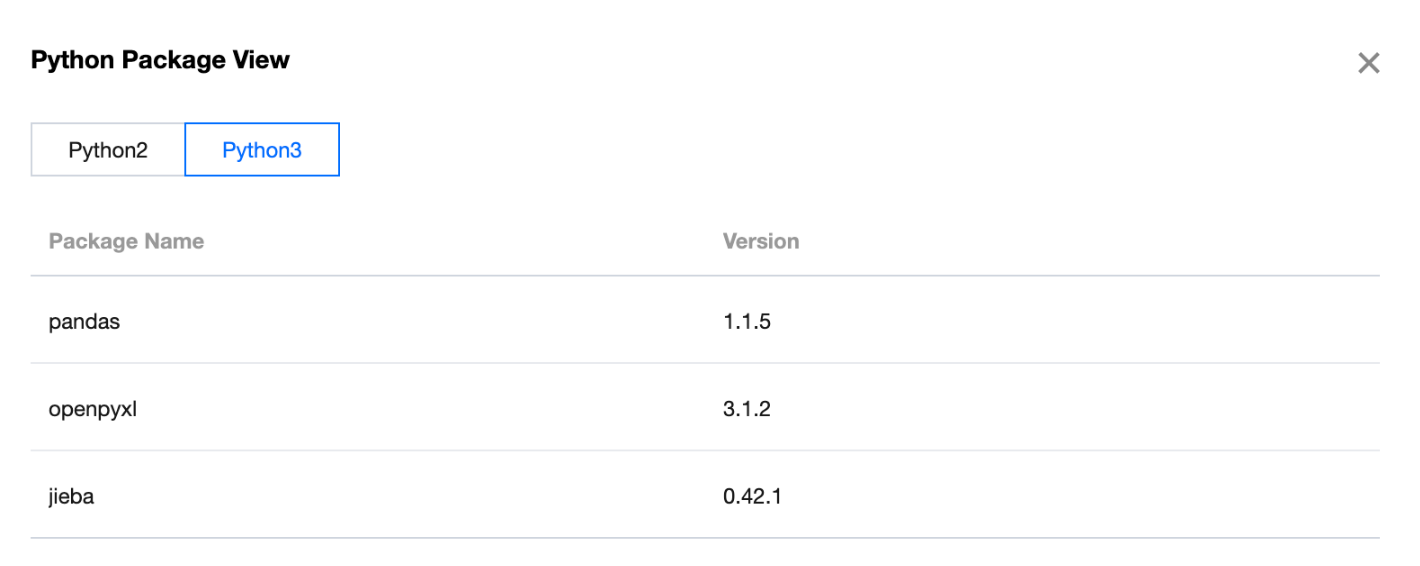
3. Currently, the platform only supports the installation of built-in libraries. Here, install the sklearn and pandas libraries. After the installation is complete, you can use the Python Package View feature to view the installed Python libraries.


Edit PySpark Task

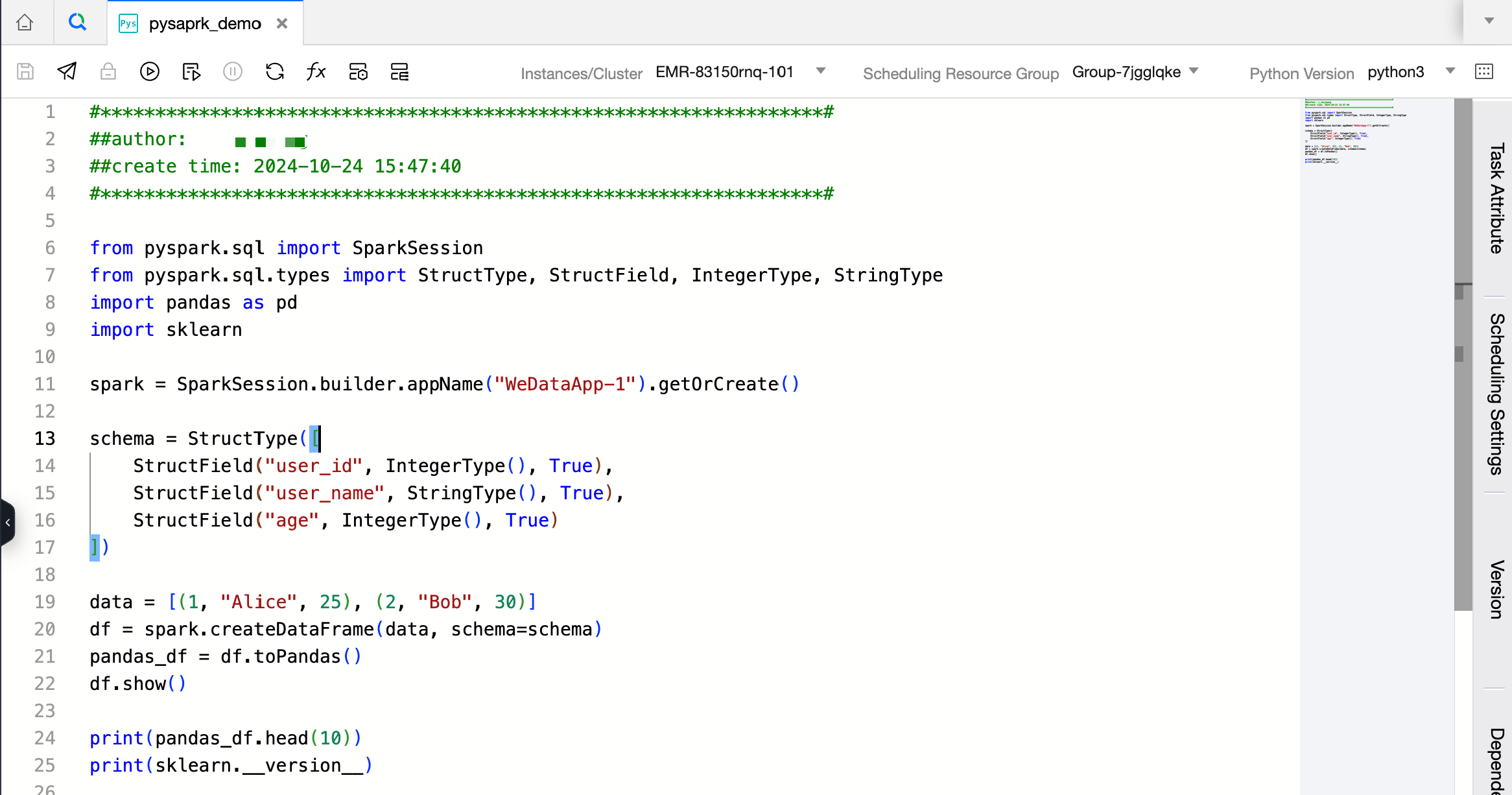
1. Create a task and select a scheduling resource group that has Python packages installed.
2. Write PySpark code using Python libraries, including pandas and sklearn here.


from pyspark.sql import SparkSession from pyspark.sql.types import StructType, StructField, IntegerType, StringType import pandas as pd import sklearn spark = SparkSession.builder.appName("WeDataApp-1").getOrCreate() schema = StructType([ StructField("user_id", IntegerType(), True), StructField("user_name", StringType(), True), StructField("age", IntegerType(), True) ]) data = [(1, "Alice", 25), (2, "Bob", 30)] df = spark.createDataFrame(data, schema=schema) pandas_df = df.toPandas() df.show() print(pandas_df.head(10)) print(sklearn.__version__)

Debug PySpark Task

1. Click debugging and running to view the logs and results of debugging and running.
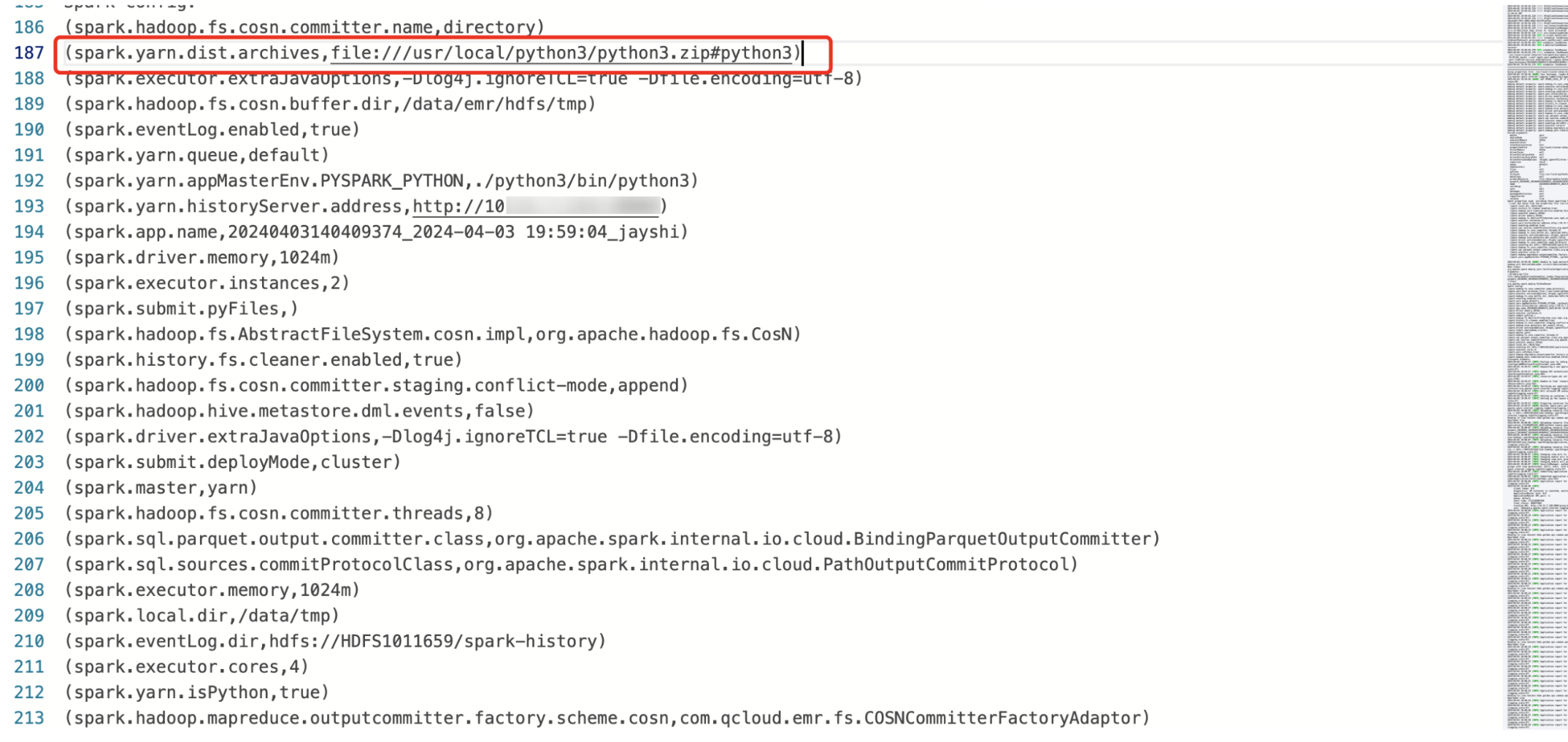
Example: In the logs, you can see that the Python environment using the scheduling resource group is used as the environment for task execution.
spark.yarn.dist.archives,file:///usr/local/python3/python3.zip#python3

2. By viewing the log results, you can see that the installed pandas library is used and the version of the installed scikit-learn library is correctly printed.

Periodic Scheduling Of PySpark Tasks

Perform periodic scheduling runs and view the logs and results of the debugging runs. In the logs, you can see that the Python environment using the scheduling resource group is used as the environment for task execution.



Bantuan dan Dukungan

Apakah halaman ini membantu?

masukan