tencent cloud

Tencent Cloud Observability Platform

Release Notes and Announcements
Release Notes
Product Introduction
Overview
Strengths
Basic Features
Basic Concepts
Use Cases
Use Limits
Purchase Guide
Tencent Cloud Product Monitoring
Application Performance Management
Mobile App Performance Monitoring
Real User Monitoring
Cloud Automated Testing
Prometheus Monitoring
Grafana
EventBridge
PTS
Quick Start
Monitoring Overview
Instance Group
Tencent Cloud Product Monitoring
Application Performance Management
Real User Monitoring
Cloud Automated Testing
Performance Testing Service
Prometheus Getting Started
Grafana
Dashboard Creation
EventBridge
Alarm Service
Cloud Product Monitoring
Tencent Cloud Service Metrics
Operation Guide
CVM Agents
Cloud Product Monitoring Integration with Grafana
Troubleshooting
Practical Tutorial
Application Performance Management
Product Introduction
Access Guide
Operation Guide
Practical Tutorial
Parameter Information
FAQs
Mobile App Performance Monitoring
Overview
Operation Guide
Access Guide
Practical Tutorial
Tencent Cloud Real User Monitoring
Product Introduction
Operation Guide
Connection Guide
FAQs
Cloud Automated Testing
Product Introduction
Operation Guide
FAQs
Performance Testing Service
Overview
Operation Guide
Practice Tutorial
JavaScript API List
FAQs
Prometheus Monitoring
Product Introduction
Access Guide
Operation Guide
Practical Tutorial
Terraform
FAQs
Grafana
Product Introduction
Operation Guide
Guide on Grafana Common Features
FAQs
Dashboard
Overview
Operation Guide
Alarm Management
Console Operation Guide
Troubleshooting
FAQs
EventBridge
Product Introduction
Operation Guide
Practical Tutorial
FAQs
Report Management
FAQs
General
Alarm Service
Concepts
Monitoring Charts
CVM Agents
Dynamic Alarm Threshold
CM Connection to Grafana
Documentation Guide
Related Agreements
Application Performance Management Service Level Agreement
APM Privacy Policy
APM Data Processing And Security Agreement
RUM Service Level Agreement
Mobile Performance Monitoring Service Level Agreement
Cloud Automated Testing Service Level Agreement
Prometheus Service Level Agreement
TCMG Service Level Agreements
PTS Service Level Agreement
PTS Use Limits
Cloud Monitor Service Level Agreement
API Documentation
History
Introduction
API Category
Making API Requests
Monitoring Data Query APIs
Alarm APIs
Legacy Alert APIs
Notification Template APIs
TMP APIs
Grafana Service APIs
Event Center APIs
TencentCloud Managed Service for Prometheus APIs
Monitoring APIs
Data Types
Error Codes
Glossary

Creating a Message Recipient

PDF
포커스 모드
폰트 크기
마지막 업데이트 시간: 2024-11-11 11:40:11
This document describes how to create a message recipient and bind an alarm policy to receive alarm messages.
Note:
Message recipient is a user type under sub-user. You only need to verify the mobile phone number, email to receive alarm messages, without logging in to the Tencent Cloud Console or programming access.

Operations

Step 1. Creating a Message Recipient

1. Log in to CAM Console and select Users > User List in the left navigation bar to enter the User List page.
2. On the User List page, click Create User to enter the Create User page.
3. On the user creation page, click Custom Creation to enter the selection type page.
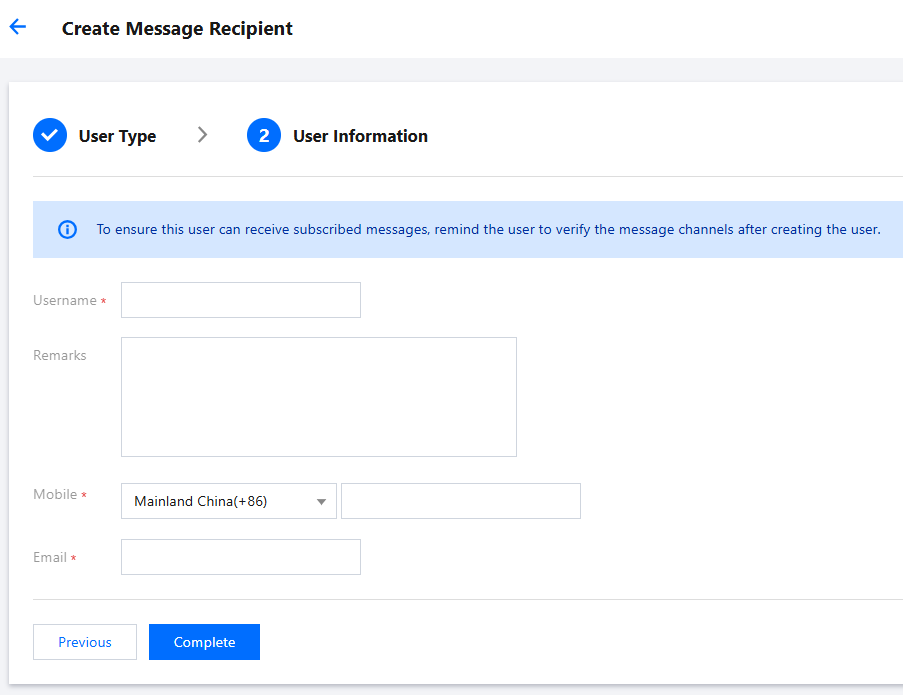
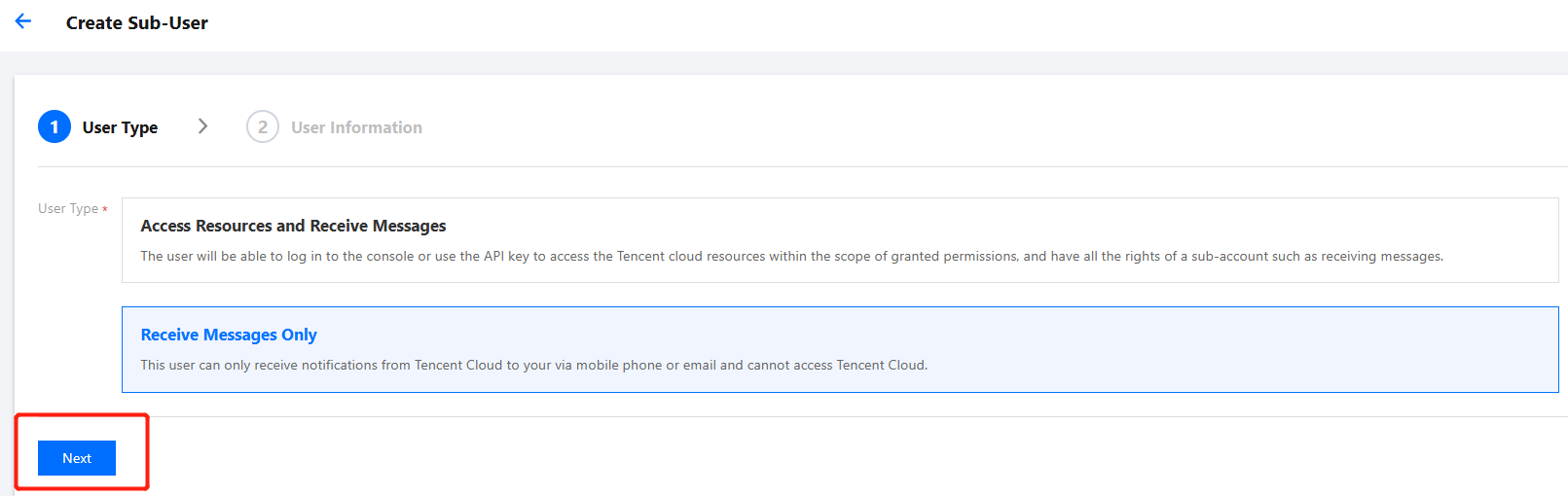
4. On the selection type page, select Receive Messages Only, and click Next to enter the fill in user information page.


5. On the fill in user information page, enter the username, remarks, mobile phone number, and email address. The remarks are optional.


6. Click Complete to finish creating the message recipient.

Step 2. Verify the Receipt Channel

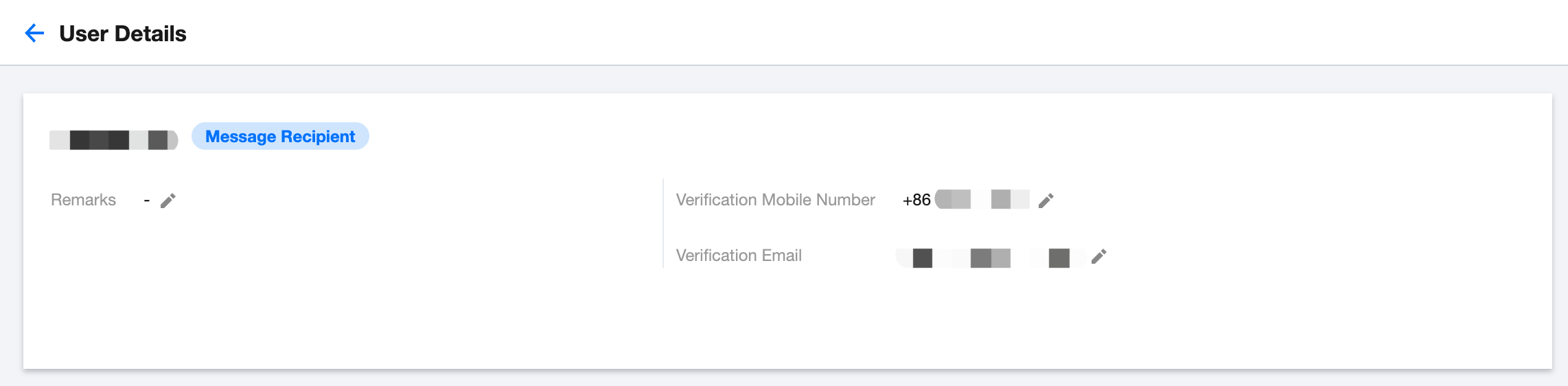
1. After successful creation, find the user in User List and click the corresponding username.
2. Enter the User Detail page.
Security Mobile: The recipient's mobile phone will receive a verification SMS message. Enter the passcode to complete mobile verification.
Security Email: The recipient's inbox will receive a verification link. Log in through link in the email to complete the verification.


Step 3. Add the Alarm Message Recipient

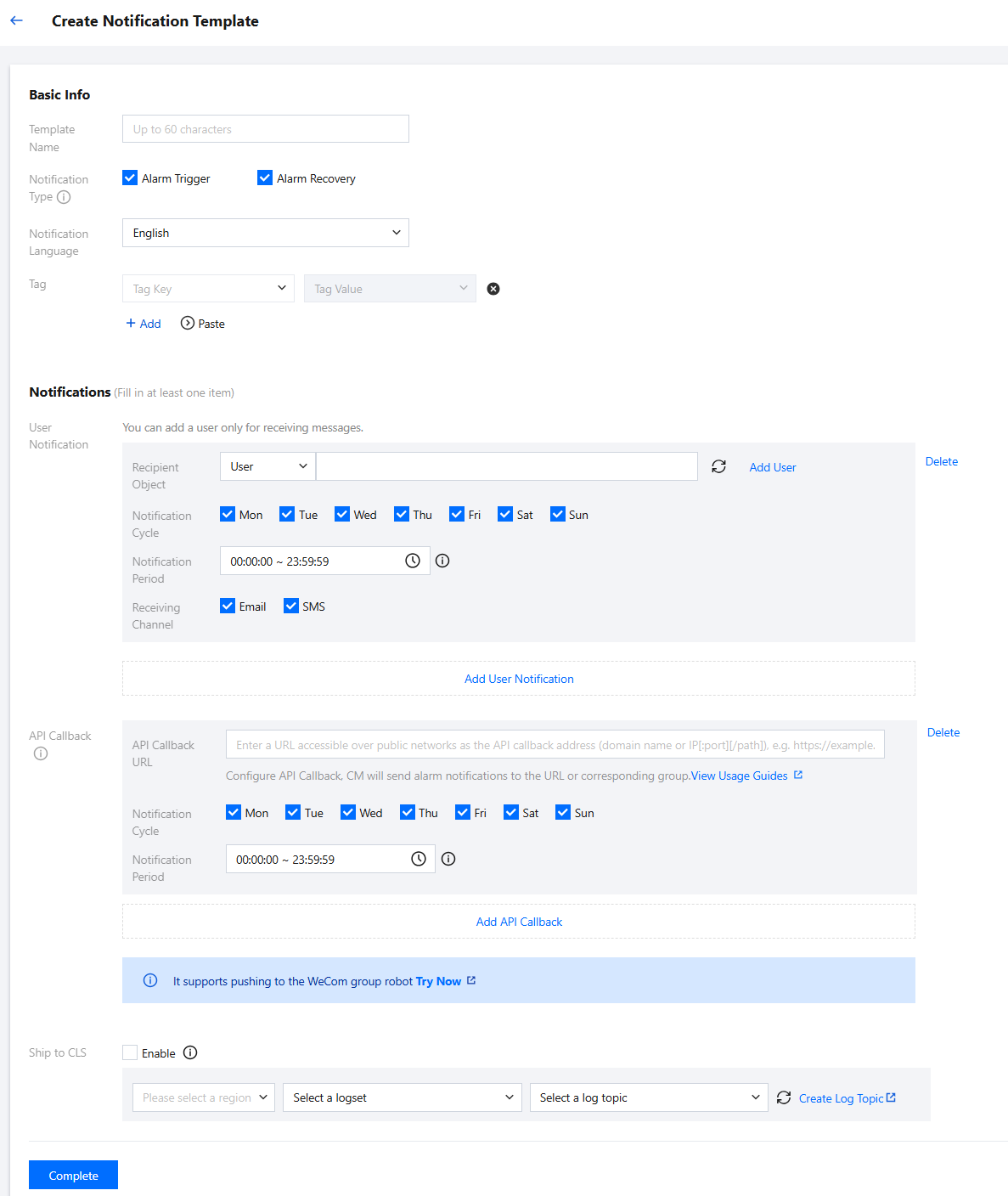
1. Log in to TCOP, select Alarm Management > Alarm Configuration > Notification Template, and click Create Notification Template. Fill in the information as required, and then click Complete.


2. On the Alarm Management page, select Alarm Policy, click on the policy name with which you want to the user to associate, and enter the Alarm Policy editing page.
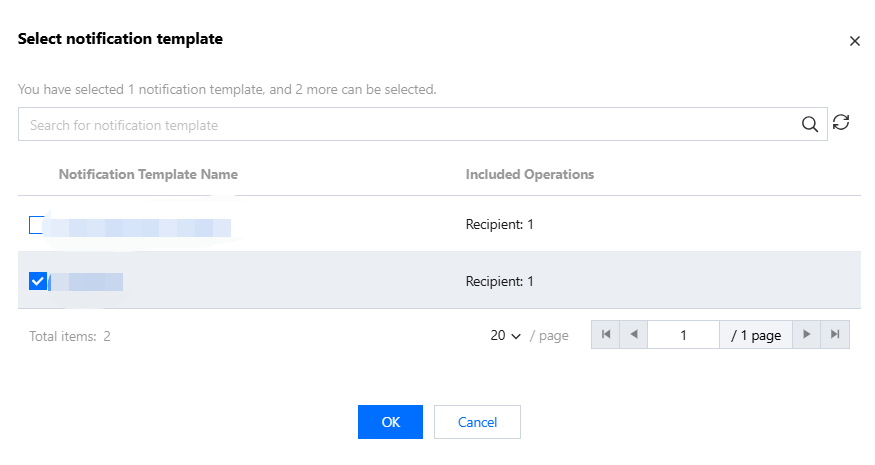
3. Find Alarm Notification configuration, and click Select Template.


4. In the pop-up window, select the template you just created, and then click OK to proceed.


도움말 및 지원

문제 해결에 도움이 되었나요?

피드백