tencent cloud

Elastic MapReduce

Release Notes and Announcements
Release Notes
Announcements
Security Announcements
Product Introduction
Overview
Strengths
Architecture
Features
Use Cases
Constraints and Limits
Technical Support Scope
Product release
Purchase Guide
EMR on CVM Billing Instructions
EMR on TKE Billing Instructions
EMR Serverless HBase Billing Instructions
Getting Started
EMR on CVM Quick Start
EMR on TKE Quick Start
EMR on CVM Operation Guide
Planning Cluster
Administrative rights
Configuring Cluster
Managing Cluster
Managing Service
Monitoring and Alarms
TCInsight
EMR on TKE Operation Guide
Introduction to EMR on TKE
Configuring Cluster
Cluster Management
Service Management
Monitoring and Ops
Application Analysis
EMR Serverless HBase Operation Guide
EMR Serverless HBase Product Introduction
Quotas and Limits
Planning an Instance
Managing an Instance
Monitoring and Alarms
Development Guide
EMR Development Guide
Hadoop Development Guide
Spark Development Guide
Hbase Development Guide
Phoenix on Hbase Development Guide
Hive Development Guide
Presto Development Guide
Sqoop Development Guide
Hue Development Guide
Oozie Development Guide
Flume Development Guide
Kerberos Development Guide
Knox Development Guide
Alluxio Development Guide
Kylin Development Guide
Livy Development Guide
Kyuubi Development Guide
Zeppelin Development Guide
Hudi Development Guide
Superset Development Guide
Impala Development Guide
Druid Development Guide
TensorFlow Development Guide
Kudu Development Guide
Ranger Development Guide
Kafka Development Guide
Iceberg Development Guide
StarRocks Development Guide
Flink Development Guide
JupyterLab Development Guide
MLflow Development Guide
Practical Tutorial
Practice of EMR on CVM Ops
Data Migration
Practical Tutorial on Custom Scaling
API Documentation
History
Introduction
API Category
Cluster Resource Management APIs
Cluster Services APIs
User Management APIs
Data Inquiry APIs
Scaling APIs
Configuration APIs
Other APIs
Serverless HBase APIs
YARN Resource Scheduling APIs
Making API Requests
Data Types
Error Codes
FAQs
EMR on CVM
Service Level Agreement
Contact Us

Node Status

PDF
Modo Foco
Tamanho da Fonte
Última atualização: 2023-12-27 14:38:20

Overview

The Node status page displays the monitoring overview and list of all nodes in the current cluster. It enables you to view heat maps of all nodes. You can manage the status information and metrics of nodes in the EMR console.

Directions

1. Log in to the EMR console and click the ID/Name of the target cluster in the cluster list to enter the cluster details page.
2. Select Cluster resources > Node status to view the monitoring information of all nodes in the cluster.
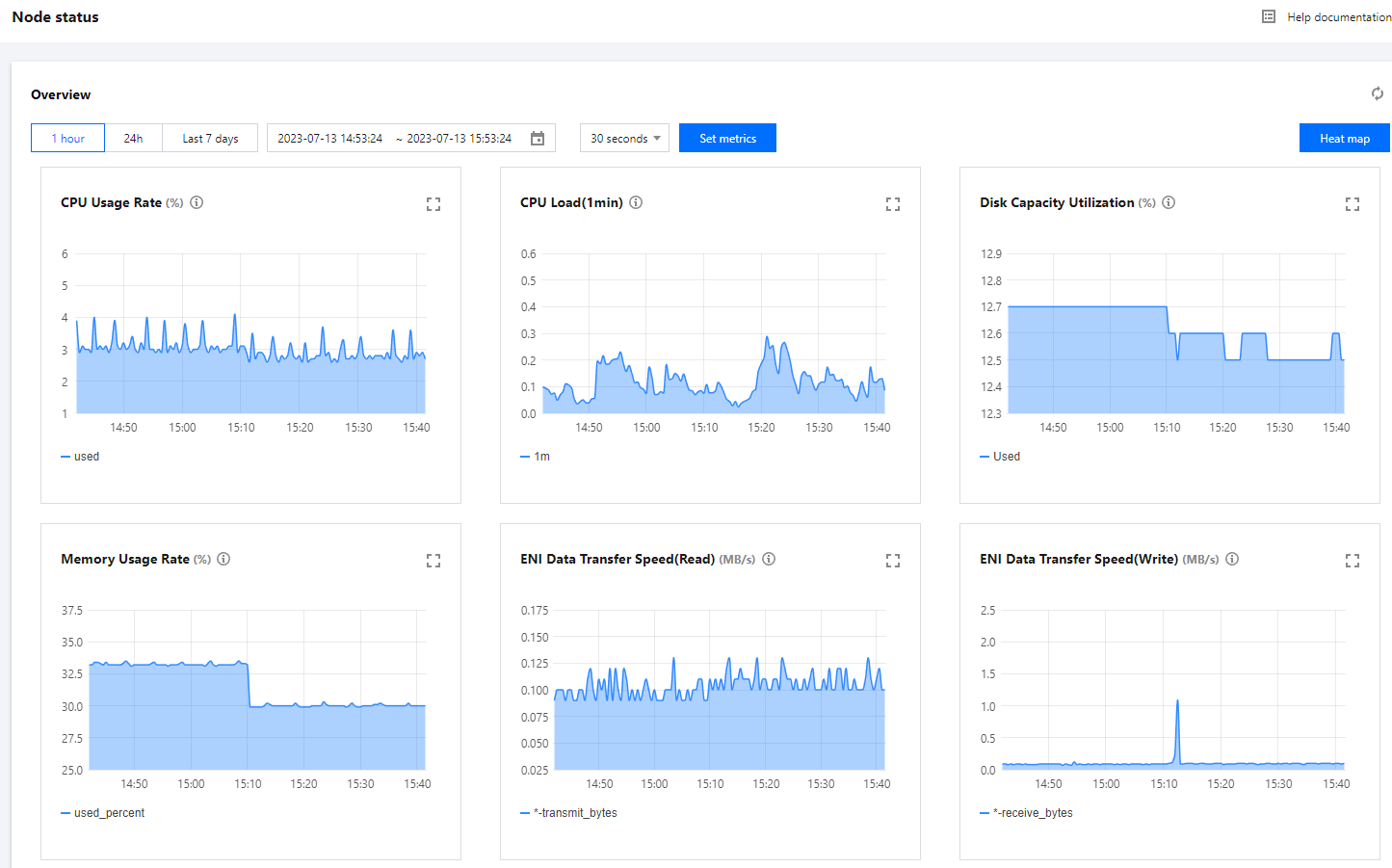
3. On the Node status page, view aggregated monitoring metrics and list of all nodes in the cluster.


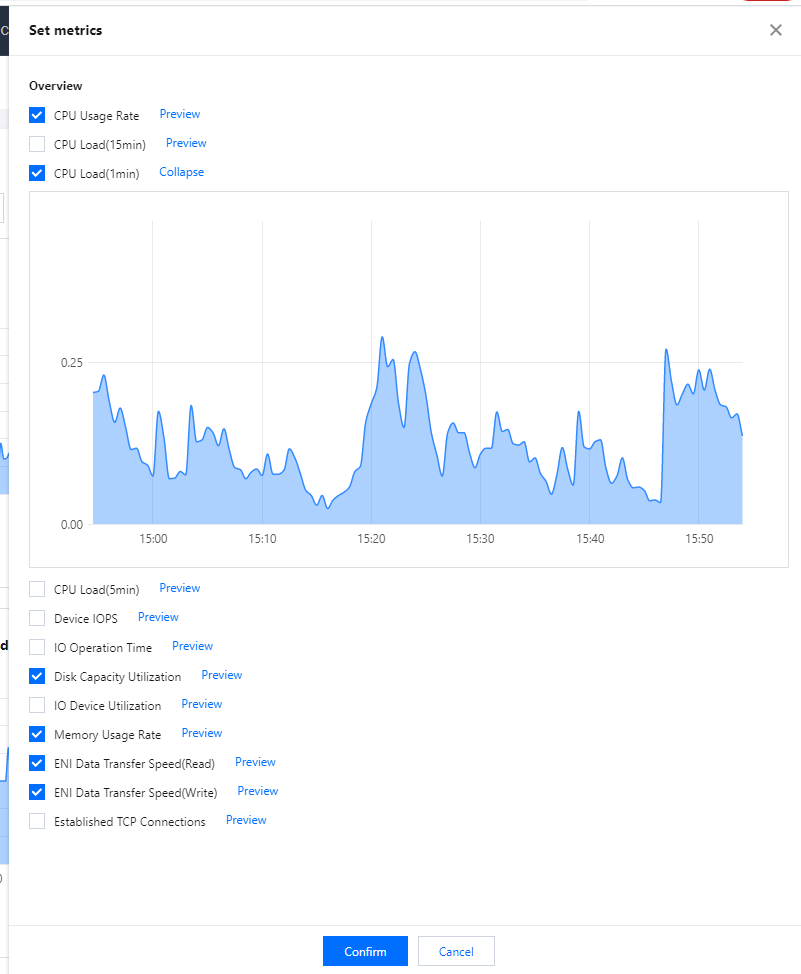
Overview: Displays aggregated monitoring metrics of all nodes during a specified period of time and the statistical rule of each metric. You can click Set metrics to customize the displayed metrics.

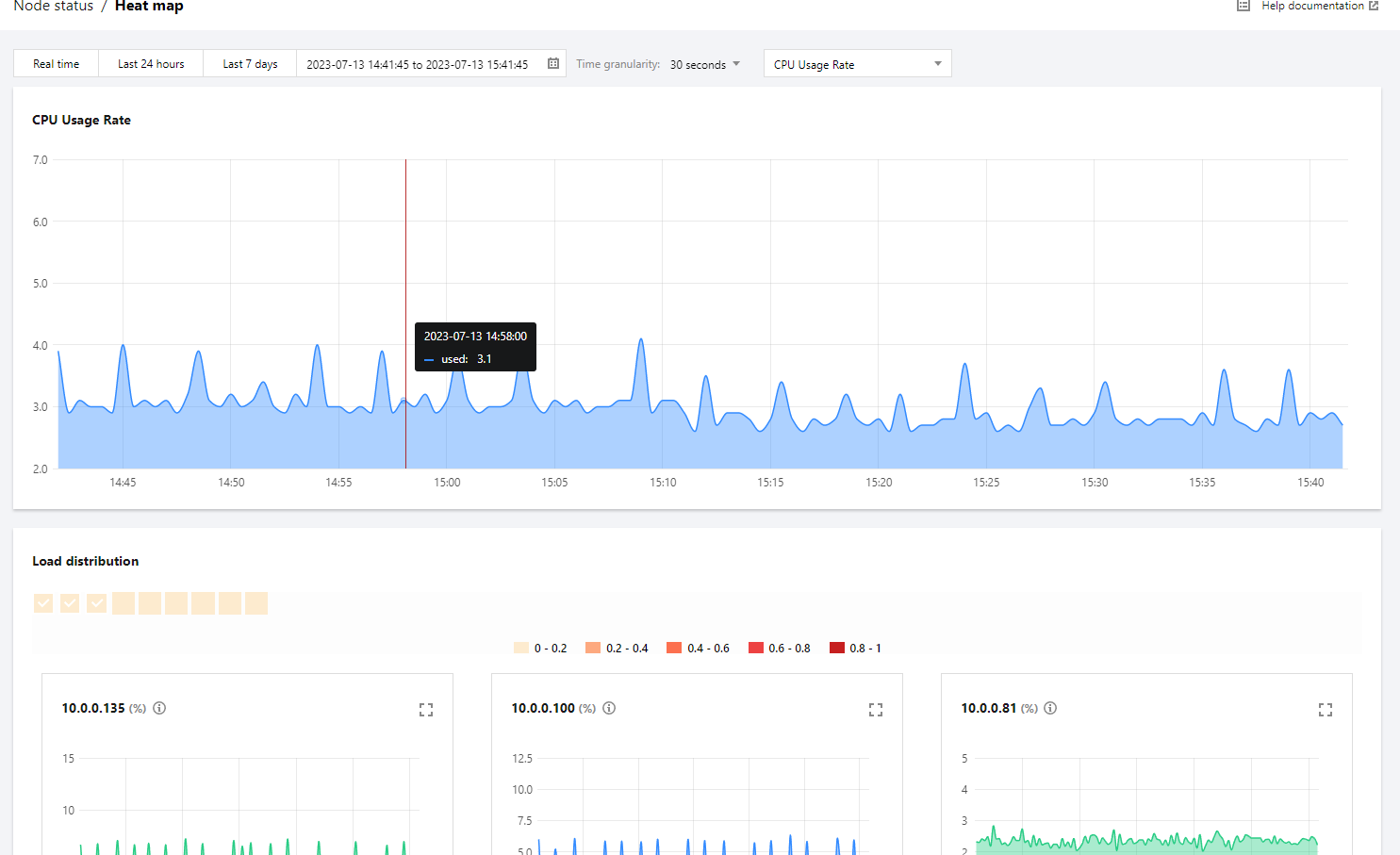
Heat map: Displays the loads of nodes. You can view the maps for a specified period of time and under specified load conditions. Load heat maps consist of two parts: the aggregated map of all nodes in the current cluster and individual heat map of each node.

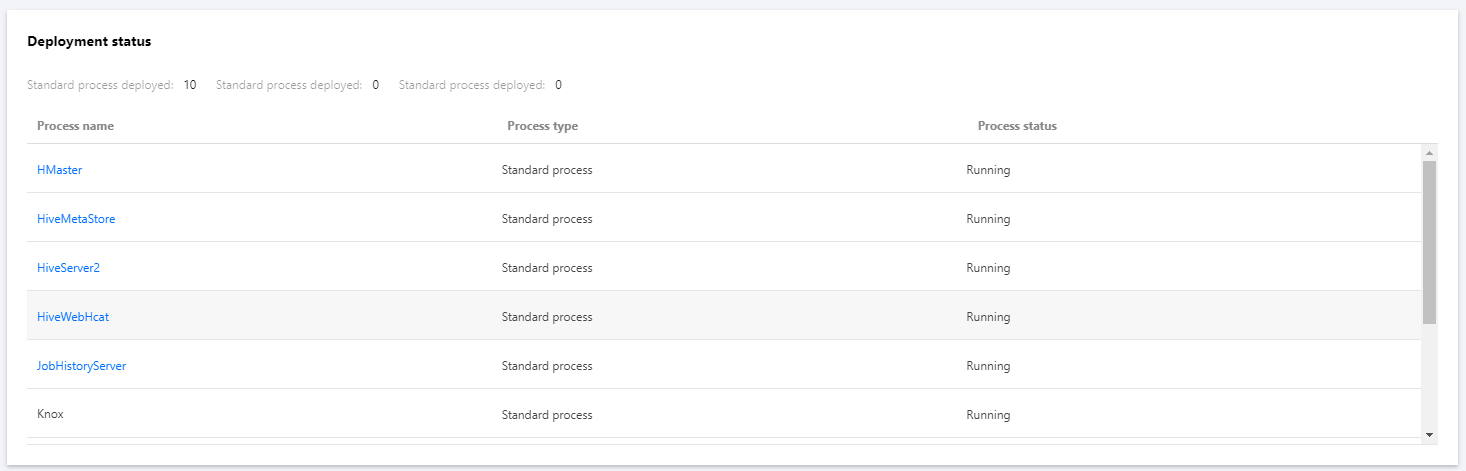
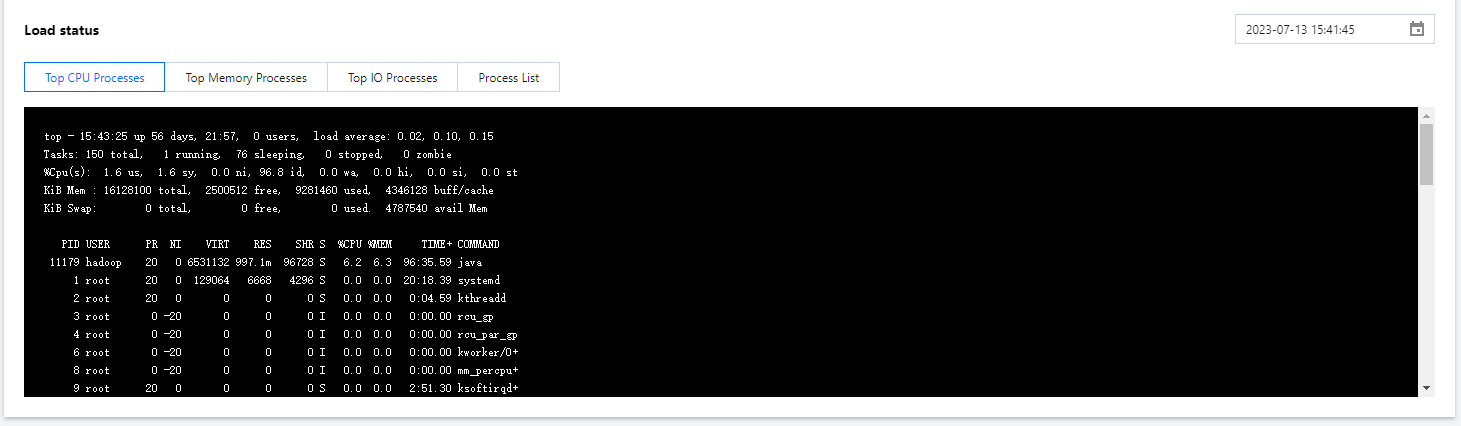
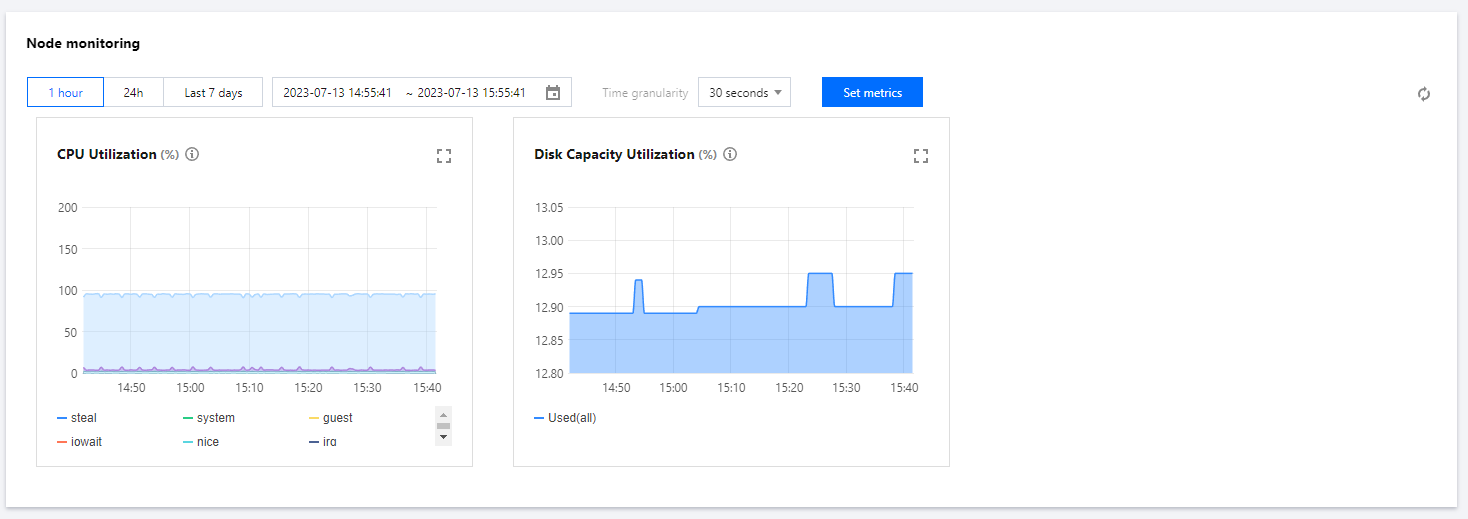
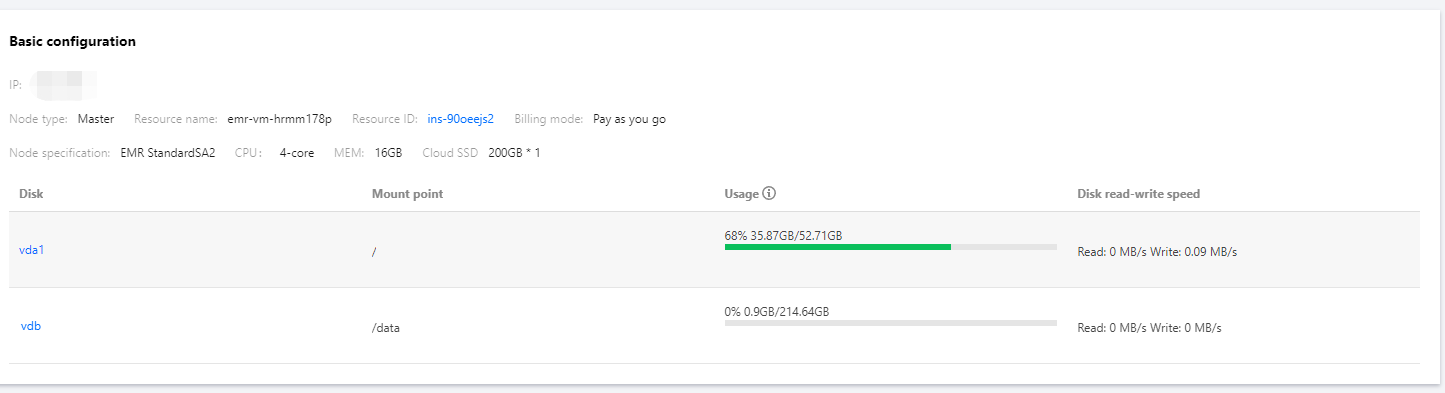
Node list: Displays all nodes in the cluster, including type, CPU utilization, memory utilization, disk utilization, and other items. You can click the IP of a node to view its basic configurations, deployment status, load status, and monitoring information. Basic configurations: Display basic information of the node, such as type, resource name, resource ID, billing mode, and spec.

Deployment status: Display services deployed in the node, process type, and process status.

Load status: Displays top N processes in the node. You can view the data on a specified date.

Node monitoring: Displays load maps of metrics (6 by default and max 12) of the node. You can click Set metrics to customize the displayed metrics.
Ajuda e Suporte

Esta página foi útil?

comentários