1. The DB2 Writer obtains protocol data generated by the Reader through the Data Synchronization Framework and writes it to DB2 using an 'insert into' statement (rows with primary key/uniqueness index conflicts will not be written). For performance considerations, PreparedStatement + Batch is used, and rewriteBatchedStatements=true is set to buffer the data into the Thread Context Buffer. A write request is initiated only when the Buffer accumulates to the predetermined threshold.
Note:
The entire task requires at least insert into permissions. Any additional permissions depend on the statements specified in preSql and postSql during task configuration.
2. DB2 AES Encryption Algorithm is currently not supported.
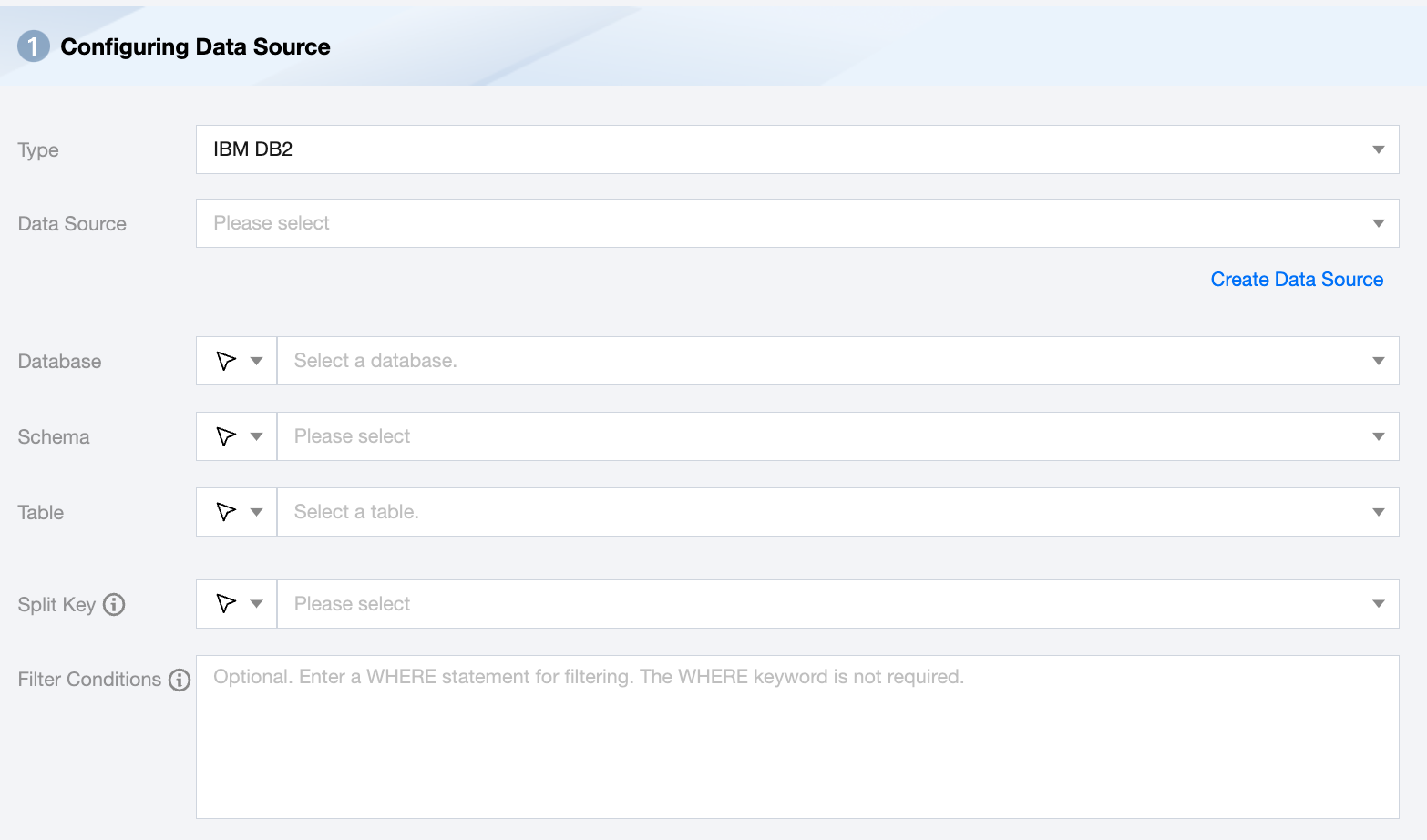
DB2 Offline Single Table Read Node Configuration
Parameters
Description
Data Source
Available DB2 data source.
Database
Supports selecting or manually entering the database name to be read
By default, the database bound to the data source is used as the default database. Other databases need to be manually entered.
If the data source network is not connected and the database information cannot be fetched directly, you can manually enter the database name. Data synchronization can still be performed when the Data Integration network is connected.
Schema
Supports selection or manual input of the Schema name to be read.
Table
Supports selecting or manually entering the table name to be read.
Split Key
Specify the field used for data sharding. Once specified, concurrent tasks will be started for data synchronization.
Filter Conditions (Optional)
DB2 constructs and executes SQL statements based on the specified 'where' conditions, and extracts data accordingly. In real-world business scenarios, it is common to synchronize the day's data by specifying the 'where' condition as gmt_create>$bizdate. This condition effectively facilitates incremental business synchronization. If this value is empty, it means synchronizing all the information in the entire table.
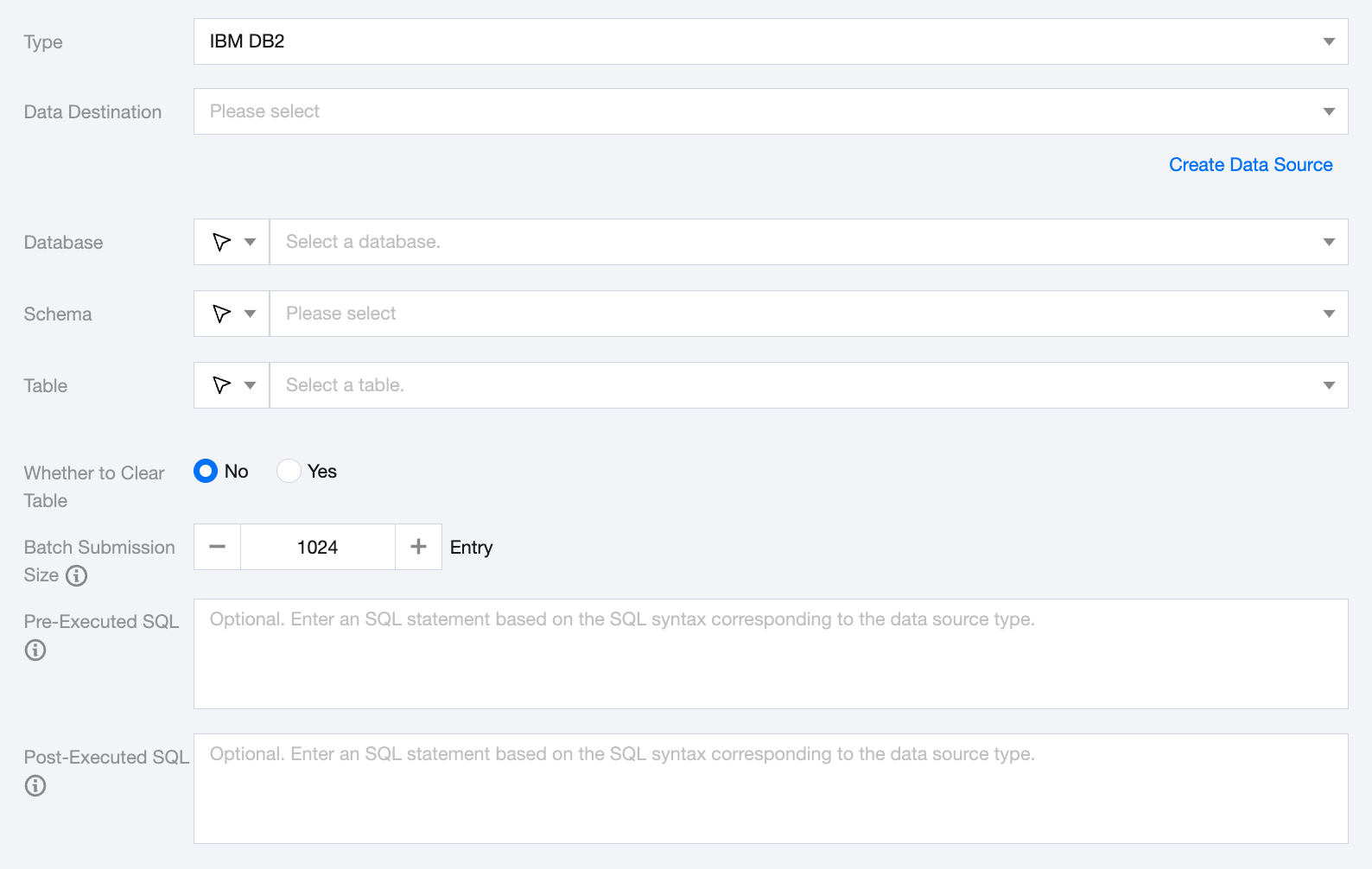
DB2 Offline Single Table Write Node Configuration
Parameters
Description
Data Destination
DB2 data source to be written to.
Database
Supports selection or manual input of the database name to write to
By default, the database bound to the data source is used as the default database. Other databases need to be manually entered.
If the data source network is not connected and the database information cannot be fetched directly, you can manually enter the database name. Data synchronization can still be performed when the Data Integration network is connected.
Schema
Supports selection or manual input of the Schema name to be read.
Table
Supports selection or manual input of the table name to write to
If the data source network is not connected and the table information cannot be fetched directly, you can manually enter the table name. Data synchronization can still be performed when the Data Integration network is connected.
Whether to Clear Table
You can manually choose whether to clear the DB2 data table before writing to it.
Batch Submission Size
The number of records for batch submission at one time. This value can significantly reduce the number of network interactions between the data synchronization system and DB2, and improve overall throughput. If the value is set too high, it will cause the data synchronization process to run into OOM exceptions.
Pre-Executed SQL(Optional)
The SQL statement executed before the synchronization task. Fill in the correct SQL syntax according to the data source type, such as clearing the old data in the table before execution (truncate table tablename).
Post-Executed SQL (Optional)
The SQL statement executed after the synchronization task. Fill in the correct SQL syntax according to the data source type, such as adding a timestamp (alter table tablename add colname timestamp DEFAULT CURRENT_TIMESTAMP ON UPDATE CURRENT_TIMESTAMP).