tencent cloud

Tencent Cloud Observability Platform

Release Notes and Announcements
Release Notes
Product Introduction
Overview
Strengths
Basic Features
Basic Concepts
Use Cases
Use Limits
Purchase Guide
Tencent Cloud Product Monitoring
Application Performance Management
Mobile App Performance Monitoring
Real User Monitoring
Cloud Automated Testing
Prometheus Monitoring
Grafana
EventBridge
PTS
Quick Start
Monitoring Overview
Instance Group
Tencent Cloud Product Monitoring
Application Performance Management
Real User Monitoring
Cloud Automated Testing
Performance Testing Service
Prometheus Getting Started
Grafana
Dashboard Creation
EventBridge
Alarm Service
Cloud Product Monitoring
Tencent Cloud Service Metrics
Operation Guide
CVM Agents
Cloud Product Monitoring Integration with Grafana
Troubleshooting
Practical Tutorial
Application Performance Management
Product Introduction
Access Guide
Operation Guide
Practical Tutorial
Parameter Information
FAQs
Mobile App Performance Monitoring
Overview
Operation Guide
Access Guide
Practical Tutorial
Tencent Cloud Real User Monitoring
Product Introduction
Operation Guide
Connection Guide
FAQs
Cloud Automated Testing
Product Introduction
Operation Guide
FAQs
Performance Testing Service
Overview
Operation Guide
Practice Tutorial
JavaScript API List
FAQs
Prometheus Monitoring
Product Introduction
Access Guide
Operation Guide
Practical Tutorial
Terraform
FAQs
Grafana
Product Introduction
Operation Guide
Guide on Grafana Common Features
FAQs
Dashboard
Overview
Operation Guide
Alarm Management
Console Operation Guide
Troubleshooting
FAQs
EventBridge
Product Introduction
Operation Guide
Practical Tutorial
FAQs
Report Management
FAQs
General
Alarm Service
Concepts
Monitoring Charts
CVM Agents
Dynamic Alarm Threshold
CM Connection to Grafana
Documentation Guide
Related Agreements
Application Performance Management Service Level Agreement
APM Privacy Policy
APM Data Processing And Security Agreement
RUM Service Level Agreement
Mobile Performance Monitoring Service Level Agreement
Cloud Automated Testing Service Level Agreement
Prometheus Service Level Agreement
TCMG Service Level Agreements
PTS Service Level Agreement
PTS Use Limits
Cloud Monitor Service Level Agreement
API Documentation
History
Introduction
API Category
Making API Requests
Monitoring Data Query APIs
Alarm APIs
Legacy Alert APIs
Notification Template APIs
TMP APIs
Grafana Service APIs
Event Center APIs
TencentCloud Managed Service for Prometheus APIs
Monitoring APIs
Data Types
Error Codes
Glossary

Custom Integration with CVM

PDF
Mode fokus
Ukuran font
Terakhir diperbarui: 2025-08-29 17:35:27
This document describes how to integrate CVM with TMP.

Purchasing a TMP Instance

Note:
The purchased TMP instance must be in the same VPC as the monitored CVM instance for network connectivity.
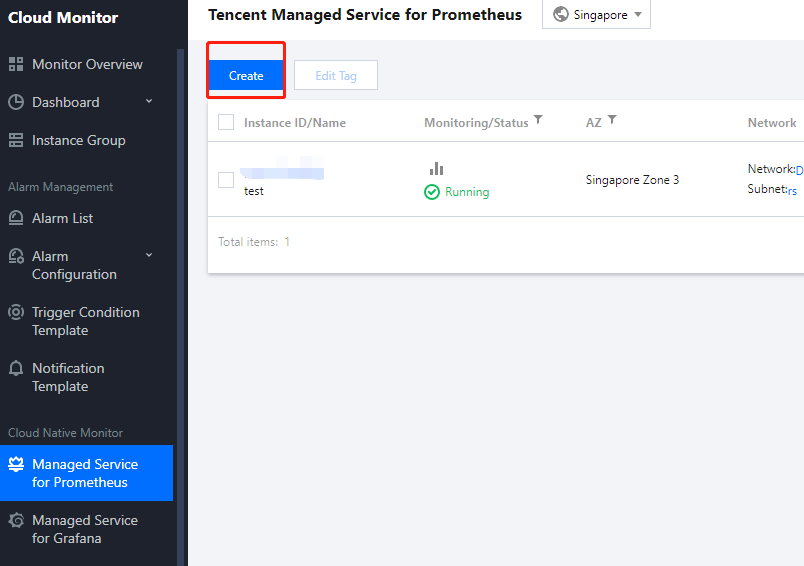
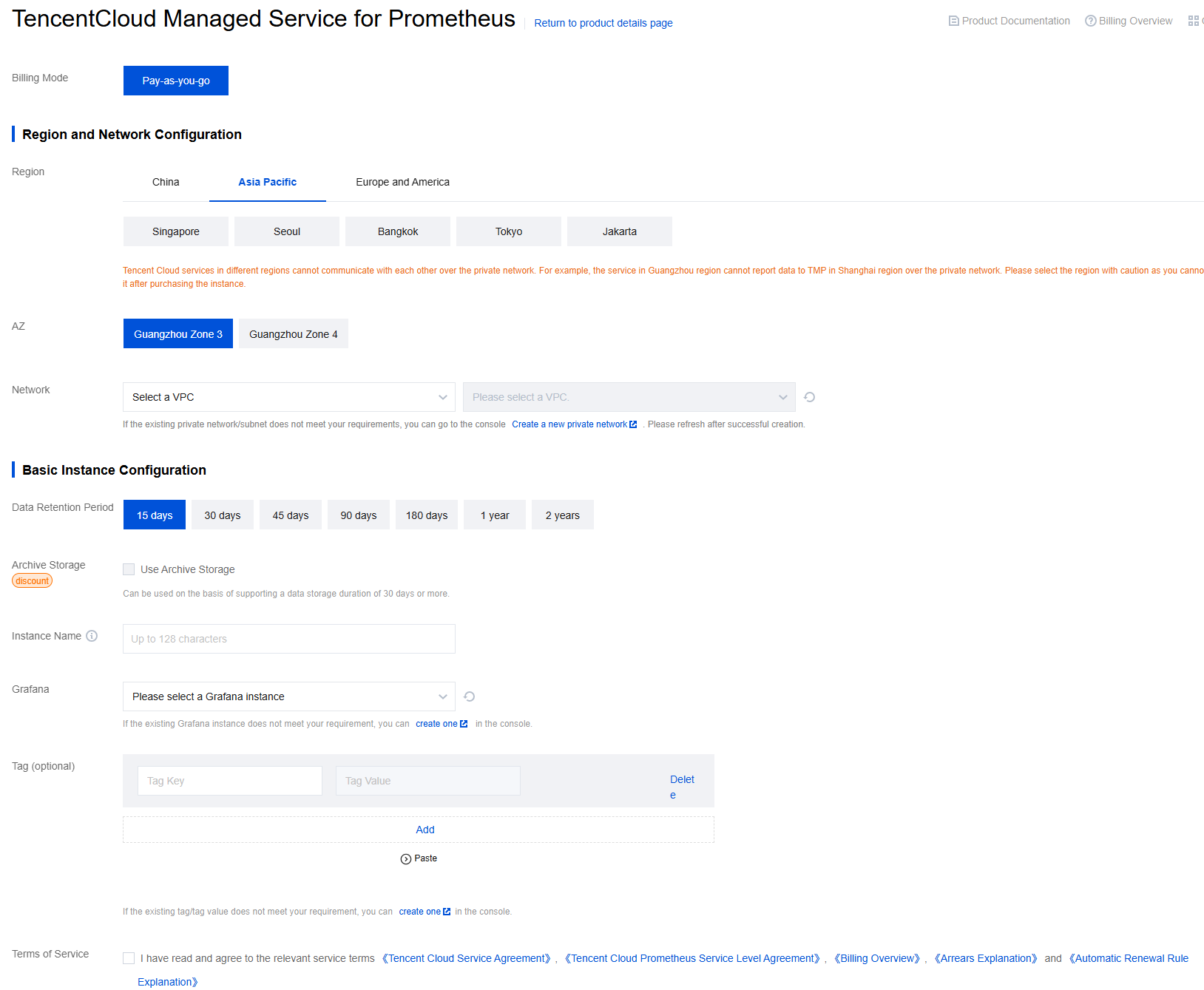
1. Log in to the TMP console and click Create to purchase a TMP instance.


2. On the purchase page, select the target instance specification and network. Make sure that the TMP and CVM instances have the same VPC IP range so that data can be collected. Select the instance specification based on your reported data volume.

3. Click Buy Now and make the payment.

Integrating CVM Basic Metrics

1. Download and install Node Exporter.
Download and install Node Exporter (used to collect basic metric data) in the target CVM instance. Click here or run the following command for download:
wget https://rig-intl-1258344699.cos.ap-singapore.myqcloud.com/prometheus-agent/node_exporter -O node_exporter
The file directory is as follows:


2. Run Node Exporter to collect basic monitoring data.
2.1 Go to the target folder and run Node Exporter.
cd node_exporter-1.3.1.linux-amd64
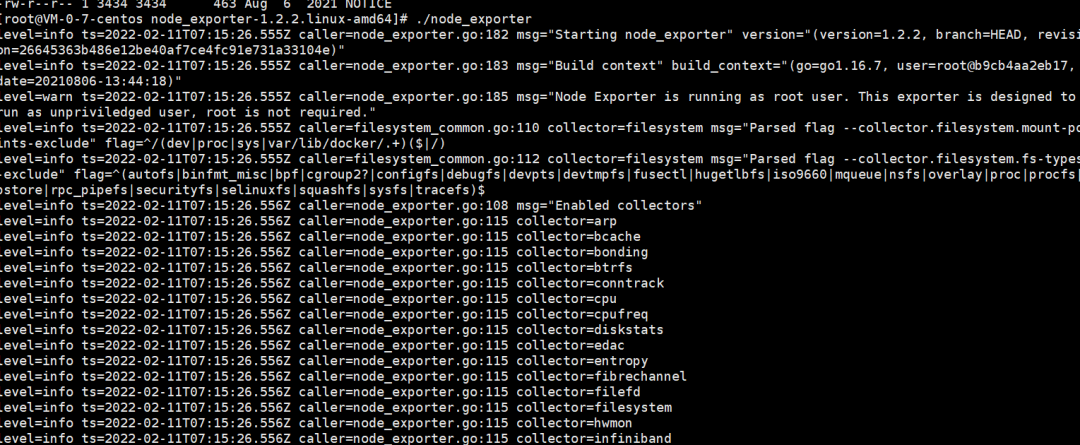
./node_exporter
If the following result is displayed, basic monitoring data has been collected successfully.


2.2 Run the following command to expose the basic monitoring data to port 9100:
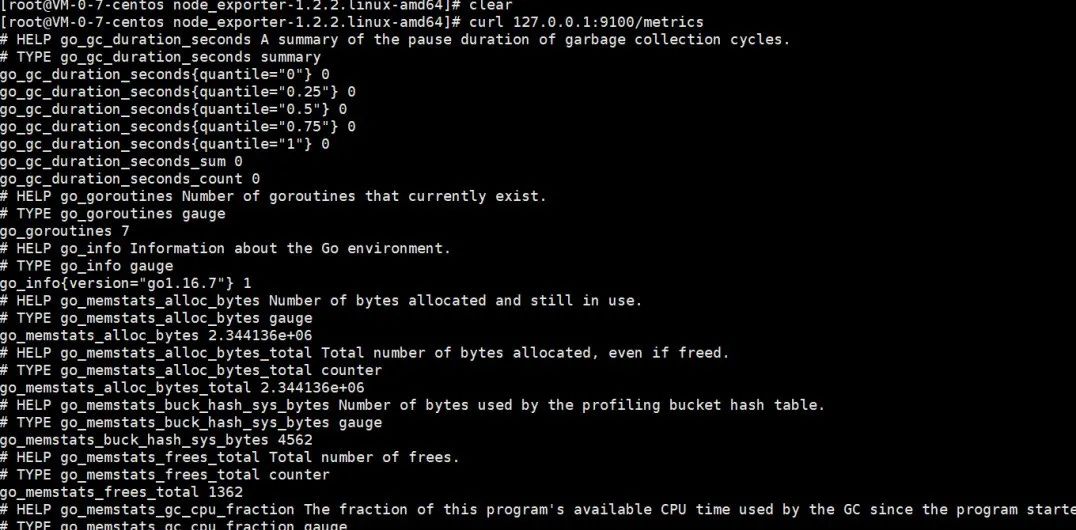
curl 127.0.0.1:9100/metrics
You can see the following metric monitoring data that is exposed after the command is executed.


3. Add a scrape task. Log in to the TMP console, select Data Collection > Integration Center > CVM Scrape Job, and configure the information in Task Configuration as prompted. Below is a sample configuration of a scrape task:
job_name: example-job-name
metrics_path: /metrics
cvm_sd_configs:
- region: ap-guangzhou
ports:
- 9100
filters:
- name: tag:Sample tag key
values:
- Sample tag value
relabel_configs:
- source_labels: [__meta_cvm_instance_state]
regex: RUNNING
action: keep
- regex: __meta_cvm_tag_(.*)
replacement: $1
action: labelmap
- source_labels: [__meta_cvm_region]
target_label: region
action: replace
4. Check whether data is reported successfully.
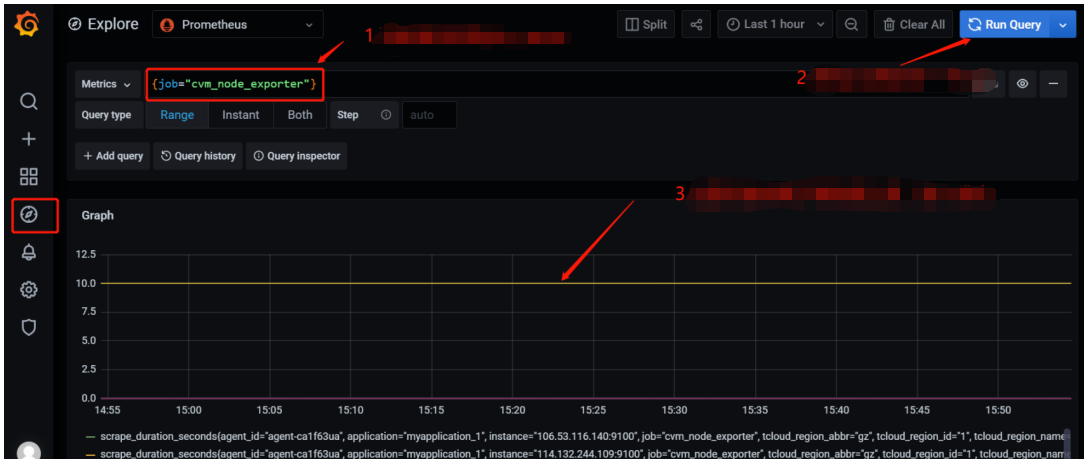
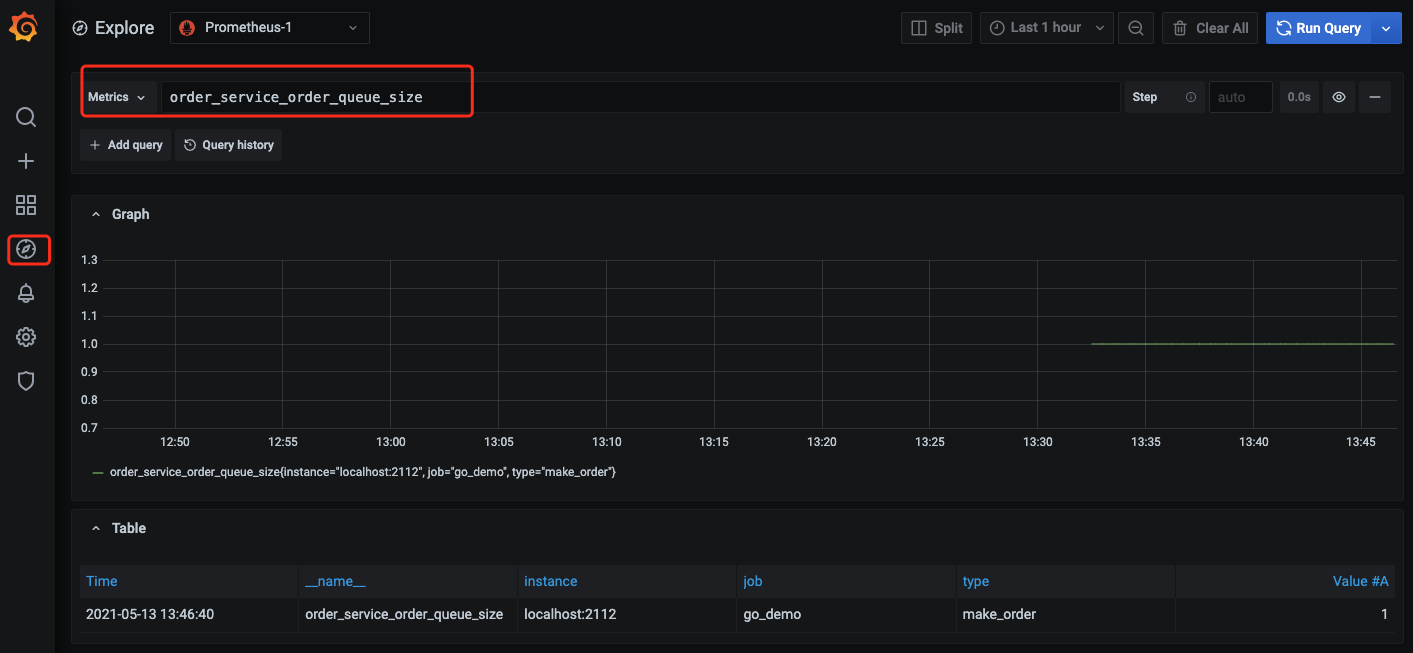
Log in to the TMP console and click the Grafana icon to enter Grafana. Search for {job="cvm_node_exporter"} in Explore to see whether there is data, and if so, data is reported successfully.


5. Configure the dashboard page: Every product has some existing JSON files that can be directly imported into the dashboard.
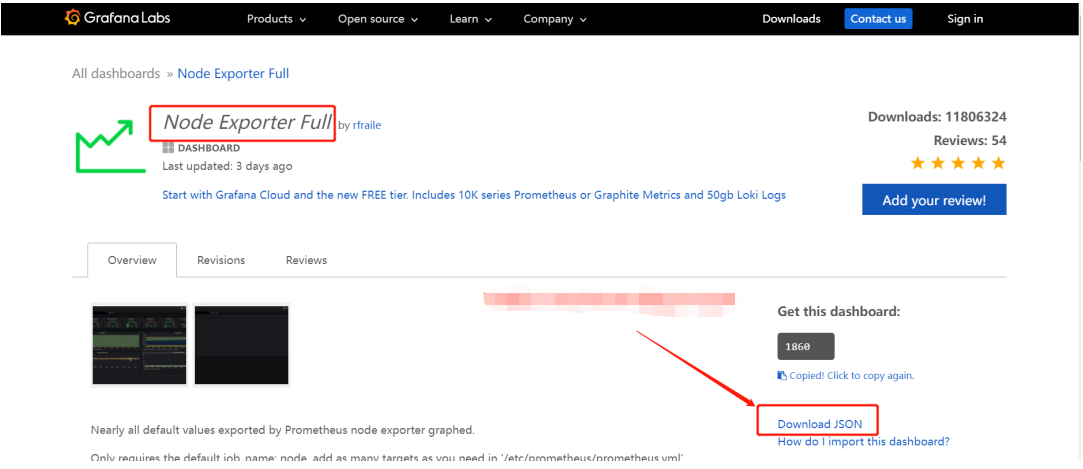
5.1 Download a dashboard file: Go to the Dashboard page, search for node_exporter, and select the latest dashboard for download.


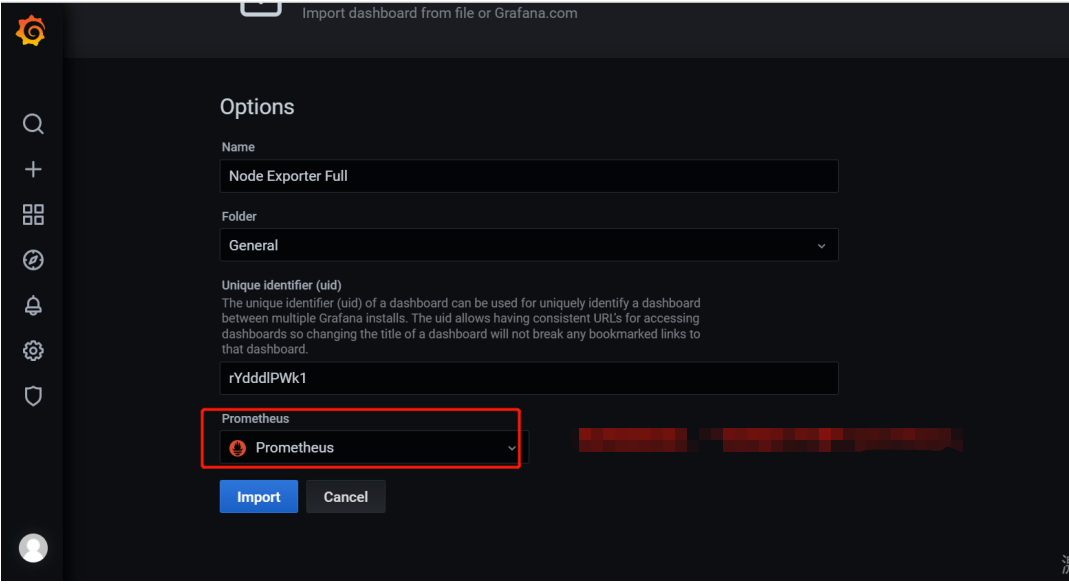
5.2 Import a JSON file into the dashboard: Log in to the TMP console, select Basic Info > Grafana Address to enter Grafana. In the Grafana console, select Create > Import and upload the dashboard file in Upload JSON file.


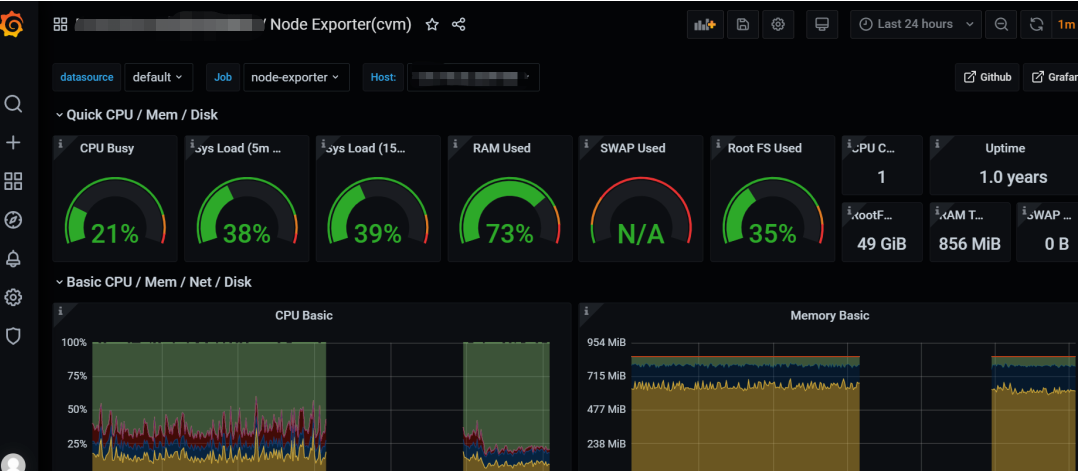
The effect after configuring is as follows:


Integrating CVM Metrics at the Business Layer

Prometheus provides four metric types for different monitoring scenarios: Counter, Gauge, Histogram, and Summary. The Prometheus community provides SDKs for multiple programing languages, which are basically similar in usage and mainly differ in the syntax. The following uses Go as an example to describe how to report custom monitoring metrics. For detailed directions of other metric types, see Custom Monitoring.

Counter

A metric in Counter type increases monotonically and will be reset after service restart. You can use counters to monitor the numbers of requests, exceptions, user logins, orders, etc.
1. You can use a counter to monitor the number of orders as follows:
package order

import (
"github.com/prometheus/client_golang/prometheus"
"github.com/prometheus/client_golang/prometheus/promauto"
)

// Define the counter object to be monitored
var (
opsProcessed = promauto.NewCounterVec(prometheus.CounterOpts{
Name: "order_service_processed_orders_total",
Help: "The total number of processed orders",
}, []string{"status"}) // Processing status
)

// Process the order
func makeOrder() {
opsProcessed.WithLabelValues("success").Inc() // Success
// opsProcessed.WithLabelValues("fail").Inc() // Failure

// Order placement business logic
}
For example, you can use the rate() function to get the order increase rate:
rate(order_service_processed_orders_total[5m])
2. Expose Prometheus metrics:
Use promhttp.Handler() to expose the metric tracking data to the HTTP service.
package main

import (
"net/http"

"github.com/prometheus/client_golang/prometheus/promhttp"
)

func main() {
// Business code

// Expose Prometheus metrics in the HTTP service
http.Handle("/metrics", promhttp.Handler())

// Business code
}

3. Collect data:
After the tracking of custom metrics for your business is completed and the application is released, you can use Prometheus to collect the monitoring metric data. After the collection is completed, wait a few minutes and then you can view the business metric monitoring data in Grafana integrated in TMP.
img


Bantuan dan Dukungan

Apakah halaman ini membantu?

masukan