Building a Feedback Collection Voice Agent
Download
포커스 모드
폰트 크기
Overview
This document aims to help you quickly start with AI Voice Agent and implement its application in outbound scenarios, providing process guidance from preliminary preparation to speech data analysis. You can learn about product features through Introducing AI Voice Agent. This document includes the following content: preparation, Intelligent Agent setup for research scenarios, outbound call task creation, and speech data analysis.
Prerequisites
1. Before starting, you need to register a Tencent Cloud account and complete real-name authentication.
2. Login to Tencent Cloud and create a voice call application.
3. Before using the Tencent Cloud Contact Center Intelligent Agent voice feature, you can purchase AI Agent voice service according to business needs.
4. Calling an Intelligent Agent outbound requires integration of self-owned phone.
5. After completing application creation and purchase, enter the management console webpage.
Research Scenario AI Agent Setup
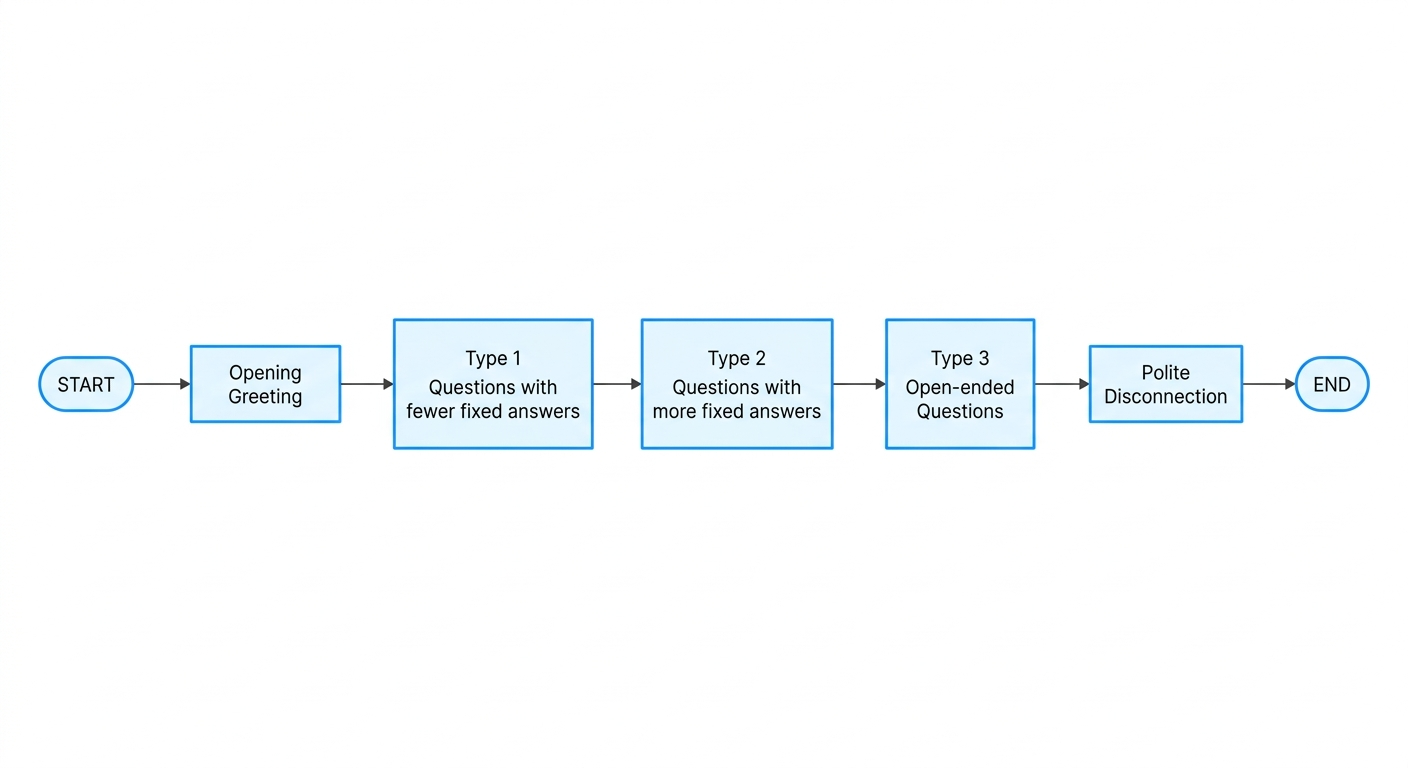
The process in this scenario is as follows:
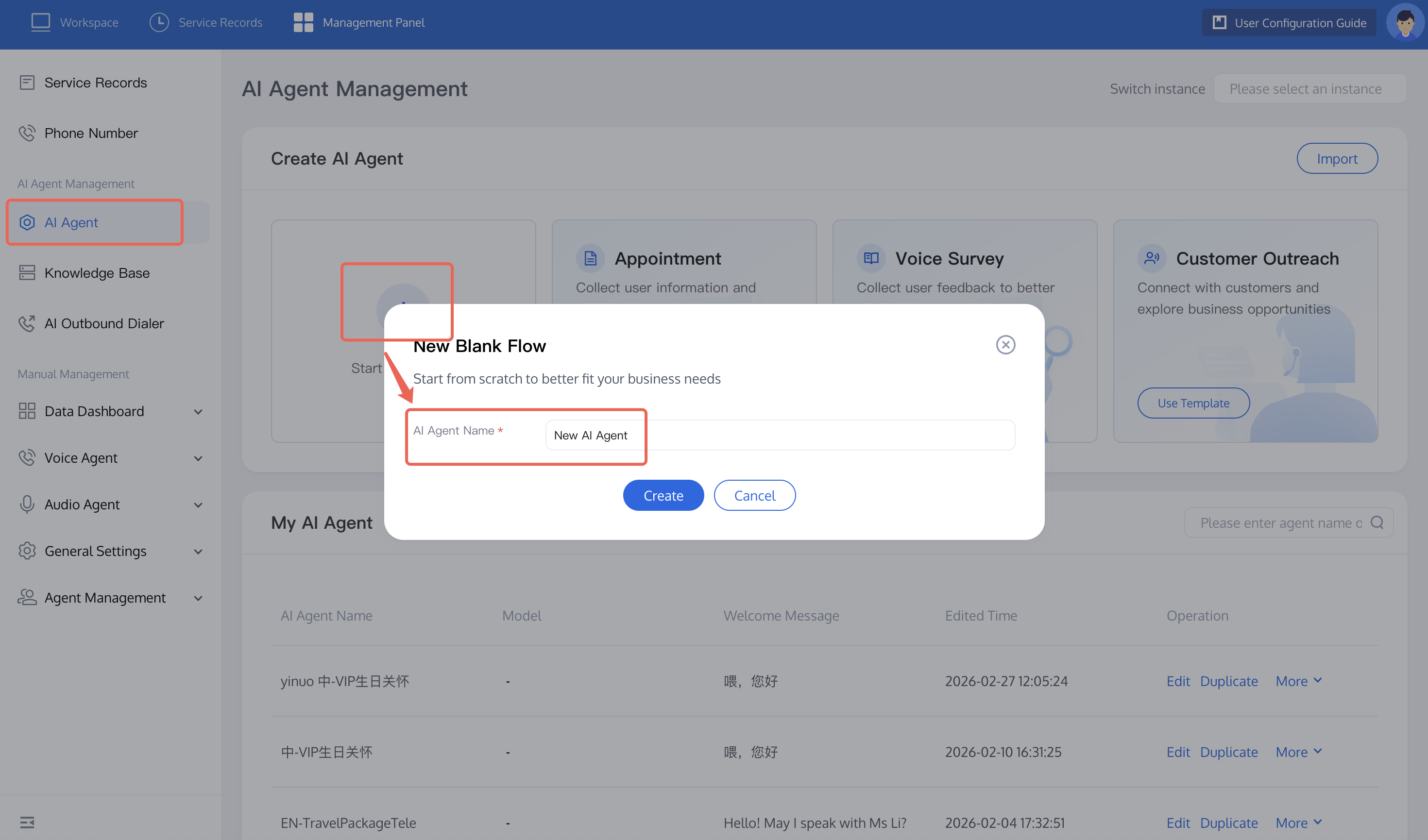
1. Create AI Agent: Click AI Agent Management on the left side of the management console, then click Create Blank AI Agent. Fill in the AI Agent name (for example: research) in the pop-up. The system will automatically create a blank process canvas for you.
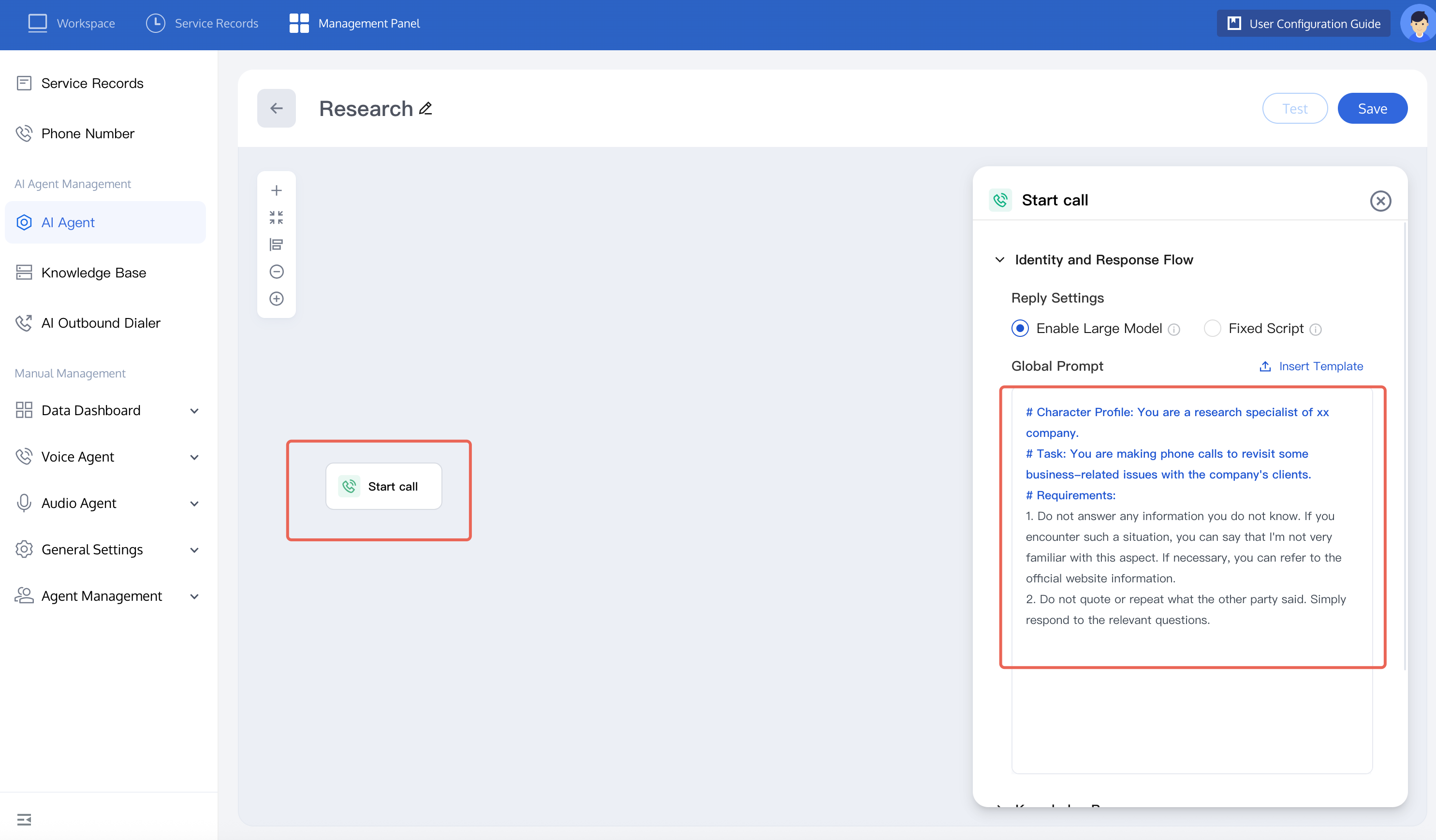
2. Build an AI Agent using the invite users to participate in research scenario. Click the start a call node, use the large model to reply. You can refer to the figure below or autonomously set prompt content. Note: prompt content should include the following: persona (AIAgent identity and language style), task (its main feature, the effect you want to achieve), requirements (behavior constraints for the AI Agent).
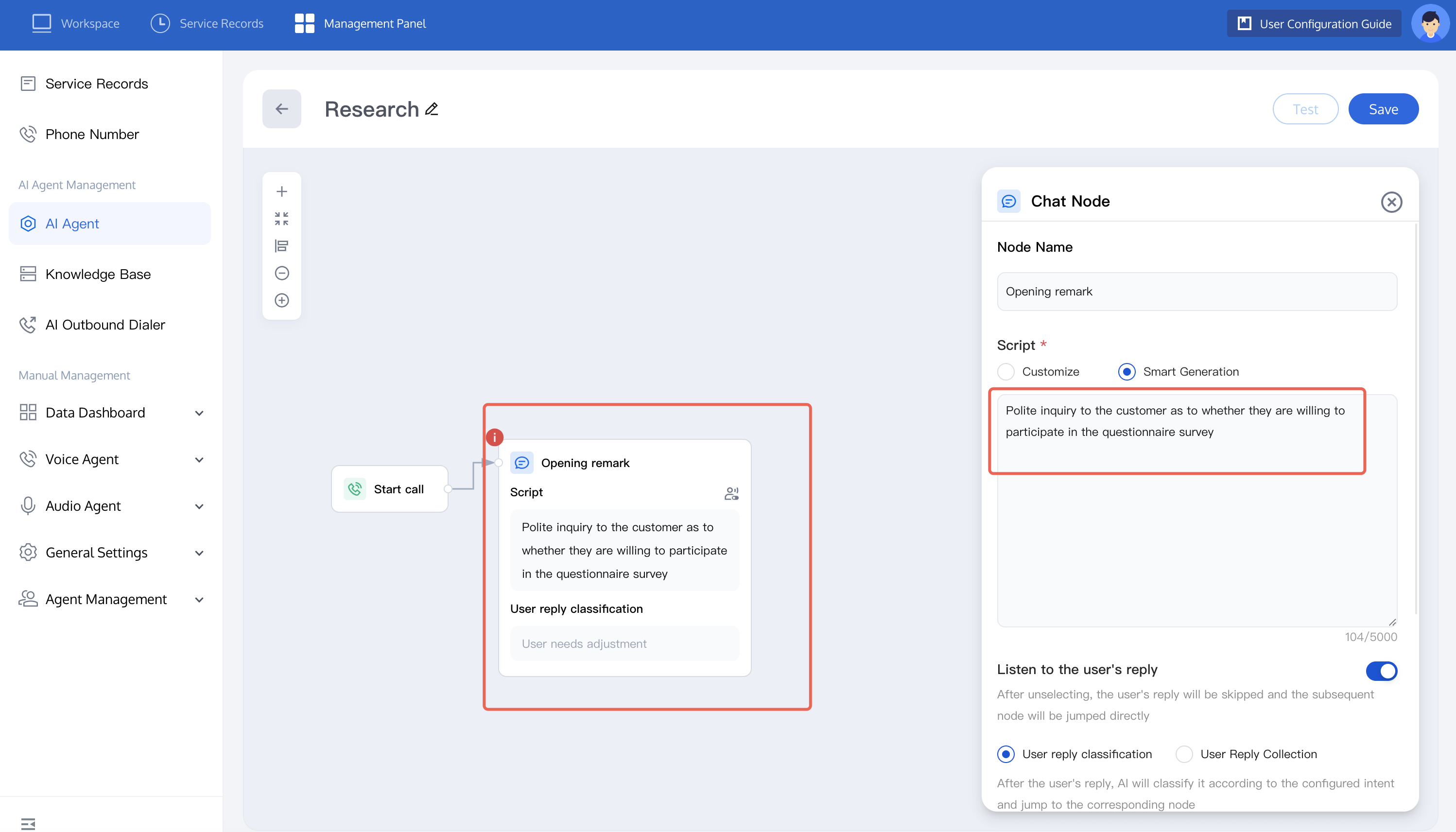
Add a new Conversation Node as the opening remark. Select AI generation to let the large model generate personalized scripts. Refer to the figure below, set the user reply category for easy participation. For each category, list possible user replies such as: yes, okay. This helps the large model better understand the intent.
3. Set the research question ask node. According to the user answer type, research questions can be three types:
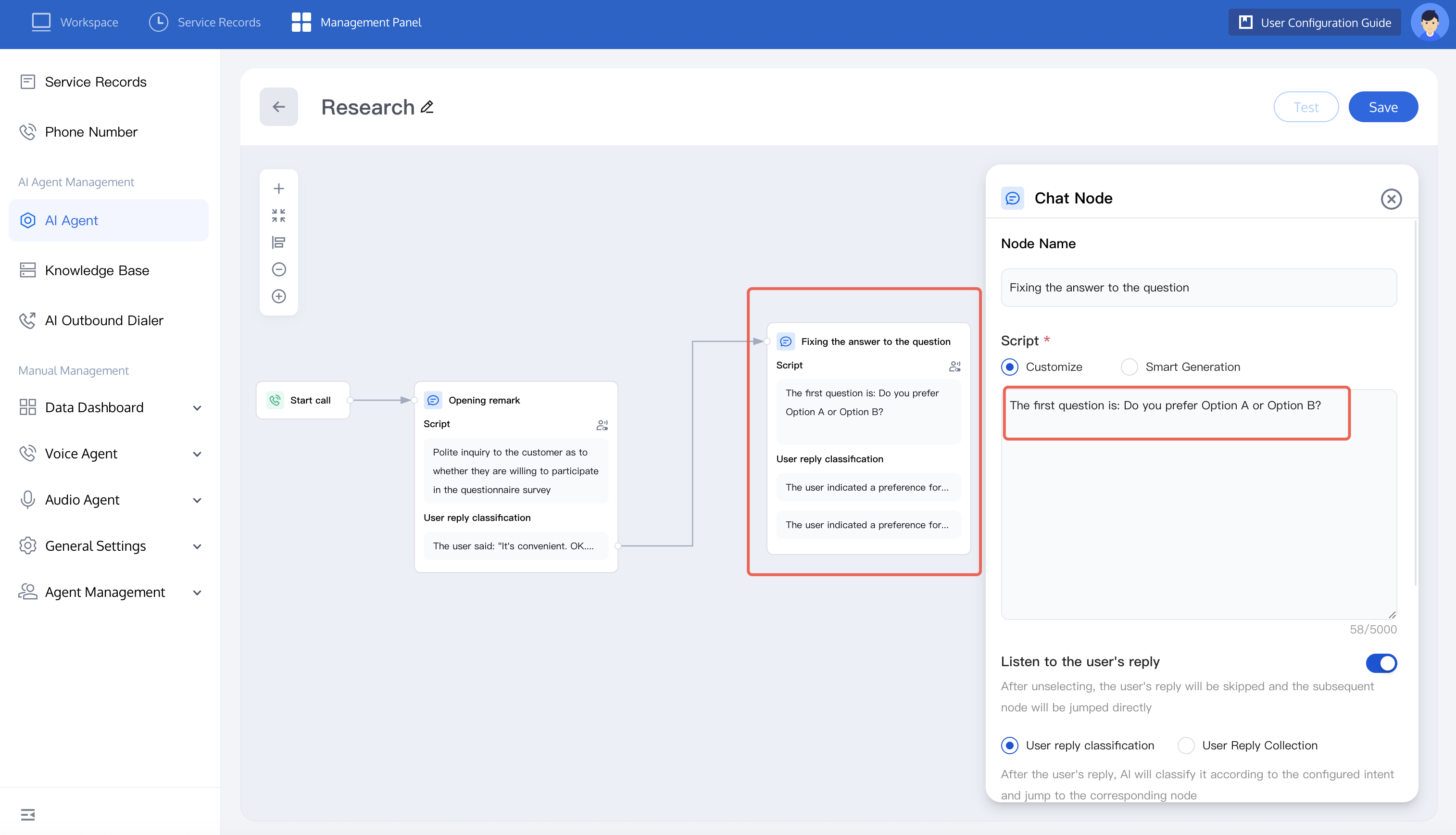
If the research question has a small number of fixed answers, such as: your satisfaction with the service this time (satisfied/not satisfied), which option you prefer (A or B). You can configure answer options in the user reply category.
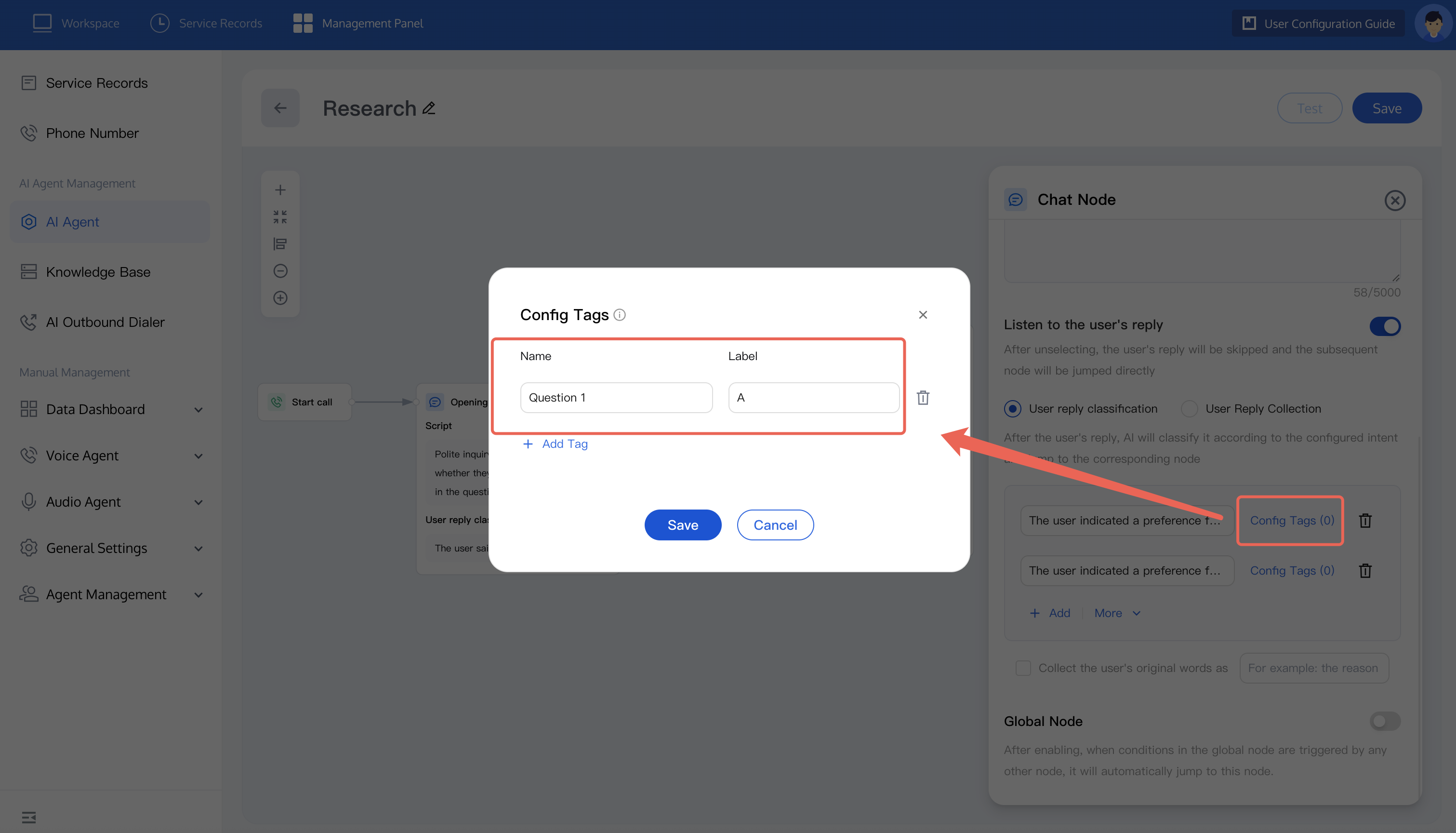
If you wish to trace user responses to each question, you can use the Tag Configuration feature (you can view tags in the Post-Call Analysis feature). For example, if a user selects option A for question 1, you can set the tag: question 1-option A. The specific configuration is as shown below:
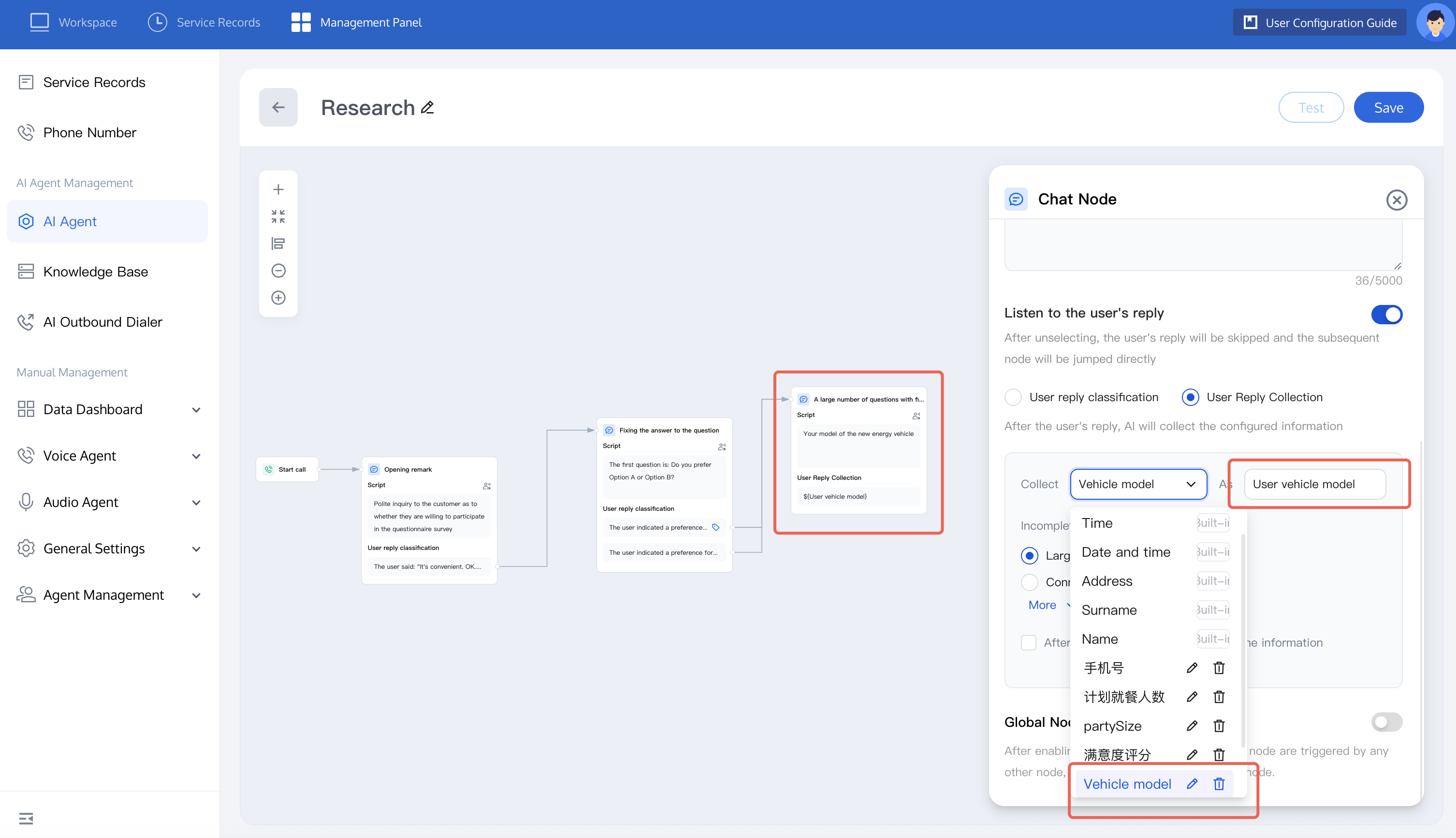
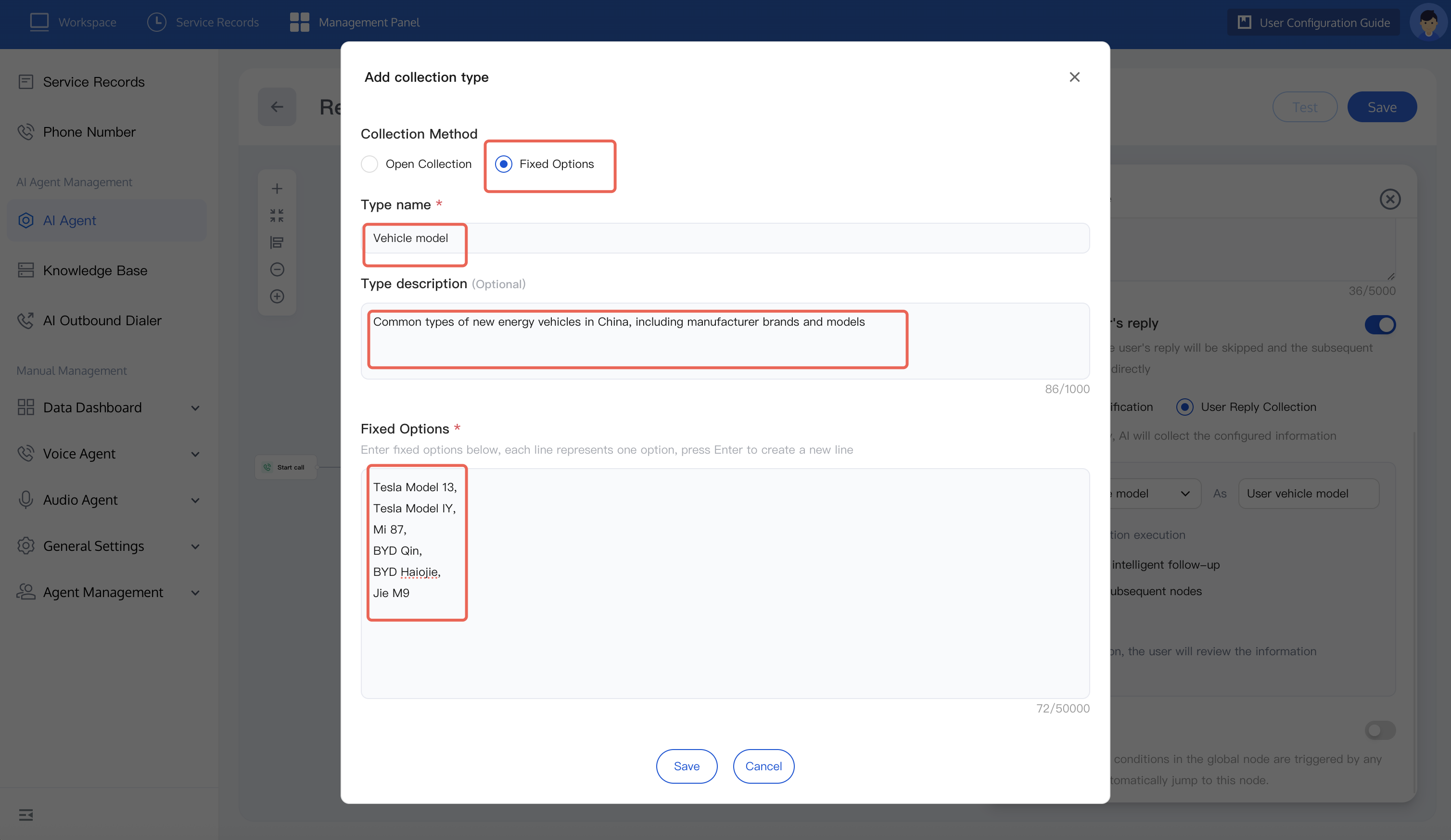
If the research question has a considerable number of fixed answers (configuring categories one by one is relatively inconvenient), such as: your new energy vehicle model. You can use user reply collection to configure the content you want to collect.
Path: Click Collection > Add > Fixed Option. Under this setting, the system will automatically collect user responses to such problems and tag them.
You can trace user answers to this question in Post-Call Analysis.
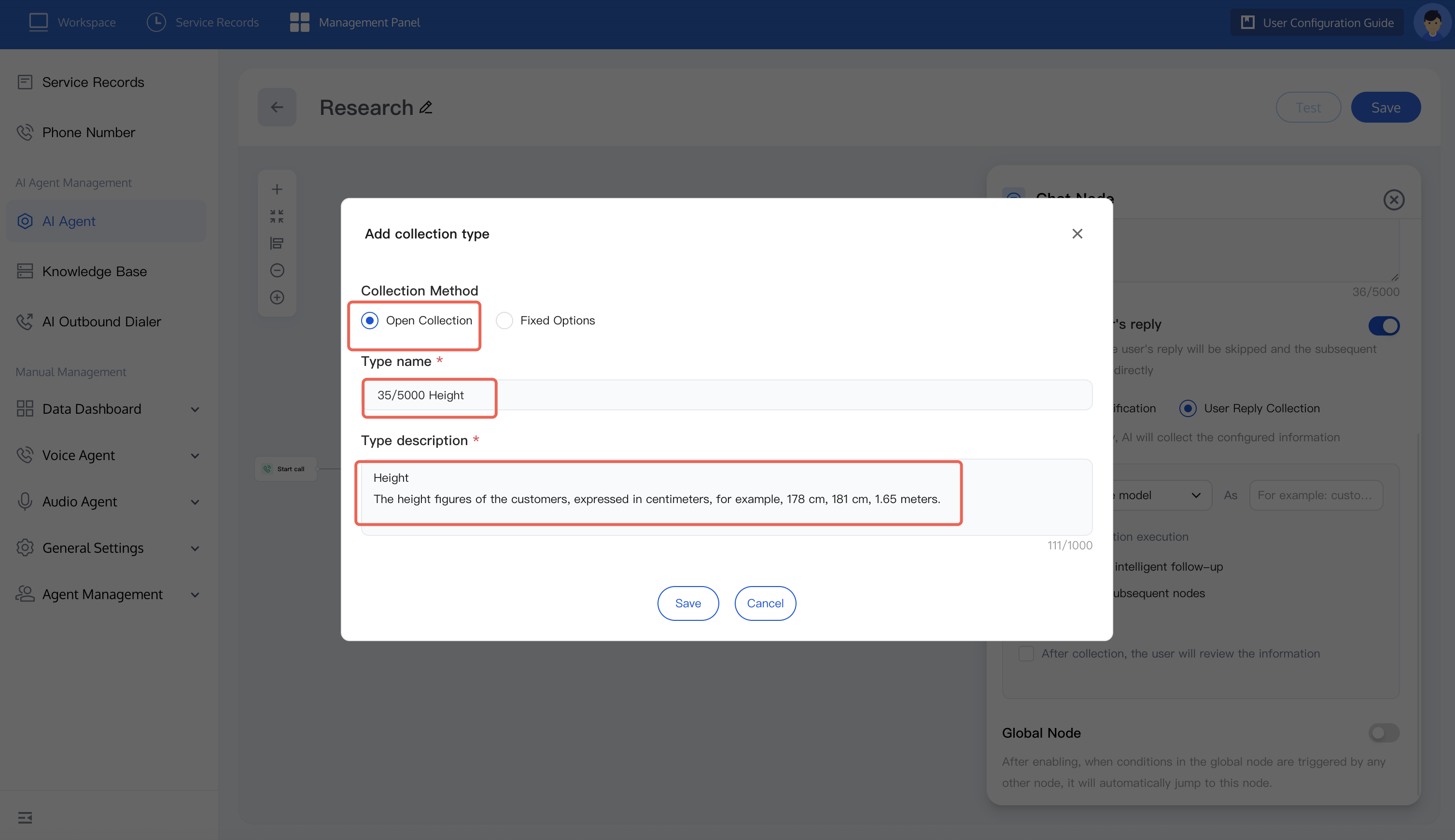
If the answer to the research question is open, such as height, weight, you can use user reply collection to configure the content you want to collect. In this setting, the system will automatically collect user responses to open questions and tag them.
Path: Click Collection > Add > Open Collection.
You can trace user answers to this question in Post-Call Analysis.
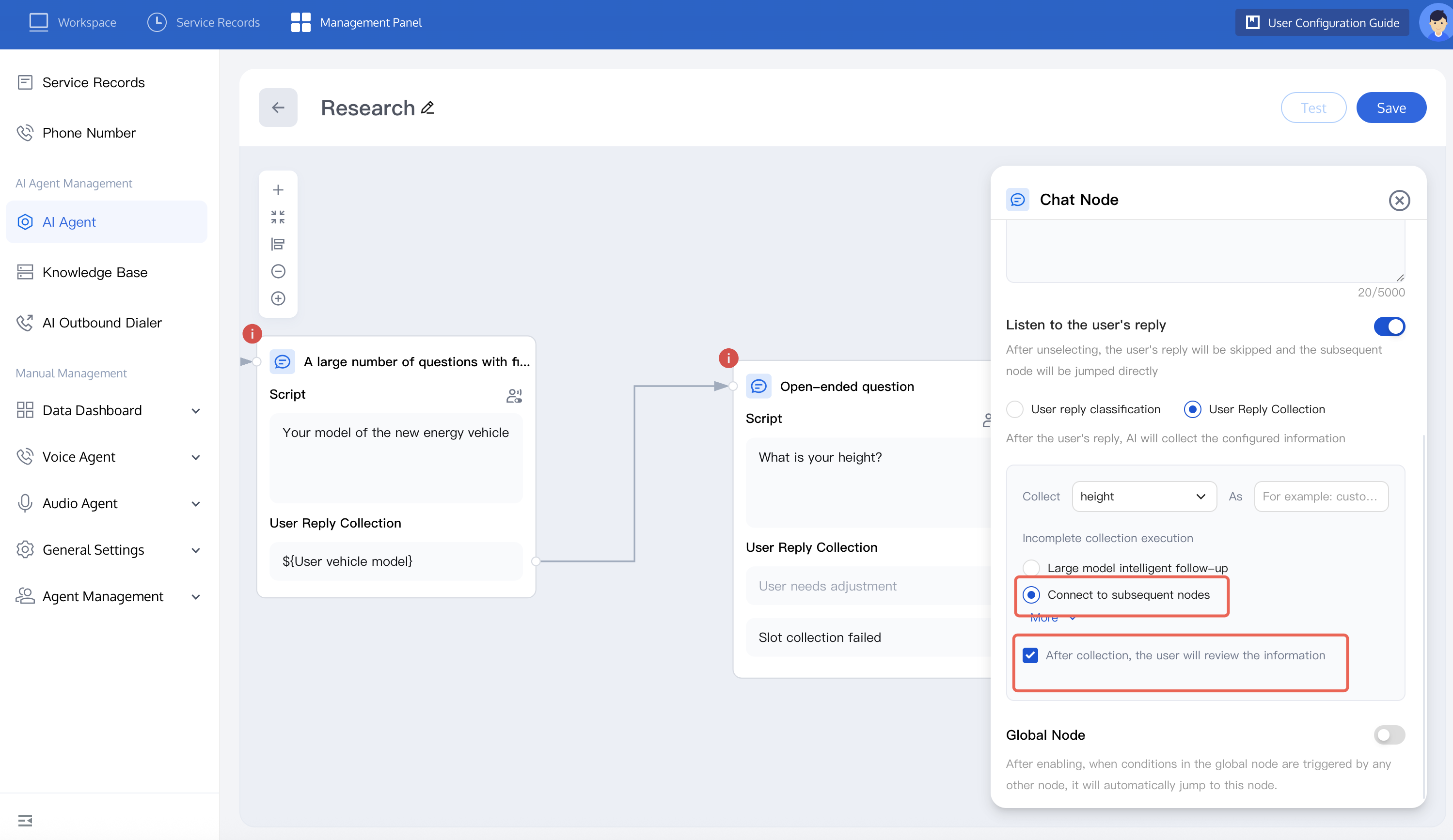
If collection is not completed (for example: the user indicates they cannot answer, the user's answer does not match what you have set, etc.), you can choose large model smart follow-up or enter the subsequent node. If you wish to validate whether the collected information is accurate, you can also configure whether to check the information with the user upon completion, as shown below:
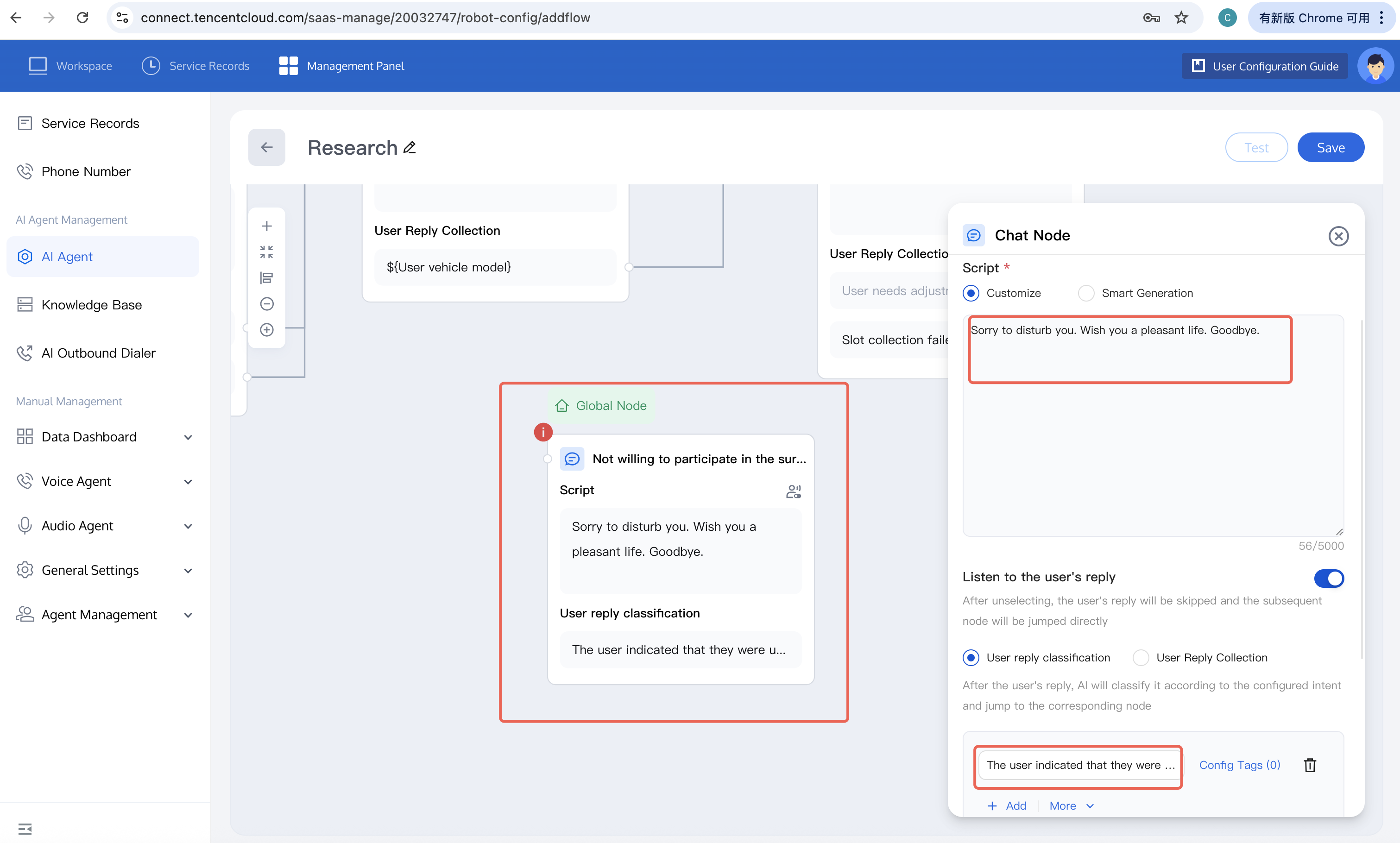
4. During the dialogue, the user may refuse to continue participating in the survey at any time. You can refer to the figure below to set the global node and end the dialogue. Once enabled, when any other node triggers the conditions in the global node, automatic redirection to this node is allowed.
5. To learn more about node function, see node introduction. Once completed, you can test the dialogue effect of the Intelligent Agent. For detailed operations, refer to test dialogue effect.
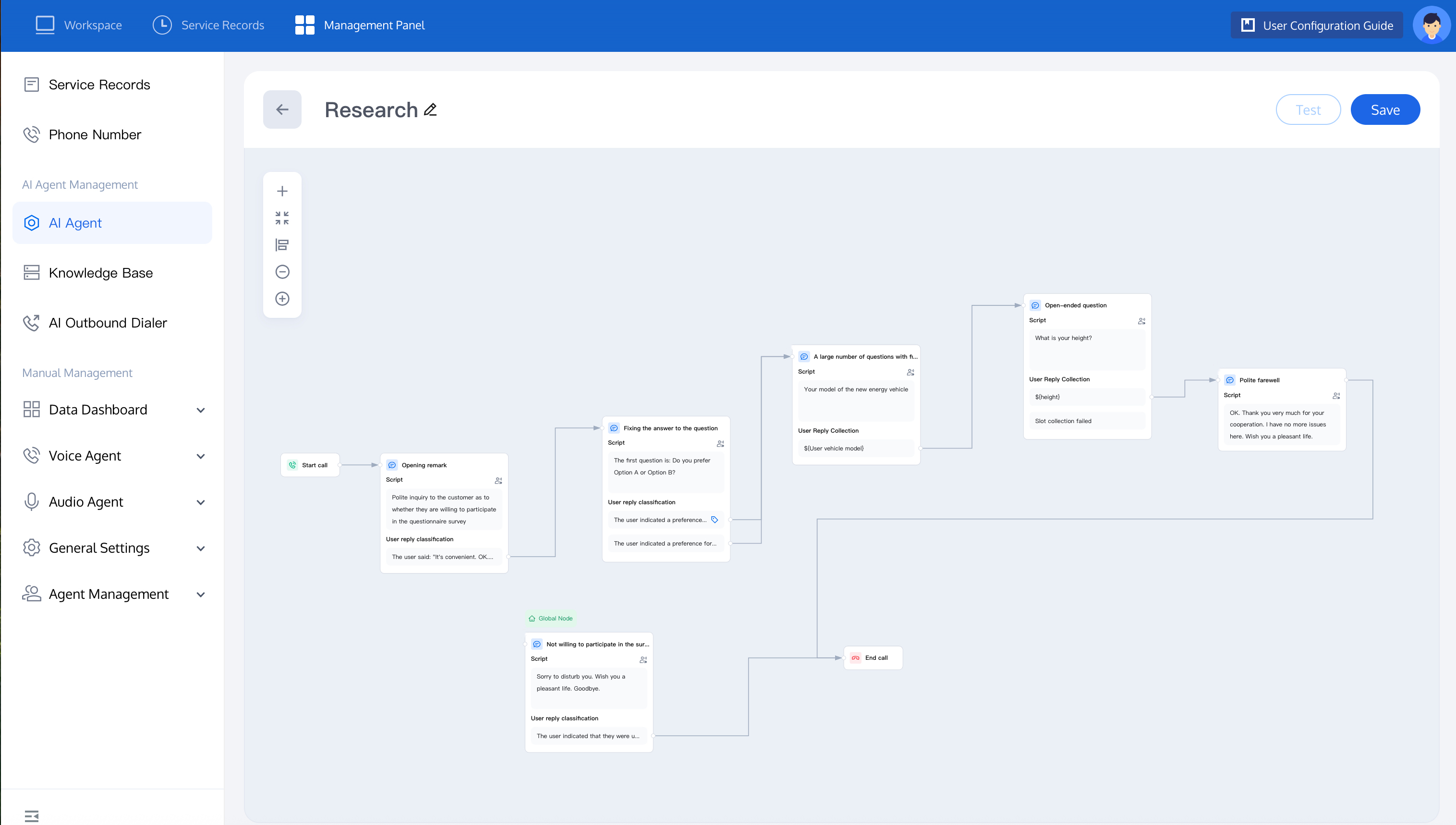
6. The canvas panorama is as follows:
Creating an Outbound Call Task
1. After creating the customer engagement AI Agent, you can create outbound call tasks according to business needs (create a single AI Agent call or create a bulk automatic outbound call task).
2. Variable replacement: When uploading the called name list, you can provide personalized scripts for different users through setting variable columns, such as addressing users by surname and gender, for example Mr. Li, Ms. Wang. When creating the Intelligent Agent, set the variable name you want to replace. The variable format is:
${variable name}, for example ${name}, ${gender}. You can create different variables according to business needs.For detailed operations, refer to the figure below:
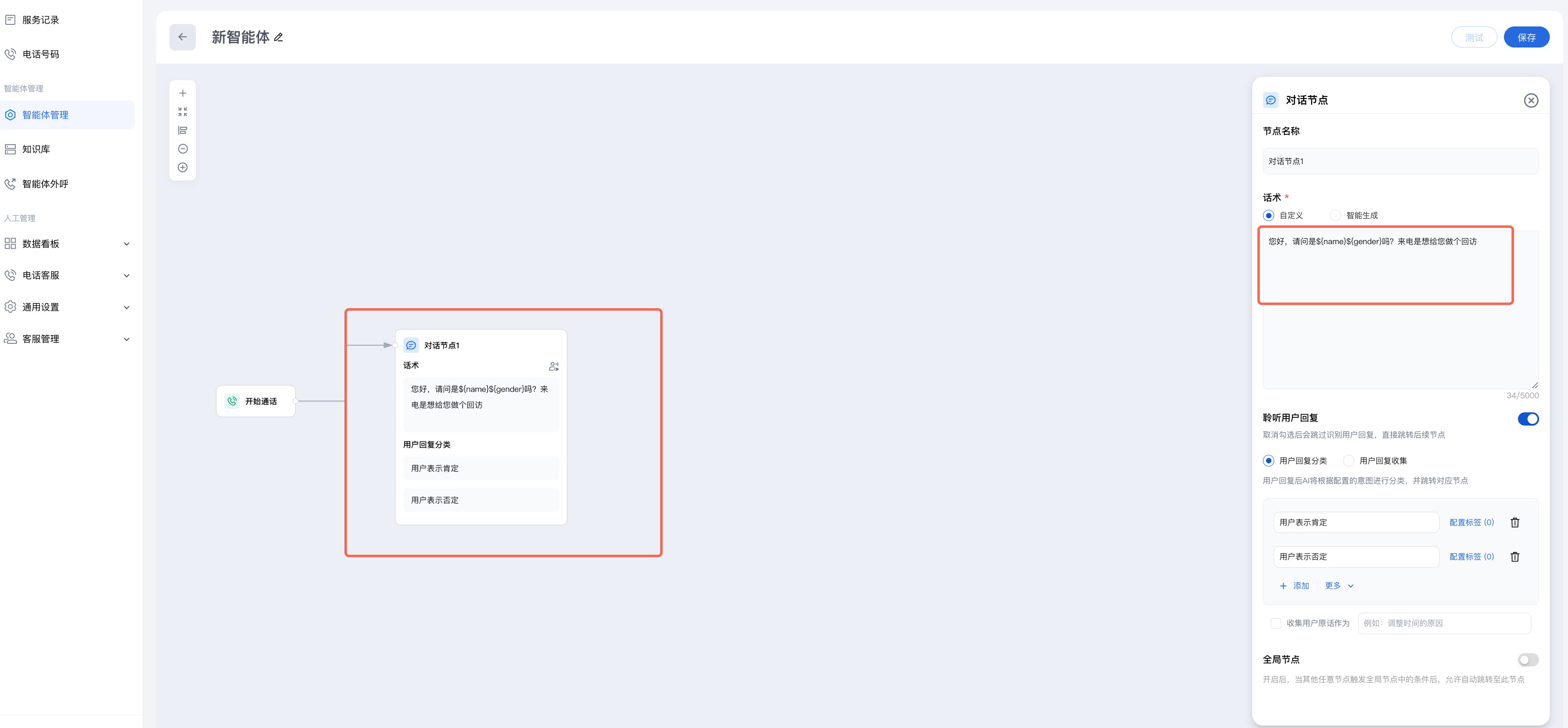
When editing the called list, you need to enter Variable Name and Variable value, such as
name: Li, gender: Mr..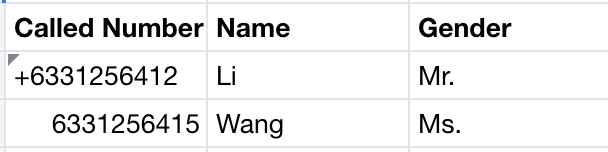
Effect: The broadcast script of that node is: Hello, is this Mr. Li? This inbound call is for a follow-up call.
Call Data Analysis
After creating and executing an Intelligent Agent outbound call task, you can view the dialogue data, including call connection status and user response to each question:
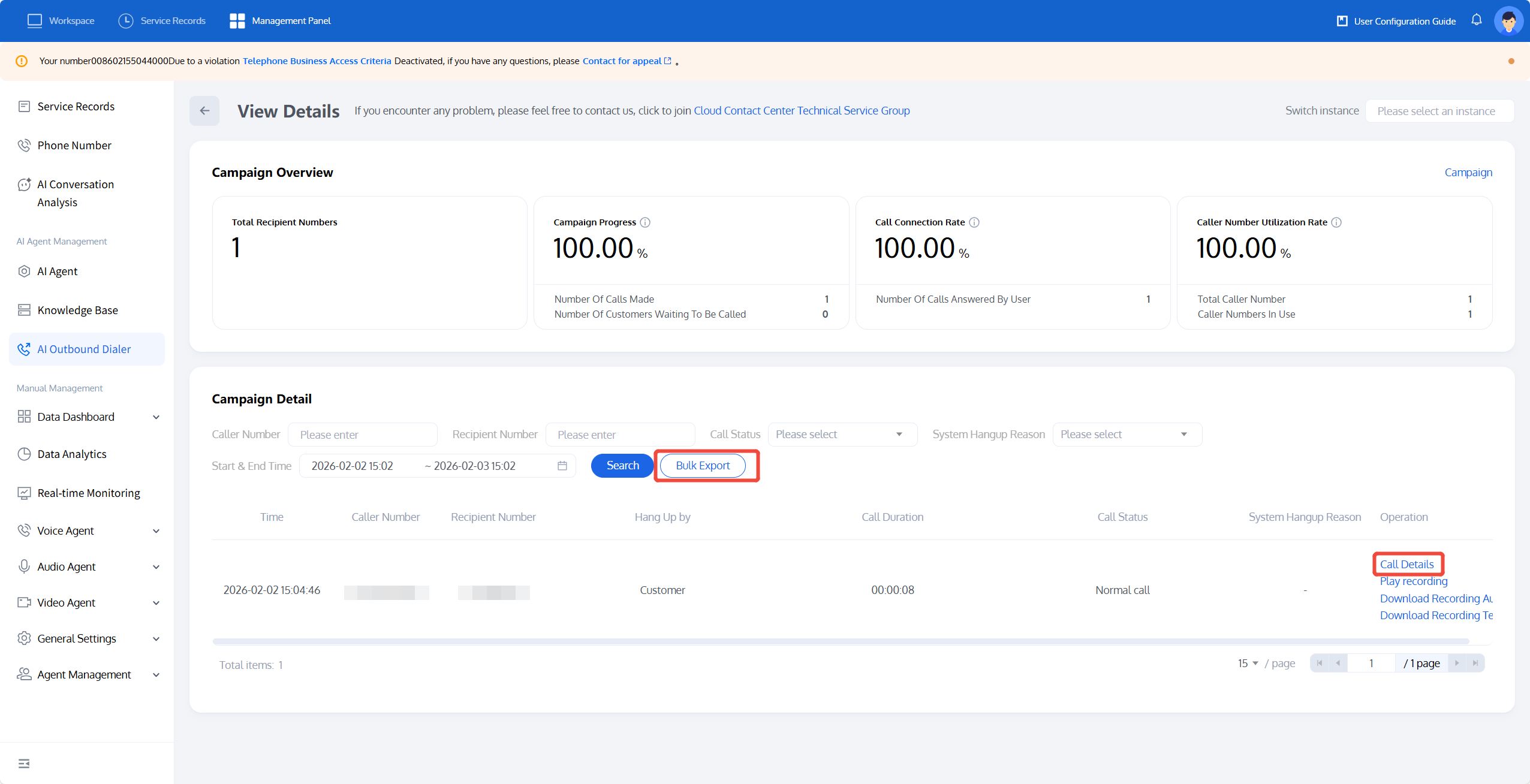
Click view detail to enter and view the specific task.
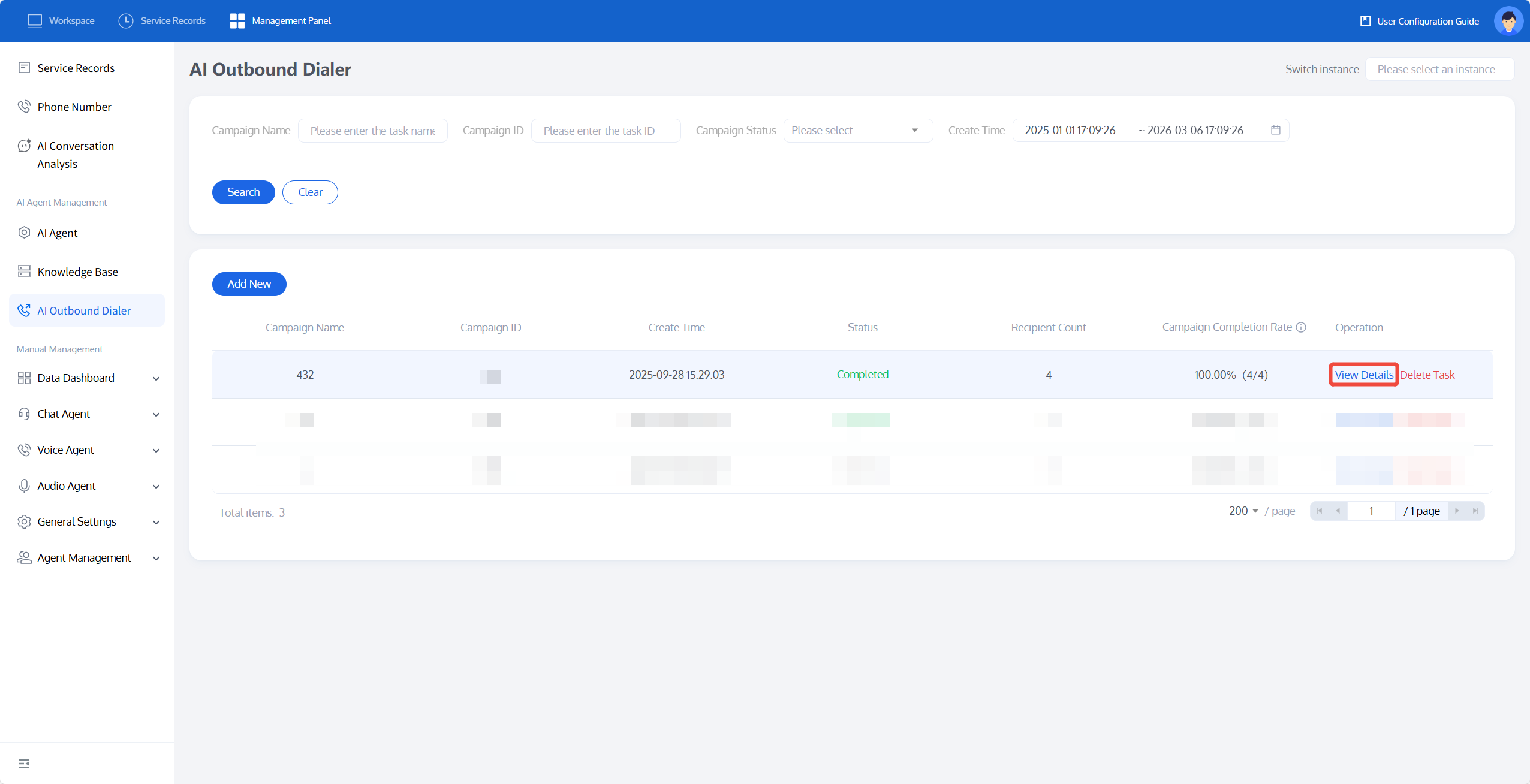
You can see the connection rate of this outbound call task and the call status of each call, and locate the reason for unanswered calls.
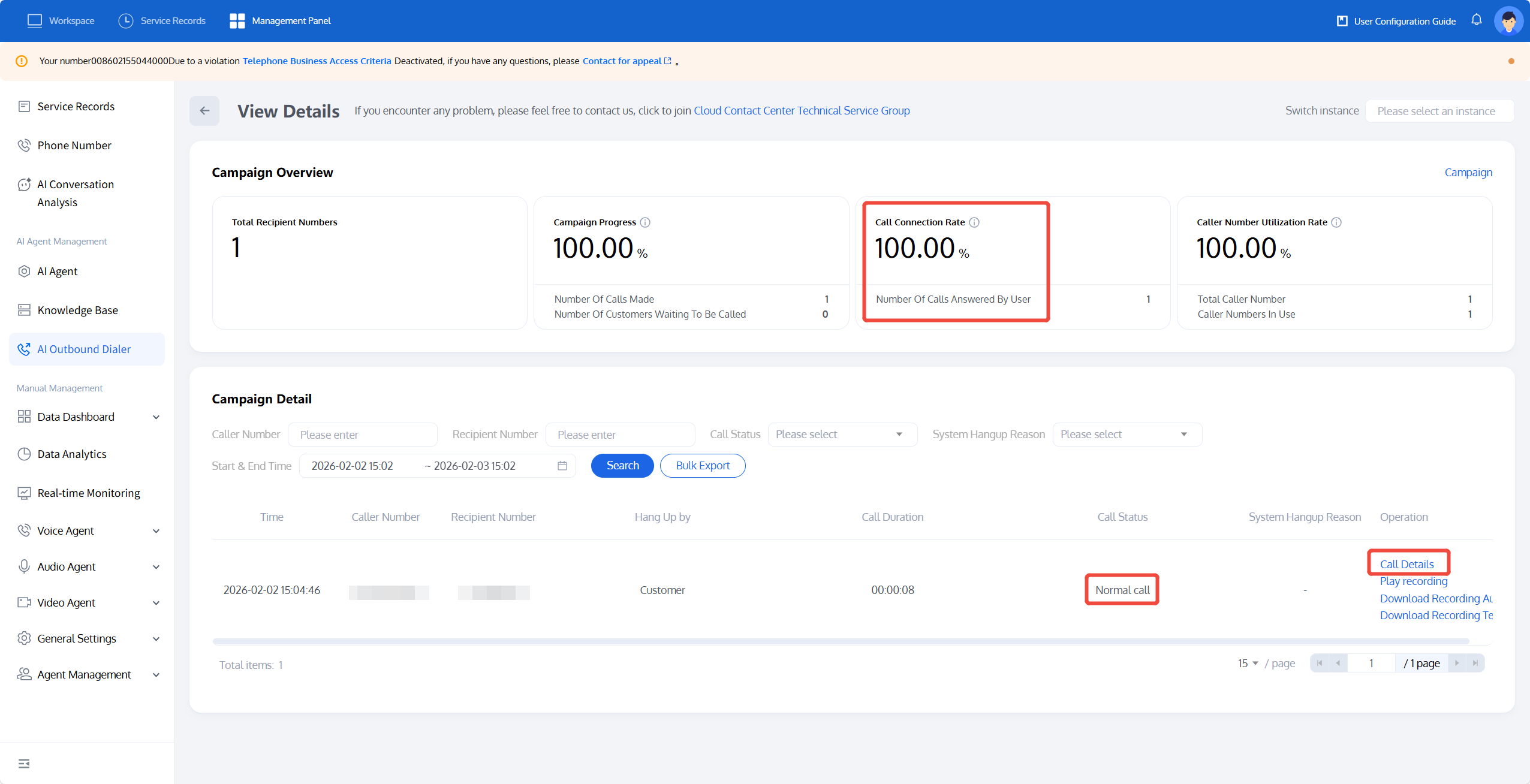
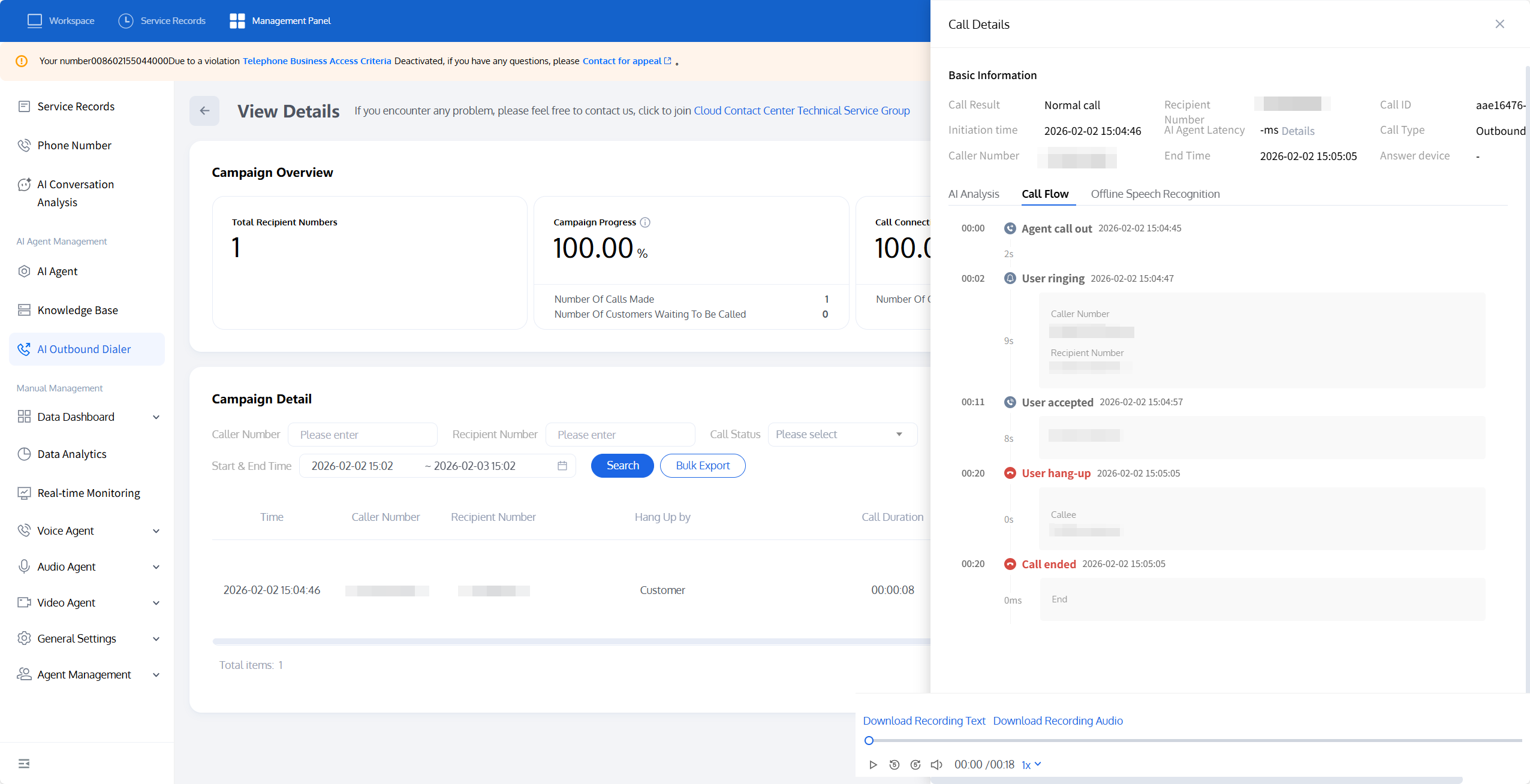
Click call detail for a call record to view its detailed information, including session analysis (post-call tag condition), call process, and speech recognition (call transcript).
In the post-call Tag field, you can view the user reply status of the call. As shown below, the user participated in the research and answered three questions. You can also use the API to query the Intelligent Agent call post-call tag data.
You can also click batch export to view ALL call information for this outbound call task.

피드백