tencent cloud

Tencent Container Security Service

Release Notes
Product Introduction
Overview
Strengths
Use Cases
Features and Versions
Purchase Guide
Applying for Trial
Purchasing Pro Edition
Purchasing Image Scan
Purchasing Log Analysis
Getting Started
Operation Guide
Security Overview
Asset Management
Vulnerability Detection
Image Risk Management
Cluster Risk Management
Baseline Management
Runtime Security
Advanced Defense
Policy Management
Protection Switch
Alarm Settings
Log Analysis
Hybrid Cloud Installation Guide
Compromised Container Isolation
Log Field Data Parsing
Practical Tutorial
Mirror Vulnerability Scanning and Vulnerability Management
Troubleshooting
Offline Linux Client
Troubleshooting for Cluster Access
API Documentation
History
Introduction
API Category
Making API Requests
Network Security APIs
Cluster Security APIs
Security Compliance APIs
Runtime security - High-risk syscalls
Runtime Security - Reverse Shell APIs
Runtime Security APIs
Alert Settings APIs
Advanced prevention - K8s API abnormal requests
Asset Management APIs
Security Operations - Log Analysis APIs
Runtime Security - Trojan Call APIs
Runtime Security - Container Escape APIs
Image Security APIs
Billing APIs
Data Types
Error Codes
FAQs
TCSS Policy
Privacy Policy
Data Processing And Security Agreement
Contact Us
Glossary

Configuring Log

PDF
Focus Mode
Font Size
Last updated: 2024-01-23 15:44:44

Log collection

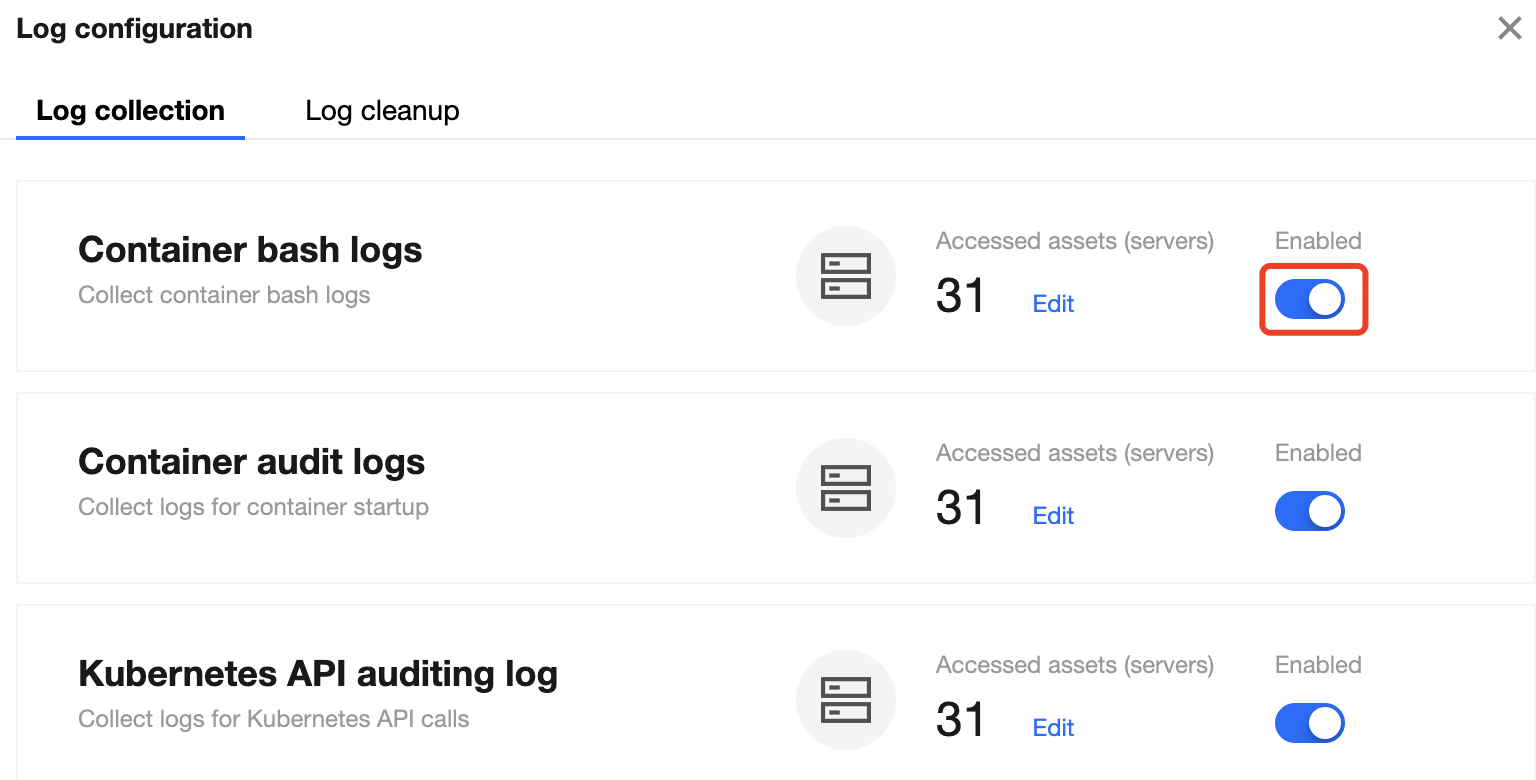
1. On the Log Analysis page, click Log configuration > Log collection at the top.


2. On the Log collection tab, toggle on or off the Enabled switch to enable or disable the collection of container bash logs, container startup audit logs, and Kubernetes API audit logs.


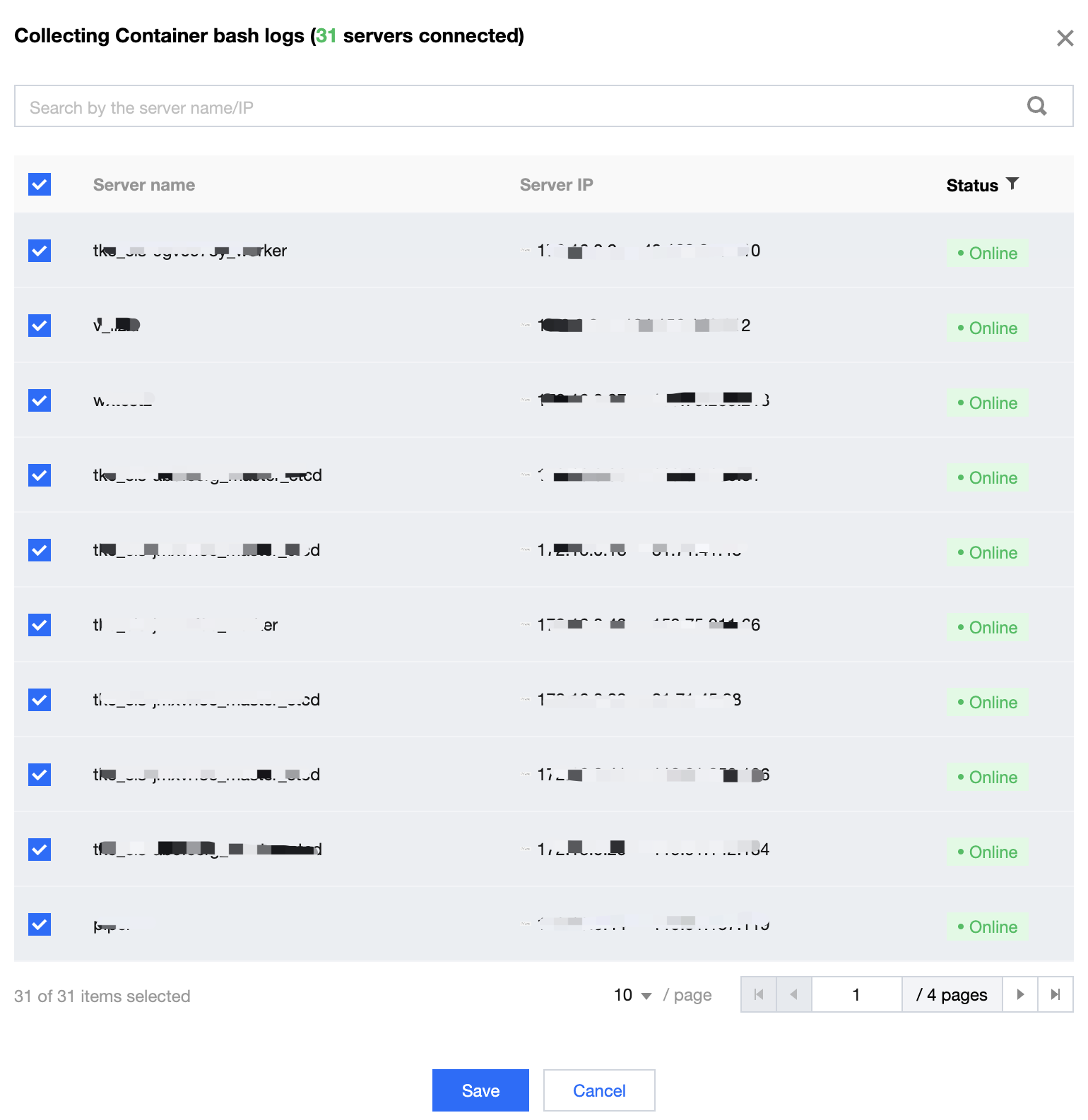
3. On the Log collection tab, click Edit in the Accessed assets column to configure the node scope for log collection. Select the servers for log collection and click Submit.


Log cleanup

1. On the Log Analysis page, select Log configuration > Log cleanup at the top.


2. On the Log cleanup tab, clear logs by percentage or storage period.
Clear logs by percentage: When the log storage volume reaches the configured percentage, historical logs are cleared until the configured percentage.
Clear logs by storage period: When the log storage period reaches the configured value, historical logs are cleared, and only those within the configured storage period are retained.
Note:
The two cleanup methods take effect at the same time, which means log cleanup starts when either of the two conditions is met.


Help and Support

Was this page helpful?

Help us improve! Rate your documentation experience in 5 mins.

Feedback