tencent cloud

Cloud Virtual Machine

Release Notes and Announcements
Release Notes
Public Image Release Notes
Official End of Support Plan for the Operating System
Announcements
Product Introduction
CVM Overview
Strengths
Basic Concepts
Regions and Zones
Tutorial
Service Regions and Service Providers
Billing
Billing Overview
Billing Modes
Billing Items
Billing Mode Conversion Overview
Purchasing Instances
Configuration Adjustment Billing Guide
Overdue Payments
Getting Started
Purchasing a Customized Linux Instance
Purchasing a Customized Windows Instance
User Guide
Operation Guide Overview
Use Limits
Instances
Spot Instances
Reserved Instances
Images
Storage
Backup and Restoration
Network
Security
Passwords/Keys
Monitoring and Alarms
Ops Management
Convenience Features
Migrating a Server
Online Migration
Migration Consultation
Troubleshooting
CVM Login Failures
Windows Instance Login Failures
Linux Instance Login Failures
Other Login Failures
Instance Running Failures
Linux Instance Memory Failures
Network Failures
Use Cases
Suggestions on CVM Model Selection
Environment Building
Website Building
Application Building
Visual GUI Building
Uploading Local Files to CVM
Network Performance Test
Other Practical Tutorials
API Documentation
History
Introduction
API Category
Making API Requests
Region APIs
Instance APIs
Cloud Hosting Cluster APIs
Image APIs
Instance Launch Template APIs
Placement Group APIs
Key APIs
Security Group APIs
Network APIs
Data Types
Error Codes
Security and Compliance
CAM
Network
FAQs
Regions and Zones
Billing
Instances
Storage
Images
Server Migration
Network
Security
Operating Systems
Ops and Monitoring
CAM
NTP Service
Scenarios
Agreements
CVM Service Level Agreements
Red Hat Enterprise Linux Image Service Agreement
Public IP Service Level Agreement
Glossary

Linux VNC Failure: "Module is unknown"

PDF
Focus Mode
Font Size
Last updated: 2024-01-06 17:32:18

Error Description

I entered the correct password, but still could not log in to the CVM using VNC. The message “Module is unknown” appears.


Possible Reasons

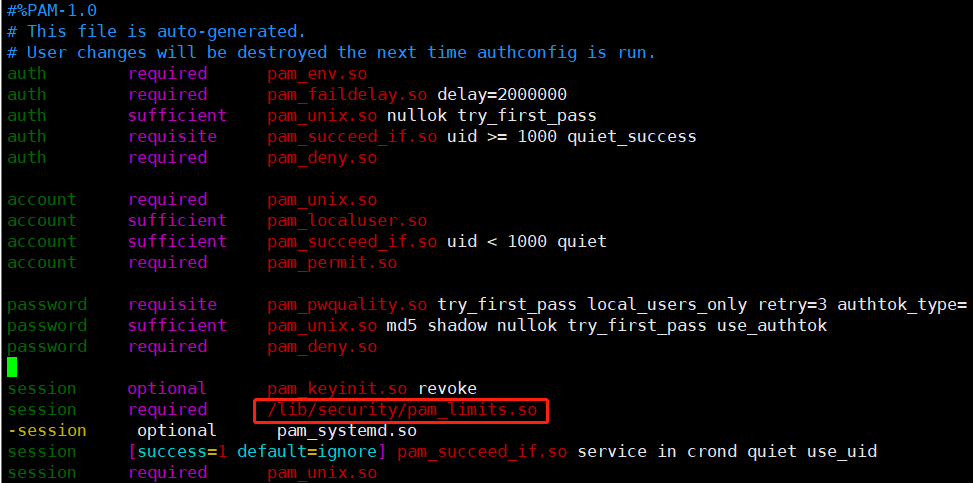
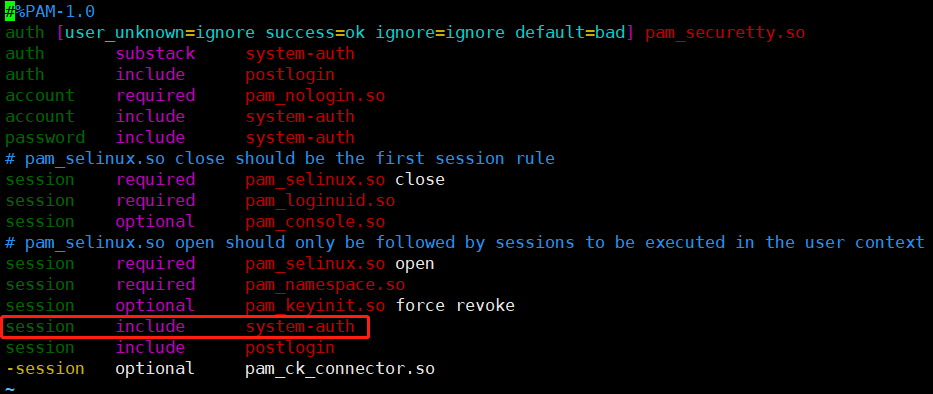
This issue may be caused by the /etc/pam.d/system-auth configuration in /etc/pam.d/login file.

If the path of the pam_limits.so module is not configured correctly in the system-auth configuration file, the login fails.


Note:
The pam_limits.so module limits the system resource usage of a user during the session. If the module path is not configured correctly according to the actual operating system, the login authentication fails.

Solutions

1. Perform the troubleshooting procedure to locate the pam_limits.so path configuration in the system-auth file.
2. Correct the pam_limits.so module path.

Troubleshooting Procedure

If the login succeeded, proceed to the next step.
If login failed, use single user mode.For more information, see Booting into Linux Single User Mode.
2. Run the following command to view logs.
vim /var/log/secure
This file records the security information, mostly CVM login logs. You can check the error logs of /lib/security/pam_limits.so as shown below.


3. Run the following commands in sequence to enter /etc/pam.d directory and search for /lib/security/pam_limits.so.
cd /etc/pam.d
find . | xargs grep -ri "/lib/security/pam_limits.so" -l
If the result similar to the following figure is returned, /lib/security/pam_limits.so is configured in the system-auth file.


4. Access the system-auth file to correct the pam_limits.so module path. For example, you can use the absolute path /lib64/security/pam_limits.so or a relative path pam_limits.so in a 64-bit operating system.

Help and Support

Was this page helpful?

Help us improve! Rate your documentation experience in 5 mins.

Feedback